Which Observation Deck Is Best In Osaka?
Comparing Osaka Castle's 8F observation deck with Umeda Sky Building, Abeno Harukas 300 and Tsutenkaku: which one deserves your money and your evening.
Which Observation Deck Is Best In Osaka?
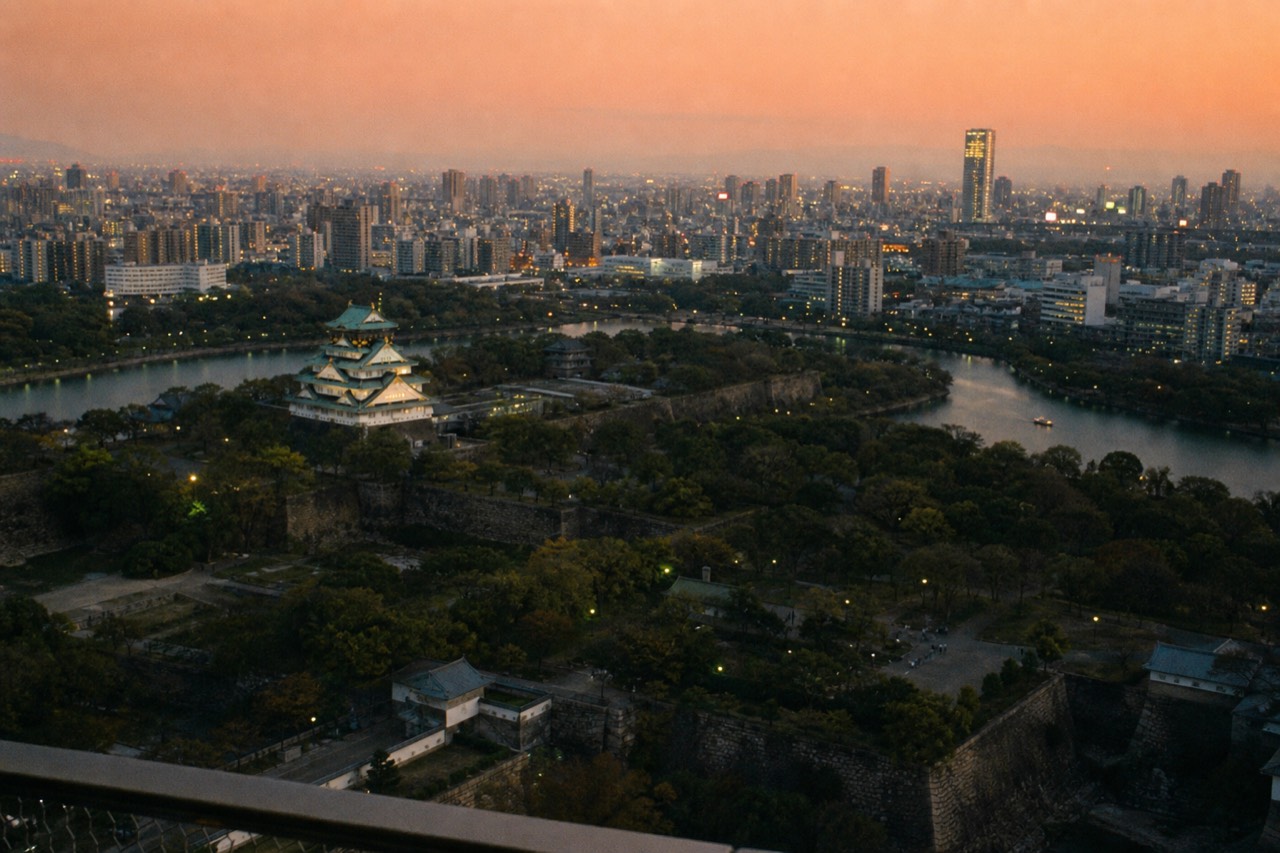
The castle's 8F deck is not Osaka's best on raw height, at roughly 50 m above ground per the castle museum's own exhibition page, since Abeno Harukas 300 and Umeda Sky Building are skyscraper decks far higher up. What it uniquely offers is the view itself: a green park, double moats, and the castle's stone ramparts below you rather than office towers, so pick by what you want to look at.
Height is the number every comparison article leads with, and the castle loses it before the conversation starts. Abeno Harukas 300 sits near the top of a 300 m skyscraper in Tennoji, Umeda Sky Building's Kuchu Teien garden floats between its two towers in Kita, and Tsutenkaku's deck in Shinsekai sits on a beloved retro tower that is cherished precisely because it is small. The castle's 8F observation deck, by the castle museum's own statement, is about 50 m above ground, per its official exhibition page. On the ladder of altitude, it is last, and no framing changes that.
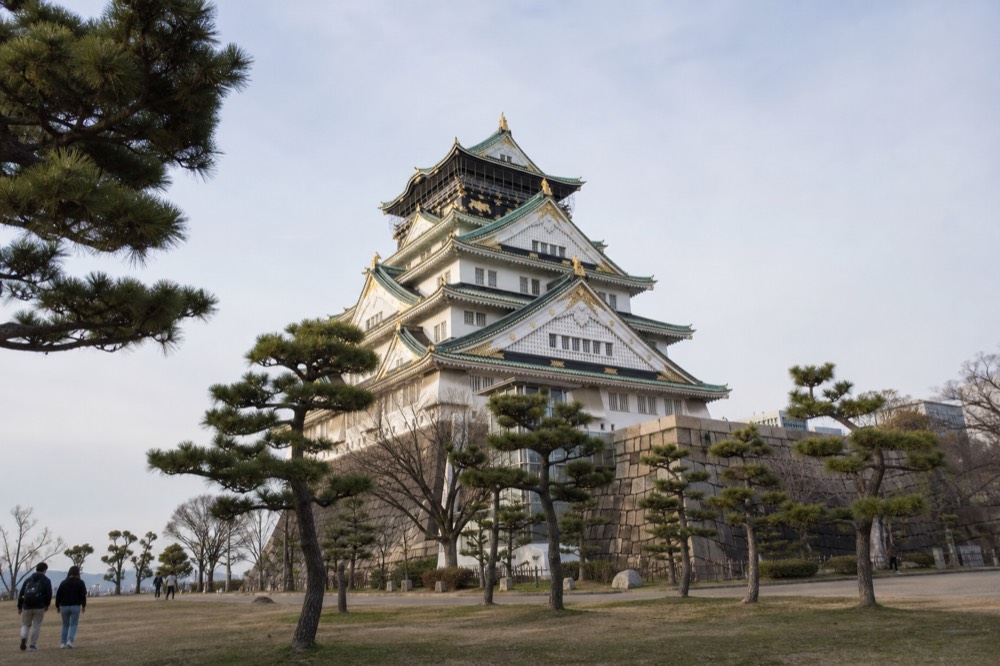
But altitude is a blunt instrument for judging a view, and Osaka's four decks reward four different moods. The Harukas deck is the panorama: from up there you see the whole city grid to the mountains on a clear day. Umeda Sky Building is the architectural experience, an open-air rooftop where you feel the wind. Tsutenkaku is nostalgia, a retro tower in a retro district where the deck is almost a side attraction next to the kushikatsu streets below. The castle deck is the only one that looks down at history. Beneath your feet are the Tokugawa-era moats, the giant stones of the masugata gate enclosures, the Ninomaru groves, and on most days a slow river of visitors crossing the Gokurakubashi bridge toward the tower you are standing in.
That is also why the castle deck is the cheapest of the four. Admission to the Main Tower is ¥1,200 for adults, and that ticket is not just the deck: it covers a full history museum on the way up, including the Toyotomi Stone Wall Museum, opened 1 April 2025, where you walk down to a section of Hideyoshi's original stone wall buried under about six metres of Tokugawa fill. The rival decks charge a single-purpose admission, and their current prices should be checked on each operator's own page before you go, since deck pricing moves more often than castle pricing does. For the height race, the castle still comes last on value-per-metre; for what a traveller actually remembers a year later, the castle has the strongest case of the four, and by a wide margin.
How Does The Castle's 8F Deck Actually Compare With Harukas 300 And Umeda Sky?
Harukas 300 wins pure altitude and the widest panorama, Umeda Sky Building wins the open-air experience, and the castle wins context: the ¥1,200 tower admission includes a full museum and the buried Toyotomi stone walls, not just a window. Tsutenkaku is the budget-nostalgia pick in Shinsekai. The castle deck is about 50 m up, the lowest, but the only one whose foreground contains a castle, moats and a park.
The castle deck's honest weakness is not just height, it is the window-to-window comparison. Harukas 300 is a purpose-built observation facility with floor-to-ceiling glass, a cafe level and, on clear winter days, views that reach the Akashi Strait. Umeda Sky Building's Kuchu Teien is an actual rooftop garden in the sky, with an open-air circular walkway where you photograph the deck itself as much as the view. Against those two, the castle's 8F deck is a viewing floor at the top of a 1931 ferro-concrete reconstruction designed to look like a 400-year-old keep. The windows are smaller, the corners are the best spots, and the FAQ warns plainly that the viewing space narrows and becomes very crowded the higher you go, which is the stated reason strollers are discouraged upstairs.
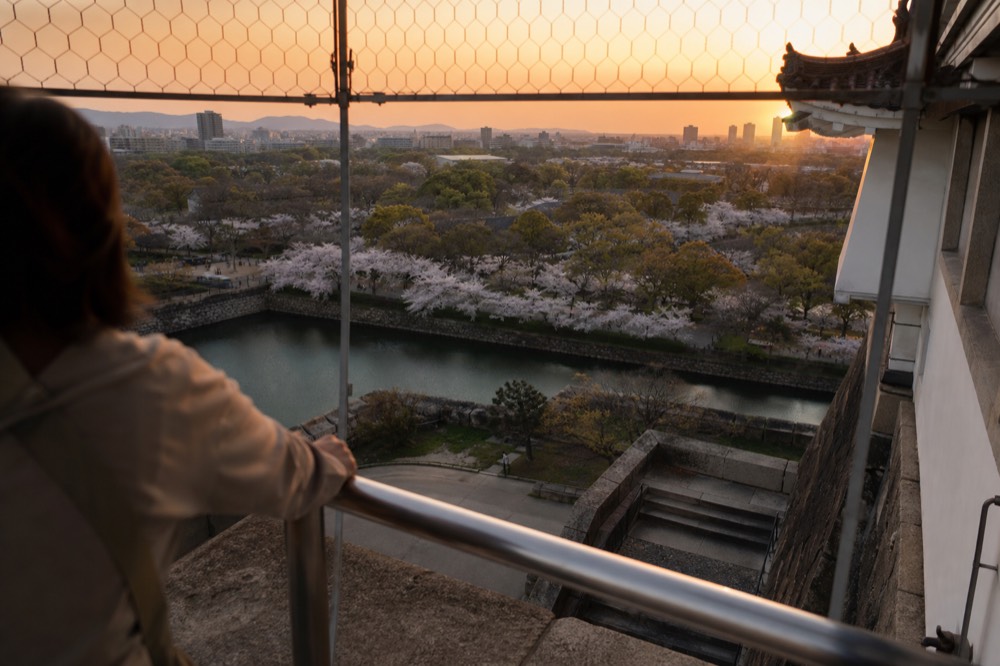
The castle deck's honest strength is everything below the 8th floor. You reach it by riding a lift that serves only upward trips for general visitors, direct to 5F, then walking up stairs past three floors of museum. Photography is banned on 3F and 4F because Important Cultural Properties are displayed there, but it is free everywhere else, and the 8F deck is one of the two photo spots the castle itself names. Hours are 9:00 to 18:00 with last admission at 17:30, closed only 28 December to 1 January, and the castle warns that the ticket-purchase queue may be capped before 17:30 on busy days, so a late-afternoon arrival carries real risk.
There is also a timing argument nobody makes. The castle tower closes at 18:00, but the free exterior floodlighting runs from sunset until 00:30, so the castle gives you two views for one visit if you time it: the 8F deck in daylight, then the floodlit tower and illuminated skyline from the moat path after dark. Harukas and Umeda Sky run later into the evening, which suits night-owl photographers, but neither puts a lit castle in your foreground. Travellers weighing an evening deck visit may also want the fuller picture of the castle after hours in our guide to Osaka Castle at night. The whole Osaka Castle Tickets site exists because this one attraction repays that kind of planning, and deck-versus-deck timing is a good example of why.
| Deck | Where | Best for | The honest catch |
|---|---|---|---|
| Osaka Castle 8F | Chuo-ku, inside the Main Tower | History in the foreground: moats, ramparts, park, plus a full museum below | About 50 m up, the lowest of the four; closes 18:00 |
| Abeno Harukas 300 | Tennoji, atop the Harukas skyscraper | The widest full-city panorama | Single-purpose admission; check the operator's page for the current price |
| Umeda Sky Building Kuchu Teien | Kita, between the twin towers | Open-air rooftop and architecture fans | Weather-dependent; wind and rain hit harder up there |
| Tsutenkaku | Shinsekai | Retro atmosphere, cheap kushikatsu streets below | Modest height; the district, not the deck, is the reason to go |
from $7.69 The from-price you see online and the price at the castle window are the same adult admission, so booking ahead costs nothing extra.
Your ticket into the tower
Official E-Ticket
- Osaka Castle Main Tower entry
- Osaka Castle Toyotomi Stone Wall Museum
- QR code entry
- Valid 30 days
- No fixed time slot
- No viewing time limit
Buying the official e-ticket ahead saves you the ticket-purchase line, not money, since the online price matches the window. You exchange nothing at the gate, you simply show the voucher and go in.
The real flexibility here is the voucher's 30-day validity, with no fixed time slot and no set viewing time limit.
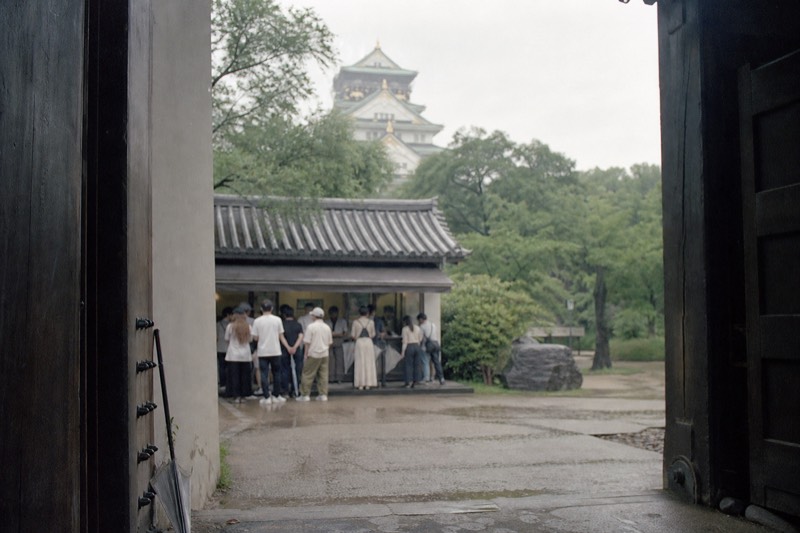
At The Gate
Adult, per person Group rate from 15 paying visitors Free categories at the window
¥1,200
The window price is identical to the online price, so nothing is lost by paying in person. Students and under-15s should buy here, because proof-of-age discounts are handled face to face and not through an e-ticket.
Students with ID and visitors aged under 15, since discounted and free rates are only applied at the window.
See what it covers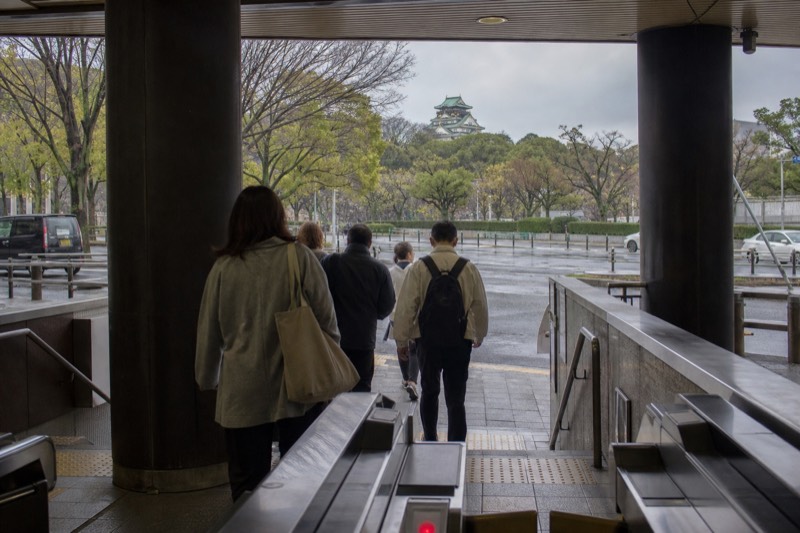
Osaka Amazing Pass
One-day pass On sale 25 March 2026 to 31 March 2027
¥3,500
The one-day pass costs 3,500 yen against the 1,200 yen castle ticket on its own, so it only pays off with two or more other paid sights. Add transport and the maths tips further in its favor.
Visitors packing several paid sights plus metro and bus rides into one day, who will clear the pass price easily.
See what it covers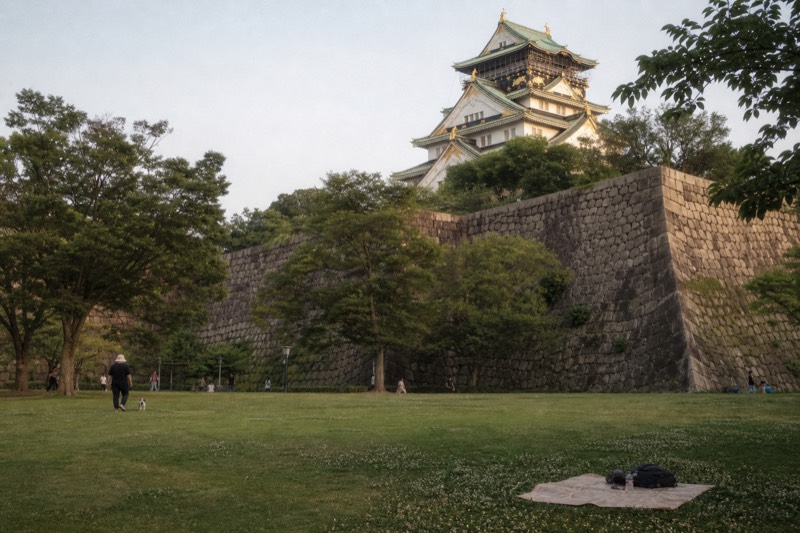
Free Park Areas
No admission charge
Free
The park grounds, moats, stone ramparts and exterior views of the tower cost nothing at all, and they fill a half day on their own. The paid line falls only at the Main Tower entrance and the Toyotomi Stone Wall Museum.
Anyone who wants the castle views, moats and grounds without paying to go inside the buildings.
See what it coversIs The Castle's Observation Deck Worth It If You Have Already Seen Harukas?
Yes, the ¥1,200 admission, covering the tower and stone wall museum, still holds up after Harukas, because the two experiences barely overlap. Harukas sells altitude, while the castle puts a National Special Historic Site in the foreground, and the same ticket covers the Toyotomi Stone Wall Museum, so one admission gets you three attractions.
The reason the comparison is lopsided in the castle's favour is that decks are not fungible. Once you have seen Osaka from 300 metres, a second 300-metre deck is redundant, and even the second-best skyscraper view in the city is largely the same city. The castle view cannot be gotten anywhere else at any price: the geometry of the moats, the inner gate enclosures, the sweep of the park toward Osaka-jo Hall, and the tower's own golden shachihoko dolphin ornaments close enough to see their scales. The castle museum's own FAQ points visitors to the 8F deck and the 2F life-size shachihoko replicas as the photo spots, and both are inside the one ticket.
The stacking logic works in the other direction too. A traveller doing the castle properly, tower plus stone wall museum, spends 50 to 60 minutes inside by the museum's own estimate, or about 1.5 hours at a proper pace. That leaves a whole afternoon for a skyscraper deck afterwards, and the two pair naturally: castle in the morning before the queues build, Harukas or Umeda Sky at dusk when the city lights come on. Doing them in the reverse order wastes the castle's 9:00 opening, which is the quietest hour the tower has all day.
One planning note that belongs here and nowhere else in this article: the entry ticket sold on the operator's live listing is an e-voucher, QR entry, valid 30 days, with no fixed time slot and no set viewing time limit once you are inside. That flexibility matters when your day plan is deck plus deck, because the second deck's queue is the unpredictable one, and the castle voucher does not lock you to an hour. If you want a human guide around the grounds instead, the castle guided walking tours rundown covers that separate product, whose base price does not include tower admission, so the two stack rather than substitute.
Which Deck Is Best For Photos At Sunset?
For sunset photos the castle deck is the wrong tool in summer: it closes at 18:00, with last admission at 17:30, so you are down before golden hour peaks. Umeda Sky Building's open-air rooftop and Harukas 300 are the sunset decks. The castle's compensating move is after closing: the free exterior floodlighting runs sunset to 00:30, and the tower turns cherry-pink until midnight on the single night the cherry opening is declared.
Winter visitors get the castle's secret best slot. With sunset in Osaka in December and January arriving in the late afternoon, a 16:30 entry to the tower puts you on the 8F deck exactly as the western sky ignites over the city, with the moats catching the last colour below. In June the same entry is full daylight, and by the time the sky turns interesting the tower is closed and the queue may already have been capped. The castle's own hours warning, that the ticket-purchase line can be restricted before 17:30 depending on conditions, bites hardest in high season, so late entries gamble.
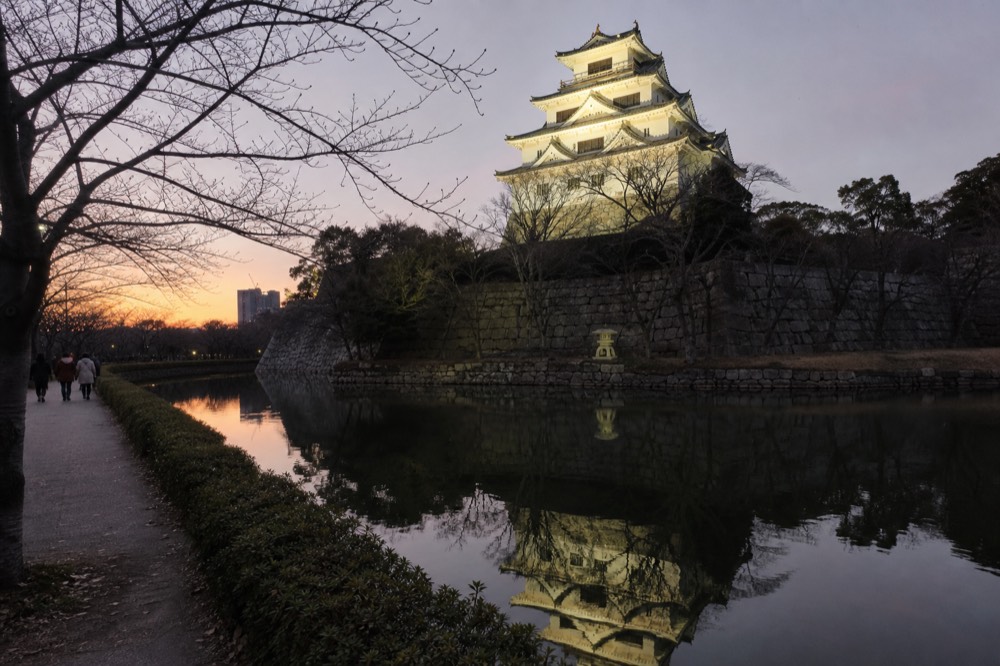
The after-dark half of the castle visit is free, and it is the part most deck comparisons forget. Once the tower closes, the exterior illumination begins, lit gradually over about an hour after sunset and running until 00:30, switched off on one inspection day a year. From the inner moat path, the floodlit keep above dark water outperforms most glass-deck skylines for a single frame, and it costs nothing. Travellers chasing the full after-dark castle picture, including the paid winter illumination events when they run, should read our castle at night guide for the timing mechanics.
For the skyscraper side of sunset, one structural fact helps: Osaka's deck inventory is stable. No new observation deck has opened or been announced for the city, so the three-way comparison below holds. lists no new public observation decks opening in the 2025 to 2027 window, so the four-deck comparison you are reading now is not about to be invalidated by a new supertall. Harukas 300 remains the altitude pick, and the Abeno district's own tourism materials describe the deck and its access on the official Osaka tourism site.
What Does The Castle's 8F Deck Look At, Floor By Floor On The Way Up?
You reach the 8F by an up-only lift direct to 5F, then stairs, passing the Summer War of Osaka folding screen floor, the Hideyoshi exhibits and the closed 6F corridor. Photography is banned only on 3F and 4F. The deck itself is about 50 m above ground, and its foreground is the Honmaru, the inner moat, the Gokurakubashi bridge and the park, with the modern Osaka skyline beyond, two eras in one frame.
The route up is the deck's hidden asset, because a castle deck ride is a museum tour in disguise. The floor guide runs 7F on the life of Toyotomi Hideyoshi, 6F a closed corridor with no viewing floor, 5F the world of the Osaka Summer War folding screen with video and miniature models, 4F and 3F on Hideyoshi and his era, 2F a castle information corner with the life-size shachihoko replicas, and 1F the entrance, theater room and museum shop. The theater room was renewed in March 2025 and runs five programmes with Japanese, English, Chinese and Korean subtitles. A traveller who walks all of that and then steps onto the 8F deck has earned the view in a way no express lift to a skyscraper roof replicates.
From the top, the geometry tells the castle's story. Below to the front, the Gokurakubashi bridge funnels visitors across the inner moat, the same approach every attacker since 1615 would have had to solve. The stone ramparts radiating outward are the Tokugawa rebuild, begun in 1620, and the museum's own curatorial column notes the Tokugawa keep was about 58 m tall, roughly 3 m taller than today's reconstruction, so the view you are photographing is one a 17th-century samurai would recognise in outline, minus the Osaka Business Park towers behind you. That coexistence of the 1620s and the 2020s in a single frame is the castle deck's signature shot, and it exists nowhere else in the city.
Practical notes that complete the picture: free audio guides in Japanese, English, Korean and Chinese are lent from the 1F and 5F counters, reception 9:00 to 17:00, return by 17:30, numbers limited. Accessible toilets are on 2F and in the Honmaru plaza. The 8F deck itself is reachable for wheelchair users under staff guidance, since wheelchairs may use the lift in both directions on every floor, and the exhibition page states wheelchairs can go out onto the deck. For the fuller floor-by-floor detail, including what the ¥1,200 ticket includes, see inside Osaka Castle.
Four questions cover most of what travellers ask when they stack Osaka's decks against each other: which one wins on height, whether the castle's 8F is included in its admission, how high it actually is, and which deck handles sunset best. The short answers are Harukas 300 on height, yes it is included, about 50 m, and it depends on the season. The detail below unpacks each one with the castle's own published figures.
Common Questions About Osaka's Observation Decks
Which Observation Deck Is Best In Osaka?
For pure altitude and panorama, Abeno Harukas 300. For an open-air rooftop experience, Umeda Sky Building. For a view with a castle, moats and a park in the foreground, the Osaka Castle 8F deck, which also includes a full history museum and the Toyotomi Stone Wall Museum in its ¥1,200 admission. The castle loses on height, about 50 m above ground, and wins on what you are actually looking at.
Is The Osaka Castle Observation Deck Included In The Ticket?
Yes. The ¥1,200 adult admission to the Main Tower covers the whole museum route up to the 8F observation deck, plus the Toyotomi Stone Wall Museum in the basement. There is no separate deck-only ticket and no separate stone wall museum price; the castle's own pages state the tower admission fee includes both venues.
How High Is The Osaka Castle Observation Deck?
About 50 m above ground, per the castle museum's own exhibition page. That makes it the lowest of Osaka's four famous decks, well below Abeno Harukas 300 and Umeda Sky Building. The trade-off is the foreground: moats, stone ramparts and a 105.6-hectare park instead of a business district.
Can You Take Photos On The Osaka Castle Observation Deck?
Yes. Photography is free everywhere except floors 3F and 4F, where Important Cultural Properties are displayed. The castle's own FAQ names the 8F observation deck and the 2F life-size shachihoko replicas as the recommended photo spots. Tripod use is not addressed on the castle's official pages, so plan hand-held.
Which Osaka Deck Is Best At Sunset?
In winter, the castle deck can work, because a 16:30 entry catches golden hour before the 18:00 close and the 17:30 last admission. In summer the skyscraper decks win, since the castle closes before the sky turns. Either way, the castle's free exterior floodlighting runs from sunset to 00:30, giving a strong night shot after the tower closes.
Is The Castle Deck Or Harukas 300 Cheaper?
The castle deck is generally the cheaper visit, since its ¥1,200 adult admission is fixed and published by the castle itself, while skyscraper deck prices move more often and should be checked on each operator's own page before you go. The castle ticket also covers a full museum and the Toyotomi Stone Wall Museum, not just the view.