Which Month To Avoid Osaka?
June rain, August heat and the late-March blossom crush at Osaka Castle, with JMA climate normals and holiday calendars to help you pick the month to skip.
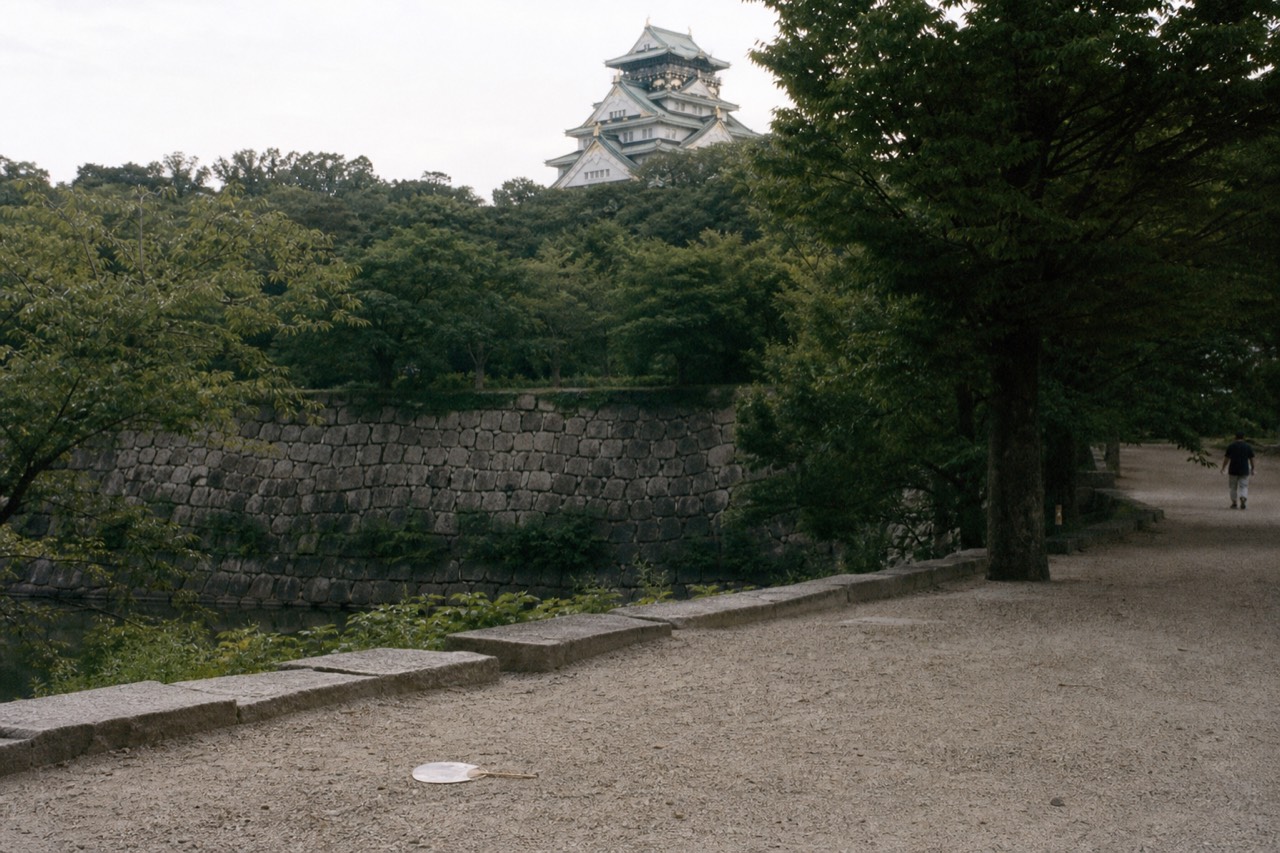
Which Month To Avoid Osaka?
The month to avoid is June. The Japan Meteorological Agency's 1991-2020 climate normals give Osaka 185.1 mm of rain in June, the wettest month of the year, and the rainy season usually covers it. August is the close runner-up for different reasons: a 29.0°C monthly mean, the highest of any month, compounded by holiday crowds around Obon.
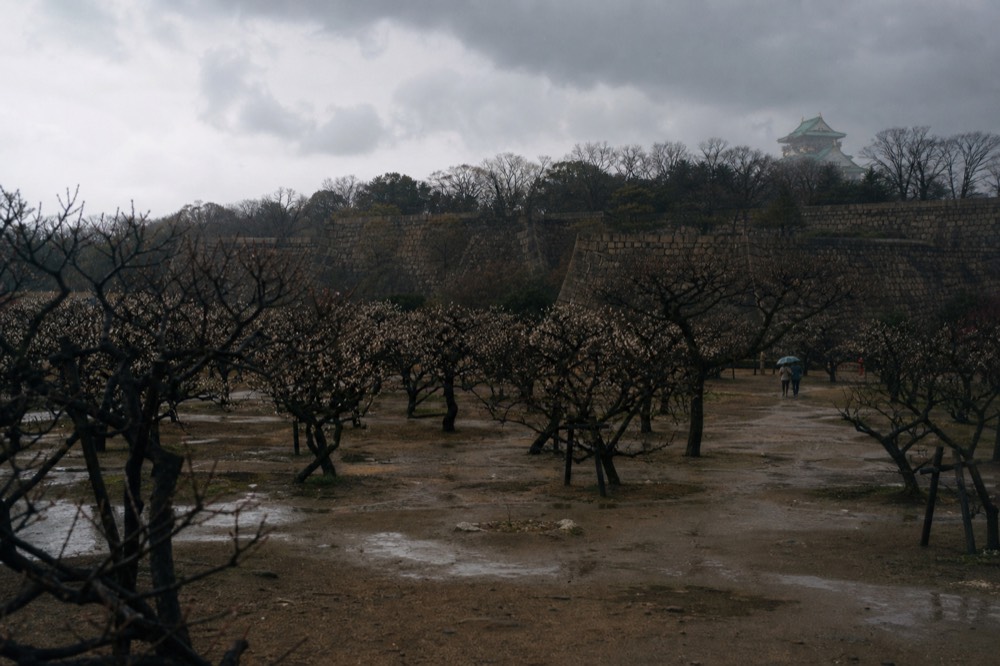
June wins the avoid award on the numbers. The JMA's published normals for Osaka city, the 30-year averages the agency uses as its baseline, put June's monthly precipitation at 185.1 mm, ahead of July's 174.4 mm and September's 152.8 mm. Monthly mean temperature sits at 23.6°C, so it is not that June is cold; it is that it is warm, grey and drizzling, often all afternoon, for weeks at a stretch.
The timing of the rainy season, the tsuyu, shifts every year, so June is not guaranteed misery. The rainy season in the Kinki region, which includes Osaka, usually runs from June into July, a shorter run than usual. But the odds are against you: the normals themselves are the average of thirty years of exactly this pattern.
There is a second reason June is the weakest month for a castle-centred trip: it sits in the dead zone between the two events that make the park worth timing a visit around. The cherry season is finished, the late-blooming yae-zakura at Tamatsukuri-guchi long past, and the summer festivals have not started. You get rain, a green park, and no seasonal payoff. If your dates are flexible and you are choosing between June and almost anything from October to April, June loses.
Why Is June The Rainiest Month In Osaka?
Because the East Asian rainy season, the tsuyu, parks its stationary rain front over Kinki in June. The JMA 1991-2020 normals record 185.1 mm of rain for Osaka in June against 113.0 mm in August and 101.9 mm in April, and June's mean temperature of 23.6°C turns that rain humid rather than refreshing.
The mechanics are stable from decade to decade, which is why the normals look the way they do. A seasonal front stalls along the Japanese archipelago and Kinki sits under it. In 2026 the private forecaster tenki.jp reported the JMA's provisional declaration of a 4 June start and an 8 July end for Kinki, a compact season, but travellers posting that summer described it as still drizzly every afternoon even so. The JMA publishes its own declarations, and the agency's climate data is the reference point this site uses for every temperature and rainfall figure here, via its ClimatView normals page for Osaka.
Here is the full year as the agency's normals state it, so you can see the avoid months and the good ones side by side:
| Month | Mean temperature | Precipitation |
|---|---|---|
| January | 6.2°C | 47.0 mm |
| February | 6.6°C | 60.5 mm |
| March | 9.9°C | 103.1 mm |
| April | 15.2°C | 101.9 mm |
| May | 20.1°C | 136.5 mm |
| June | 23.6°C | 185.1 mm |
| July | 27.7°C | 174.4 mm |
| August | 29.0°C | 113.0 mm |
| September | 25.2°C | 152.8 mm |
| October | 19.5°C | 136.0 mm |
| November | 13.8°C | 72.5 mm |
| December | 8.7°C | 55.5 mm |
What does June rain actually do to a castle visit? Less than you might fear, and more than you might hope. The Main Tower is indoors, the Osaka Castle Toyotomi Stone Wall Museum is underground, and both are covered by the same admission, so the ticketed core of the visit survives the weather. What does not survive it is everything around the ticket: the walk from the station, which the castle museum's own map gives as roughly 18 to 21 minutes on foot from every rail option, in rain the whole way. The open-air park shuttle, when you use it, offers little protection in a downpour. Photography from the 8F observation deck, about 50 m above ground, collapses into haze.
One more June note, and it is practical rather than climatic. Complaints about aggressive crows near park paths appear in traveller reports from late March to early July, nesting season, which overlaps June. It is a small thing, but small things add up in a month that already starts with a deficit.
Is August The Worst Month For Heat And Crowds?
Yes, August is the heat peak: 29.0°C monthly mean, the highest in the JMA normals, with overnight lows that barely drop and humidity that makes the climb to the 8F observation deck a sweatbox. Obon in mid-August adds domestic crowds to the mix, and recent travellers have described Osaka's August heat as walking into a sauna daily.
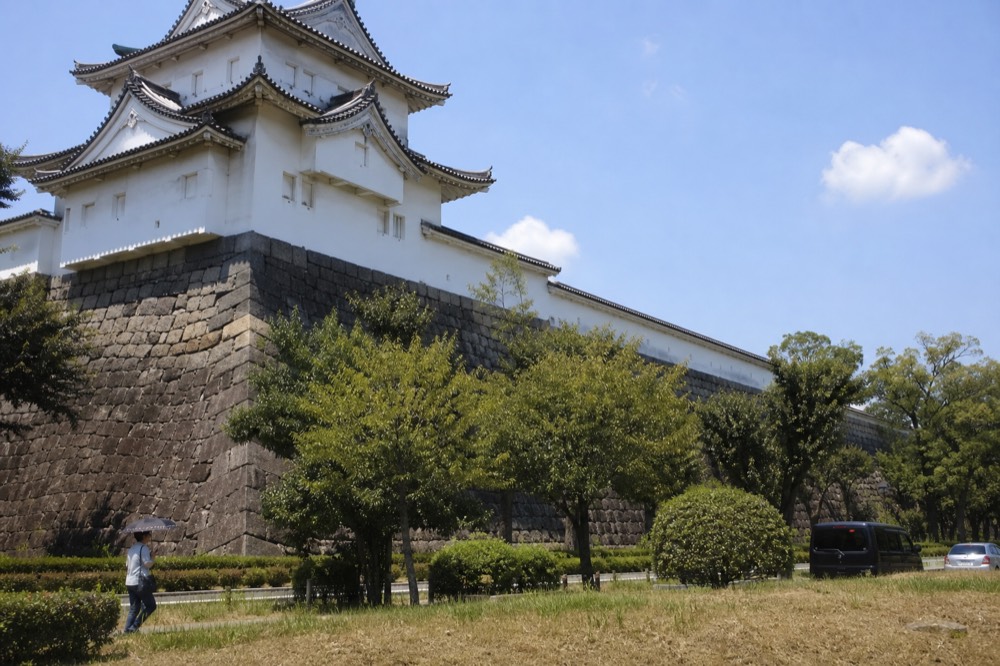
The numbers are blunt. The JMA normals put August's mean at 29.0°C against July's 27.7°C, and those are 24-hour means, not afternoon highs. Visitor voices match the data: posts from late 2025 described the August heat in Osaka as brutal, one comparing it to a sauna every day. The castle's own practical warnings compound it. The museum's FAQ states that viewing space narrows and becomes very crowded the higher you go, and the 8F deck is the top. There is an up-only elevator to the 5th floor for general visitors, but the rest is stairs, and the descent from 8F to 1F is on foot.
August also carries the Obon holiday block in mid-month, when domestic travel surges across Japan. The castle's FY2025 admission figures, 2,813,851 to the Main Tower, provisional and an all-time record, show what the pressure on the site has become even outside peak weeks, and August is inside peak weeks. The castle's guide page warns outright that the ticket-purchase queue can be capped before the 17:30 last admission, which is the polite official phrasing for: on busy days, latecomers get turned away.
If August is your only window, do not skip the castle over it. Time it. The museum opens at 9:00, the queue builds through the day, and recent chatter on the ticket line says exactly that: very long in the morning but shorter later. Arrive at opening, do the tower first, and retreat to the shade of the park or an air-conditioned museum in the early afternoon. The castle museum's own guide page carries the queue warning and the hours, and it is the page to check before any summer visit.
Are Late March And April The Worst Months For Crowds?
They are the most crowded, not the worst. The cherry season around Osaka Castle draws the year's heaviest numbers, and the park's official viewing window for 2026, the Kan'o Nighter from 20 March to 12 April, 9:00 to 21:00, is the period to expect queues everywhere, with about 3,000 cherry trees park-wide pulling the whole city toward the moats.
Blossom is the complicated case, because unlike rain and heat it is a problem people travel to Osaka to buy. The park does not publish a fixed bloom window; what it publishes is the mechanism. The official Somei-Yoshino specimen tree for all of Osaka stands inside Nishinomaru Garden, and when the JMA observes 5 or 6 flowers open on that tree, the city's cherry-blossom opening is declared. In 2026 in 2026 the JMA recorded full bloom on 3 April, an observation published after the blossom peaked, and by late April visitors were still posting that the tower area was extremely crowded, buying a shrine seal quickly and leaving rather than lingering.
So the honest advice splits by what you want. If blossom is the point of your trip, accept the crowds and go; a full-bloom Nishinomaru Garden with the floodlit tower behind it is the single best scene the park offers all year, and visitors in 2026 called the framed view from the garden exactly that. If blossom is a bonus rather than a goal, the week either side of the JMA's full-bloom declaration is the single most avoidable stretch of the calendar. You can track the declaration itself through the JMA's cherry-blossom data page, which publishes the observed dates each year.
One crowd factor that compounds the blossom weeks: the free exterior illumination runs from sunset until 00:30 every night, so the evening crowd does not disperse at closing time the way it does at most attractions. The tower stops admitting at 17:30, but the park fills again after dark.
Should You Avoid Golden Week And The Holiday Blocks?
Yes, if you have any choice in dates. Golden Week, in late April and early May, is the densest domestic travel block of spring: every queue warning the castle issues applies double. September adds Silver Week, and September brings a rare run of public holidays, which recent travellers described as leaving the city booked solid.
Golden Week is the classic avoid-date for all of Japan, and the castle is one of the places it bites hardest, because it lands in pleasant weather with the blossom crowds barely faded. The queue-capping warning on the castle's guide page exists precisely for weeks like this. Traveller chatter from Golden Week 2026 was blunt about it: crowds at the castle were described as insane, the queue capped early. The castle takes no advance reservations for admission at the gate, which means the queue is the queue, though tickets can be bought ahead through the museum's own online partner.
Silver Week is the autumn sibling, formed when Respect for the Aged Day and the Autumnal Equinox Day land close enough to create a bridge holiday. It happens rarely, and 2026 produced the first five-day version since 2015. Reports from September 2026 described everything as booked solid and advised avoiding it. The New Year closure is a different problem: the tower is closed 28 December to 1 January entirely, the only scheduled closure of the year, so late December visitors lose the tower altogether rather than fighting a crowd for it.
from $7.69 The from-price you see online and the price at the castle window are the same adult admission, so booking ahead costs nothing extra.
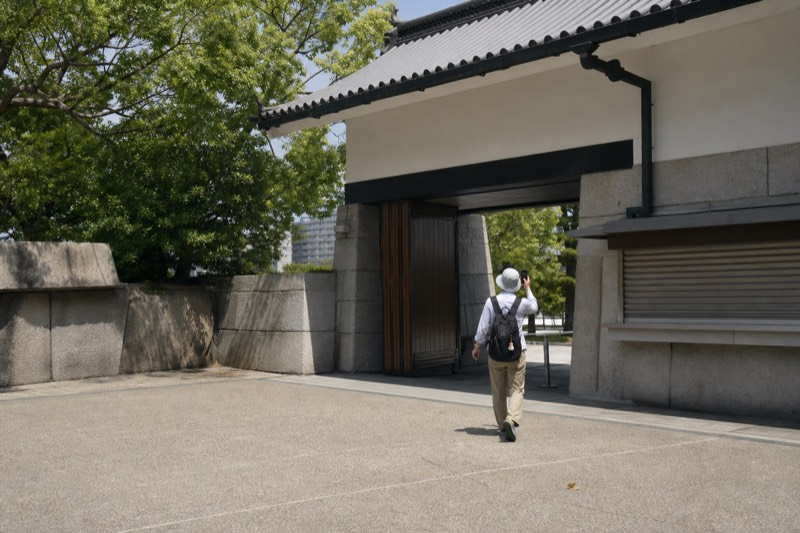
Your ticket into the tower
Official E-Ticket
- Osaka Castle Main Tower entry
- Osaka Castle Toyotomi Stone Wall Museum
- QR code entry
- Valid 30 days
- No fixed time slot
- No viewing time limit
Buying the official e-ticket ahead saves you the ticket-purchase line, not money, since the online price matches the window. You exchange nothing at the gate, you simply show the voucher and go in.
The real flexibility here is the voucher's 30-day validity, with no fixed time slot and no set viewing time limit.
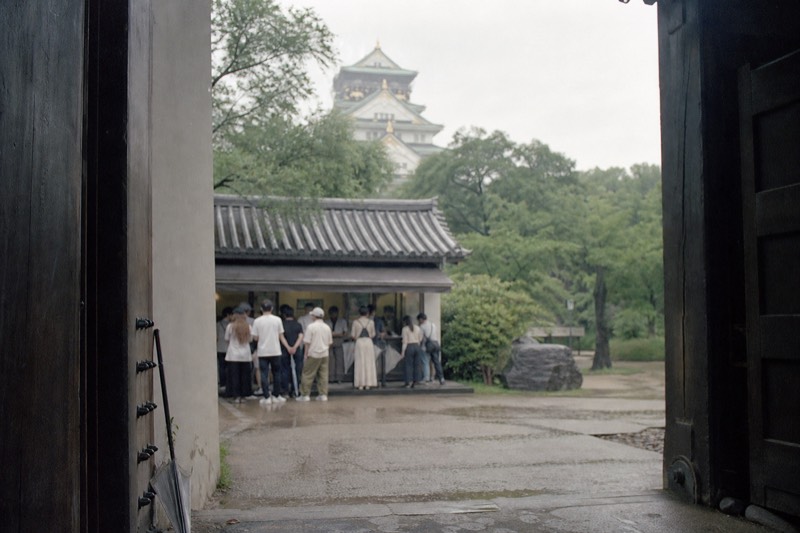
At The Gate
Adult, per person Group rate from 15 paying visitors Free categories at the window
¥1,200
The window price is identical to the online price, so nothing is lost by paying in person. Students and under-15s should buy here, because proof-of-age discounts are handled face to face and not through an e-ticket.
Students with ID and visitors aged under 15, since discounted and free rates are only applied at the window.
See what it covers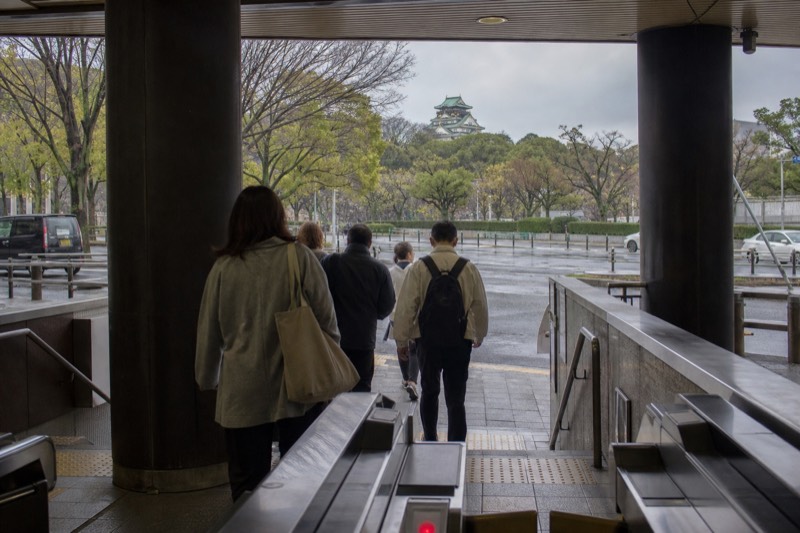
Osaka Amazing Pass
One-day pass On sale 25 March 2026 to 31 March 2027
¥3,500
The one-day pass costs 3,500 yen against the 1,200 yen castle ticket on its own, so it only pays off with two or more other paid sights. Add transport and the maths tips further in its favor.
Visitors packing several paid sights plus metro and bus rides into one day, who will clear the pass price easily.
See what it covers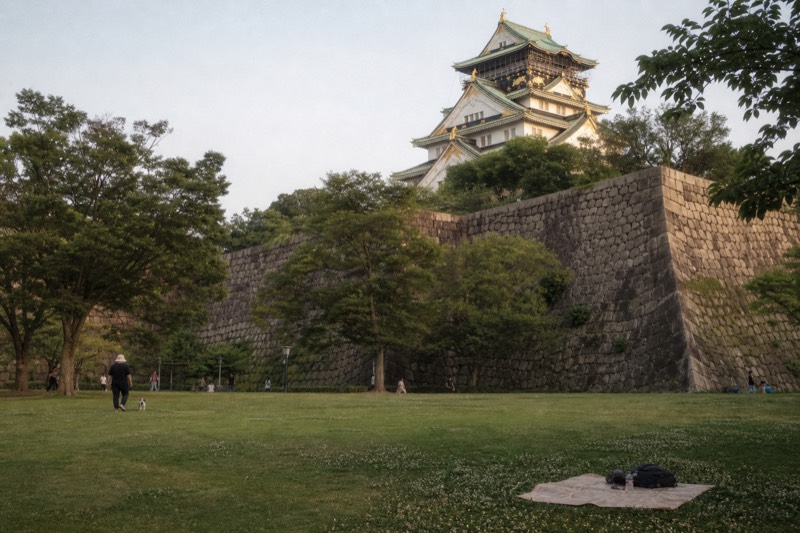
Free Park Areas
No admission charge
Free
The park grounds, moats, stone ramparts and exterior views of the tower cost nothing at all, and they fill a half day on their own. The paid line falls only at the Main Tower entrance and the Toyotomi Stone Wall Museum.
Anyone who wants the castle views, moats and grounds without paying to go inside the buildings.
See what it coversThere is one holiday-adjacent cost worth knowing even before you book, because it applies year-round. Osaka Prefecture revised its accommodation tax effective 1 September 2025: rooms under 5,000 yen per person per night are untaxed, but the old 7,000 yen exemption threshold dropped to 5,000, with bands of 200, 400 and 500 yen above it. Peak months push you up those bands, so the month you pick affects your hotel bill twice, once through price and once through tax. The rates are published on the prefecture's accommodation tax page.
Which Months Are Actually The Best To Visit Instead?
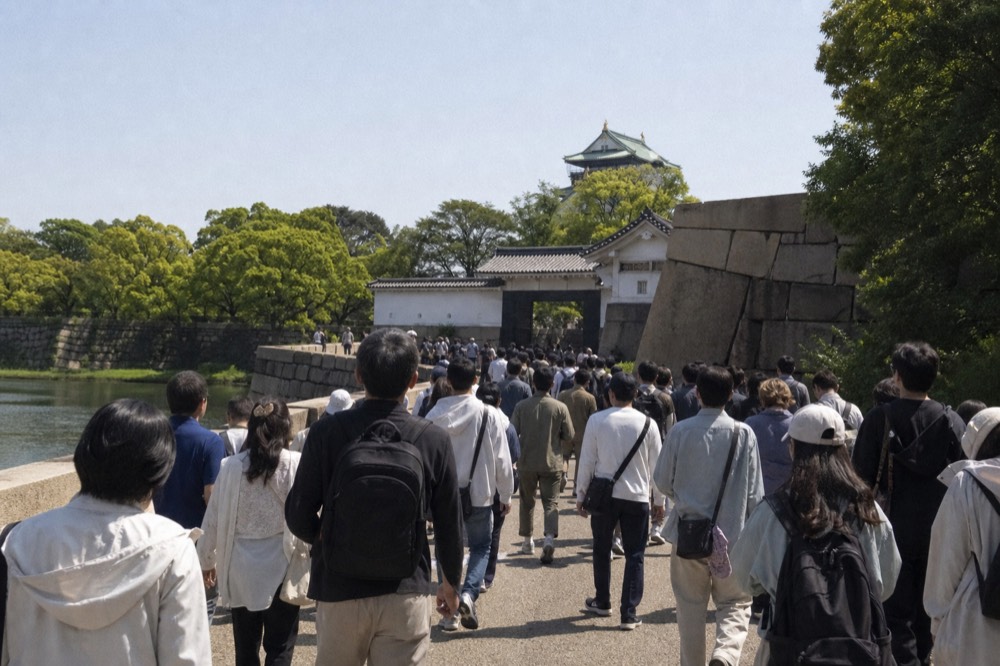
October through early December is the sweet spot for the castle: 19.5°C mean in October, 13.8°C in November, the year's second-driest run after winter, and no holiday block until New Year. February is the sleepiest and cheapest month, 6.6°C mean and 60.5 mm of rain, if you can take the chill.
October is the month recent travellers name unprompted when asked about the best time for Osaka, and the reasons show up in the normals: heat gone, typhoon risk fading, rainfall dropping to 136.0 mm after September's 152.8 mm, and crowds thinner after the summer rush. The castle ticket line shortens, the walk through the park stops being an endurance event, and the tower's 8F deck actually has visibility. November adds autumn colour across the Momiji-en and a 13.8°C mean that makes the 18 to 21 minute walk from any station comfortable rather than a march.
February is the deep-value pick. It is the a dry month at 60.5 mm, and the least crowded; the plum grove on the east side of the inner moat, about 1,245 trees of 105 varieties on the park's own count, begins its run, tracked live per variety on the park's bloom table rather than by any fixed calendar. You trade warmth for space, which for a site whose official warnings are all about crowding is a fair trade. Our fuller take on the upside-down calendar is in the best month to visit Osaka, and the castle-specific angles are covered in how long to spend at Osaka Castle.
A small note on the shoulder months people overlook. Late January and early February sit inside the quietest stretch, but the tower's only annual closure, 28 December to 1 January, means late-December visitors miss the tower entirely. If you are choosing between the last week of December and the first week of January, take January: the castle reopens on 2 January, and you can plan around the closure details in Osaka Castle opening hours.
For readers who want more than a self-guided hour inside, the guided walking tour of the castle grounds, 1.5 to 3 hours with a live English-speaking guide, private or small group, also behaves better outside the crush months, since the grounds themselves are what it covers. Its base price does not include tower admission, so the two stack rather than substitute.
To close the loop on the original question, ranked by how much a month costs you in comfort against what it gives back: June first, rain with nothing to show for it. August second, heat and Obon. The full-bloom fortnight and Golden Week third, only because they punish in exchange for real rewards. Late December loses the tower outright. And the months from October to February, quieter, cooler and drier by the agency's own numbers, are when the castle is at its most visitable, which is the quiet argument this site, Osaka Castle Tickets, exists to help you act on.
Skip June above all: 185.1 mm of rain in the JMA normals and a rainy-season front parked overhead. Then avoid August for 29.0°C heat and Obon crowds, and the full-bloom fortnight in early April if blossom is not your goal. The answers below cover each of those in the detail the months deserve, plus the one week of the year the tower closes outright.
Common Questions About Months To Avoid In Osaka
Which Month To Avoid Osaka?
June. The JMA 1991-2020 climate normals give Osaka 185.1 mm of rain in June, the wettest month of the year, and the rainy season usually sits on top of it. August is the runner-up for its 29.0°C mean heat and Obon crowds, and the full-bloom cherry fortnight around early April brings the year's heaviest crowding.
What Is The Rainiest Month In Osaka?
June, at 185.1 mm in the JMA 1991-2020 climate normals, with July second at 174.4 mm. The rainy-season front over Kinki is the cause, and the season's start and end dates shift every year, so check the current declaration rather than assuming a fixed window.
Is August Too Hot For Osaka Castle?
August is the hottest month on the normals at a 29.0°C mean, and the upper floors of the tower get very crowded on top of the heat. It is still doable: arrive at the 9:00 opening, do the tower first, and use the shade and indoor museums for the midday hours.
When Is Cherry Blossom Season At Osaka Castle?
The park publishes a mechanism, not dates: the official specimen tree in Nishinomaru Garden triggers the JMA's declaration for Osaka. In 2026 the JMA recorded full bloom on 3 April, and the park's official night-viewing window ran 20 March to 12 April. Expect peak crowds in that stretch.
Are There Months When Osaka Castle Is Closed?
The Main Tower and the Toyotomi Stone Wall Museum close only 28 December to 1 January, the sole scheduled closure of the year. Nishinomaru Garden, a separate ticket, also closes on Mondays and over 28 December to 4 January.