How Many Times Has Osaka Castle Been Rebuilt?
A dated count of every rebuild: the Toyotomi castle of 1583, the Tokugawa rebuild after 1615, the 1665 lightning fire, and the 1931 public-funded reconstruction you see today.
How Many Times Has Osaka Castle Been Rebuilt?
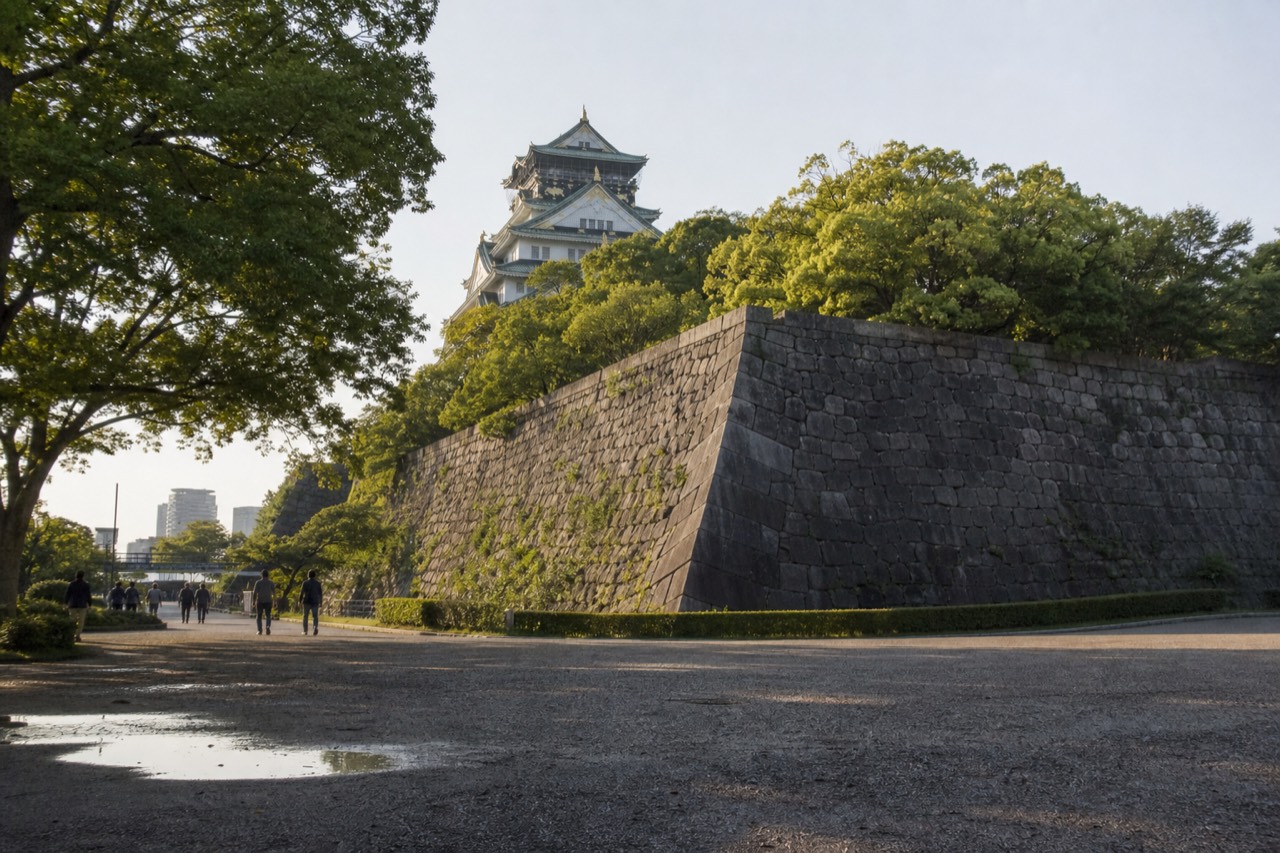
Two full rebuilds, and the keep you photograph today is generation three. Hideyoshi's 1583 castle burned in 1615; the Tokugawa rebuilt it from 1620 over 10 years; that keep burned in 1665 and was never replaced; the present tower rose in 1931 by public subscription, with a 1997 repair restoring it to that appearance.
The reason you see different numbers online is that the question hides three different objects: the castle as a fortress site, the main keep, and the dozens of walls, gates and turrets around it. Each was destroyed and repaired on its own schedule. If you count only keeps, there have been three: the Toyotomi keep, the Tokugawa keep, and the 1931 reconstruction. If you count the whole castle, the answer runs longer, because fires in 1868 and 1945 destroyed buildings that were then restored piece by piece between 1958 and 1966.
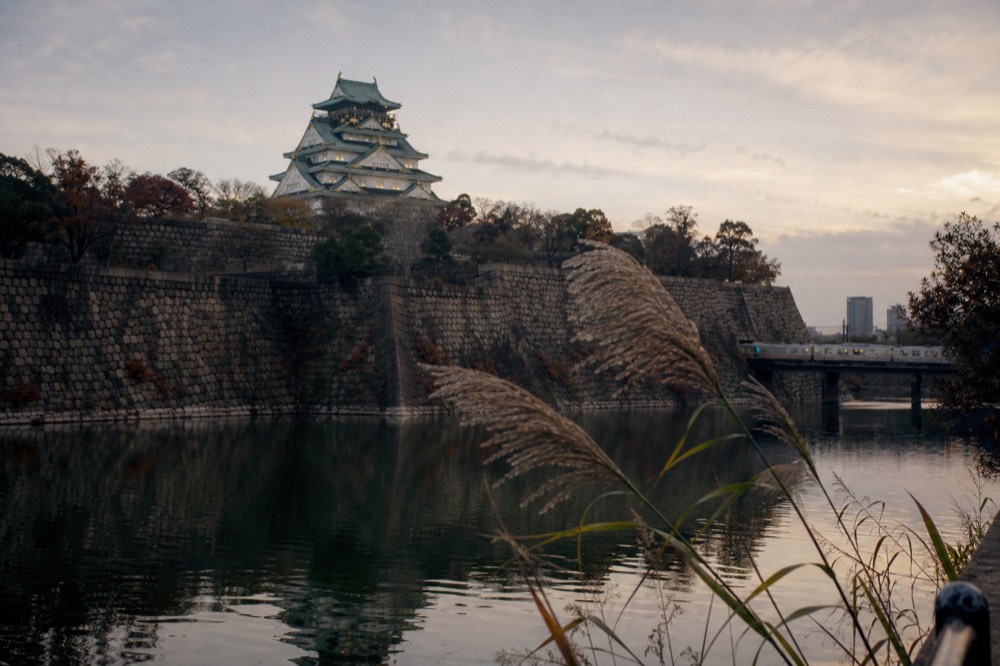
Here is the count laid out in dates, using the park's own published history. Every line below traces to the official Osaka Castle Park history text or the castle museum's own pages.
| Year | Event | What replaced it |
|---|---|---|
| 1583 | Hideyoshi begins building Osaka Castle | The original Toyotomi castle, 4 to 5 times the scale of today's |
| 1615 | Summer War of Osaka, the castle burns | Nothing, for five years |
| 1620 | Tokugawa shogunate begins the rebuild | A new castle, completed after 10 years of work |
| 1665 | Lightning destroys the Tokugawa keep | Nothing; the keep was never rebuilt |
| 1868 | Meiji Restoration fires destroy most buildings | Otemon and Tamon-yagura survive |
| 1931 | Public subscription funds a new tower | The current ferro-concrete keep |
| 1958-1966 | Postwar restoration campaign | Turrets and storehouses rebuilt |
| 1997 | Heisei Great Repair | The tower restored to its 1931 appearance |
One detail in that table changes how you read the castle forever: the Tokugawa rebuild did not simply put new buildings on the old site. It buried the entire Toyotomi castle under a mass of fill, about 6 metres deep at the nakanodan tier, with the deliberate aim of erasing the Toyotomi family's authority. Everything you see above ground today, walls and moats included, belongs to the Tokugawa rebuild. The Toyotomi stonework survived underneath, and part of it is now on display in the Osaka Castle Toyotomi Stone Wall Museum, which opened on 1 April 2025. You can read the whole buried-and-rediscovered story in our guide to inside the Main Tower today.
Who Built The First Osaka Castle, And How Big Was It?
Toyotomi Hideyoshi started construction in 1583 on the site of Ishiyama Honganji, a fortified temple he had taken. The build took roughly 15 years and produced a castle 4 to 5 times the scale of the present one, with a gold-gleaming keep at the centre of the honmaru, described as unrivalled within the three kingdoms.
Hideyoshi had chosen Osaka deliberately. It was the commercial hub of Japan, and from it he could project power over the whole country during his unification campaigns. The scale reflected that ambition: the first castle's honmaru and its walls dwarf anything on the site now, and its keep stood on a three-tier base with a further wall beneath it. The castle museum's curatorial research places the Toyotomi keep at about 40 metres above the tsumenomaru surface, roughly 16 metres lower than today's tower at the top, yet it earned its "unrivalled" epithet because of how it was staged, not raw height.
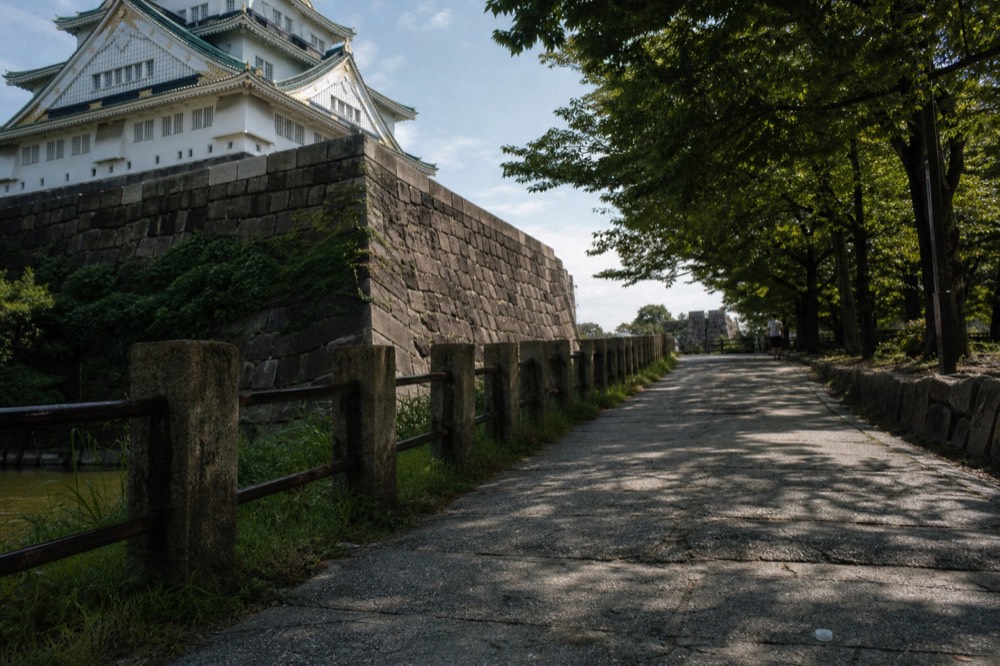
This first castle is also the one that popular culture keeps returning to. A new NHK taiga drama for 2026 has renewed public interest in the Toyotomi story in Hideyoshi and his family, and a linked special exhibition toured Nagoya, the Osaka Museum of History and Tokyo through 2026, per the exhibition's own site. The keep inside the tower tells this story floor by floor, with the life of Hideyoshi on 7F and the Summer War of Osaka folding screen on 5F. For the family behind it all, see our piece on who used to live in Osaka Castle.
Admission to the Main Tower is ¥1,200 for adults, or from $7.69 on the e-ticket, and that same ticket includes the Toyotomi Stone Wall Museum, where the buried first-generation wall is exposed.
What Happened In 1615 And Why Was The Castle Rebuilt A Second Time?
The Summer War of Osaka destroyed the Toyotomi house in 1615 and burned the whole castle. The Tokugawa shogunate then began a full rebuild in 1620 that took 10 years, raised a keep 15 metres taller than Hideyoshi's, and buried Hideyoshi's castle under fill to erase it. That second keep burned in a 1665 lightning strike.
The 1620 rebuild was less a repair than a political act. The shogunate moved enormous volumes of earth across the entire site, cut deeper moats, built entirely new stone walls, and raised a keep of about 58 metres, computed from period drawings, so its top sat near 89 metres elevation, about 3 metres above today's tower. The result, in the park's own words, was completely different from Hideyoshi's castle. The buried original is why the Stone Wall Museum can exist at all: the tsumenomaru wall, the private quarters of Hideyoshi, One, Yodo-dono and Hideyori, was rediscovered in 1984 about a metre below today's surface and is now the centrepiece of the museum, which the ¥1,200 tower ticket includes.
The second generation's end was almost casual. Lightning struck the Tokugawa keep in Kanbun 5, 1665, and it burned to the ground, and the shogunate simply never rebuilt it. From then until the Meiji era Osaka Castle functioned as a sprawling administrative fortress with no keep at all, until the fires of 1868 destroyed most of the remaining buildings too, sparing only parts such as the Otemon and the Tamon-yagura. If you want the destruction story in full, including the question of who dealt the final blow, read who destroyed Osaka Castle.
Why Was The Tower Rebuilt In 1931?
The 1931 tower was a citizen-funded reconstruction promoted by Mayor Seki Hajime, built by public subscription from the people of Osaka. It is a ferro-concrete building of five exterior tiers and eight interior floors, and it has been a museum since the day it opened.
This is the part most visitors get wrong. The current keep is not a restoration of a surviving medieval building, and it makes no attempt to hide that: it is a modern museum in the shape of a keep, and it was intended as one from the start. The citizens of Osaka paid for it themselves during the Great Depression era, an act of civic pride that the castle's own history pages highlight. The park itself opened on 7 November 1931, the same year, and the whole site had been turned from military land into a public park.
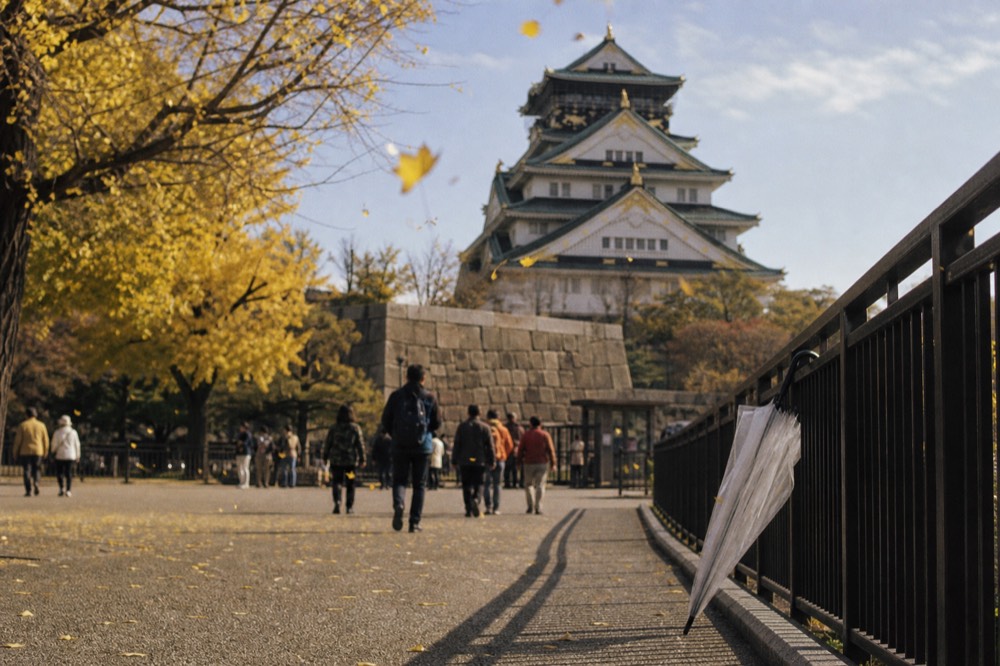
The engineering choice had consequences that saved it later. The 1931 designers built the tower so that it does not load the old tenshudai, the keep's stone foundation mound. During the Pacific War, a bomb landed a few metres north of the tower in the heaviest raid, on 14 August 1945, the day before the surrender, and caused visible slippage in the tenshudai stone wall from its north face round to its east. Because the tower carried none of the load, it survived. Corrective work on the distortion was carried out in 1964.
from $7.69 The from-price you see online and the price at the castle window are the same adult admission, so booking ahead costs nothing extra.
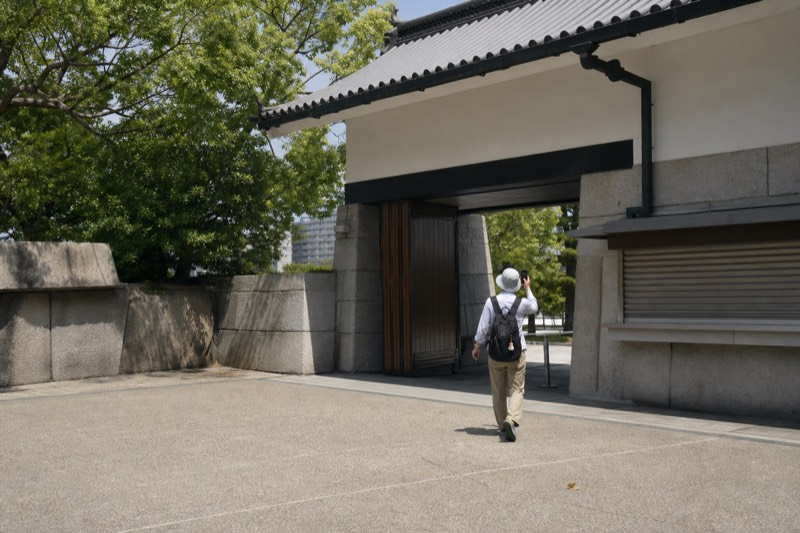
Your ticket into the tower
Official E-Ticket
- Osaka Castle Main Tower entry
- Osaka Castle Toyotomi Stone Wall Museum
- QR code entry
- Valid 30 days
- No fixed time slot
- No viewing time limit
Buying the official e-ticket ahead saves you the ticket-purchase line, not money, since the online price matches the window. You exchange nothing at the gate, you simply show the voucher and go in.
The real flexibility here is the voucher's 30-day validity, with no fixed time slot and no set viewing time limit.
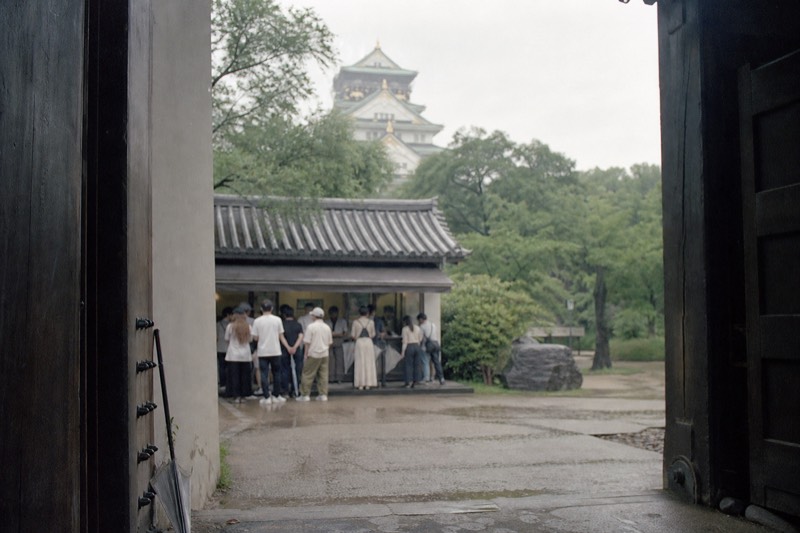
At The Gate
Adult, per person Group rate from 15 paying visitors Free categories at the window
¥1,200
The window price is identical to the online price, so nothing is lost by paying in person. Students and under-15s should buy here, because proof-of-age discounts are handled face to face and not through an e-ticket.
Students with ID and visitors aged under 15, since discounted and free rates are only applied at the window.
See what it covers
Osaka Amazing Pass
One-day pass On sale 25 March 2026 to 31 March 2027
¥3,500
The one-day pass costs 3,500 yen against the 1,200 yen castle ticket on its own, so it only pays off with two or more other paid sights. Add transport and the maths tips further in its favor.
Visitors packing several paid sights plus metro and bus rides into one day, who will clear the pass price easily.
See what it covers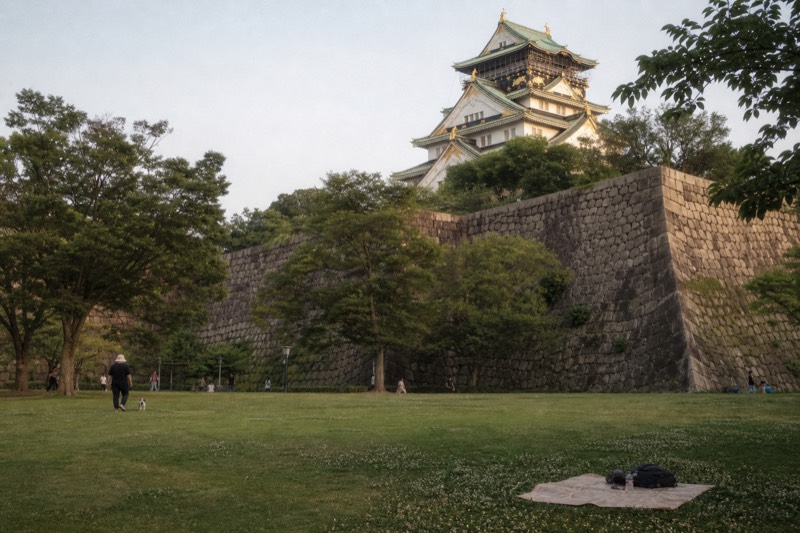
Free Park Areas
No admission charge
Free
The park grounds, moats, stone ramparts and exterior views of the tower cost nothing at all, and they fill a half day on their own. The paid line falls only at the Main Tower entrance and the Toyotomi Stone Wall Museum.
Anyone who wants the castle views, moats and grounds without paying to go inside the buildings.
See what it coversThe 8F observation deck, about 50 metres above ground, is the reward at the top of the 1931 building, and the route up passes the museum floors on the way. That is the practical reason the tower ticket is a museum ticket: you are walking through the only generation of keep that survived the twentieth century.
Was The Castle Rebuilt After World War II?
Yes, but in pieces rather than as one project. The tower itself survived 1945 with its stone base damaged; the slippage was corrected in 1964. The other burned structures, the yagura turrets and storehouses, were restored between 1958 and 1966, and the Heisei Great Repair of 1997 restored the tower to its 1931 appearance.
The postwar campaign is the quiet fourth rebuild, though almost nobody counts it, because it restored buildings one by one across nearly a decade. Those restored structures joined the Otemon and Tamon-yagura, and in 1953 thirteen of them were designated Important Cultural Properties: the gates, walls, turrets, powder magazine and well house that give the park its genuine seventeenth-century fabric. Even the wall itself is still under active care: a capstone came off the inner-moat stone wall in May 2025, and Osaka City inspected it and scheduled repair works for March 2026, per a city document. That is routine maintenance on 400-year-old masonry, not a sign of danger.
A guided walk is the most efficient way to read these layers, because the visible evidence is scattered. The Osaka Castle Walking Guided Tour, from $28.85 and rated 4.7 across 262 reviews, is a live English-speaking guide for the castle grounds, 1.5 to 3 hours, private or small group. Its base price does not include tower admission, the listing's own terms say so, so it answers a different question from the entry ticket rather than replacing it. Our guided tours guide compares the options.
Is Any Part Of The Original Toyotomi Castle Still Standing?
No Toyotomi structure survives above ground anywhere, but the original stone walls do, buried under the Tokugawa fill and now partly exposed. The Osaka Castle Toyotomi Stone Wall Museum, opened 1 April 2025, lets you walk down to the tsumenomaru wall of Hideyoshi's castle, rediscovered in 1984 about a metre below today's surface.
The burial depth is the striking number. At the nakanodan tier the Tokugawa builders piled about 6 metres of earth over the old castle, and over the inner moat line a 1969 boring, drilled before the EXPO'70 Time Capsule was buried in the honmaru, struck stone at about 25 metres down. The exposed section in the museum shows fire traces from the Summer War burnt onto the stone faces, backfill stones packed behind the wall for drainage, and repurposed foundation stones carried in from ancient temples. It is the closest anyone can now get to the 1583 castle, and the ¥1,200 tower admission covers both venues on the same ticket.
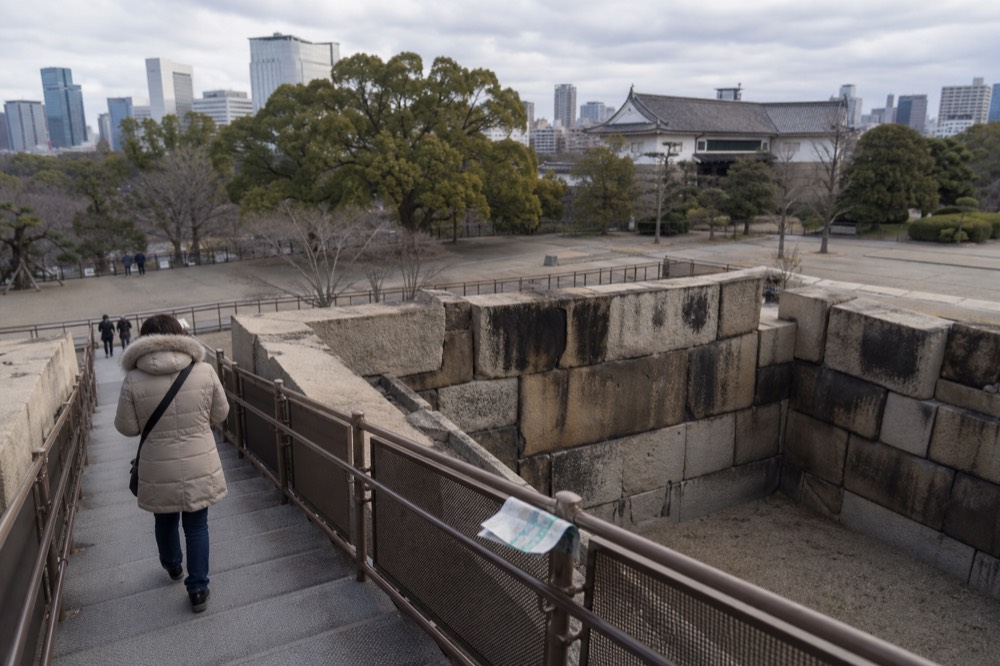
So when someone asks whether Osaka Castle is "real", the honest answer is layered, and we give it in full in is Osaka Castle a replica. The keep is a 1931 reconstruction that never pretends otherwise, the walls and gates are largely genuine Tokugawa fabric, and the Toyotomi original is underground, visitable, and extraordinary. The castle's own claim to be the castle with the greatest stone walls in Japan, printed in its own press material, is about that accumulated masonry, not about any single building.
If you are planning the visit around this history, the practical details are on Osaka Castle Tickets: hours run 9:00 to 18:00 with last admission at 17:30, and the tower closes only 28 December to 1 January. The stone-wall museum keeps the same hours, so a single morning comfortably covers both indoor venues plus a circuit of the walls above them.
Which Rebuild Should You Actually Go And See?
All three, in one visit: the Toyotomi walls underground in the Stone Wall Museum, the Tokugawa walls, gates and turrets above ground throughout the park, and the 1931 tower museum itself. One admission, ¥1,200 for adults, covers the two indoor venues, and the outdoor layers are free to walk.
The sequence works best in that order, too. Start at the Stone Wall Museum to understand what was buried, walk the Otemon and the masugata gates to see what replaced it, then climb the 1931 tower and look down on the whole archaeological sandwich from about 50 metres up. The official park map marks the giant stones at the Sakuramon, Otemon and Kyobashi-guchi masugata, and the castle museum's site at osakacastle.net carries the current exhibition and access detail. Whatever the season, the keep is the same three-generation structure, and the history does not change with the cherry blossoms, only the backdrop.
The count, stated plainly: Osaka Castle has been rebuilt twice as a castle, its keep has seen three generations since 1583, and the tower standing today dates from 1931. Each generation ended in fire, war or political erasure, which is why the dates tell the story better than the number does.
Common Questions About How Many Times Osaka Castle Has Been Rebuilt
How Many Times Has Osaka Castle Been Rebuilt?
The castle has been rebuilt twice, and the present tower is the third generation of keep. Hideyoshi's 1583 castle burned in 1615, the Tokugawa rebuilt it beginning in 1620, that keep burned in 1665 and was never replaced, and the current tower rose in 1931.
Is The Current Osaka Castle The Original?
No. Everything above ground is the Tokugawa rebuild from the 1620s or later, and the keep itself is a 1931 ferro-concrete reconstruction. The only original Toyotomi fabric visible anywhere is underground in the Toyotomi Stone Wall Museum.
Why Did The Tokugawa Bury The Original Castle?
They buried it under about 6 metres of fill at the nakanodan tier to erase the authority of the Toyotomi family, then built an entirely new castle on top with deeper moats and a taller keep.
Did The 1931 Tower Survive World War II?
Yes. A bomb that landed a few metres north in the 14 August 1945 raid caused slippage in the tenshudai stone wall, but because the 1931 design does not load the foundation mound, the tower itself was unaffected. The slippage was corrected in 1964.
How Old Are The Stone Walls At Osaka Castle?
The walls and moats you see above ground date from the Tokugawa rebuild that began in 1620, making them roughly 400 years old. Thirteen structures in the park, including the Otemon and Tamon-yagura, have been Important Cultural Properties since 1953.