What Is Inside Osaka Castle: A Floor-By-Floor Walkthrough
The Main Tower of Osaka Castle is a museum, and what you get for the ¥1,200 adult ticket runs from a subtitled theater on 1F to a 50-metre observation deck on 8F. Here is what is actually on each floor, including the two special exhibitions running right now.
Short answer
Inside the Osaka Castle Main Tower you get eight floors: a theater and shop on 1F, a helmet try-on corner on 2F, Hideyoshi exhibits on 3F and 4F, the Summer War screen on 5F, Hideyoshi's life on 7F and a roughly 50 m observation deck on 8F. The adult ticket costs ¥1,200, about $7.69, and also includes the Toyotomi Stone Wall Museum.
The Osaka Castle Main Tower holds eight floors, a subtitled theater, a helmet you can try on, and an observation deck about 50 m above the ground, and every bit of it sits behind the same ¥1,200 adult ticket (about $7.69). The castle's own guide page says most visitors spend 50 to 60 minutes inside, and 1.5 hours if you look properly. That is the honest scale of the visit, and the floor-by-floor detail below is what decides whether that sounds like your kind of hour.
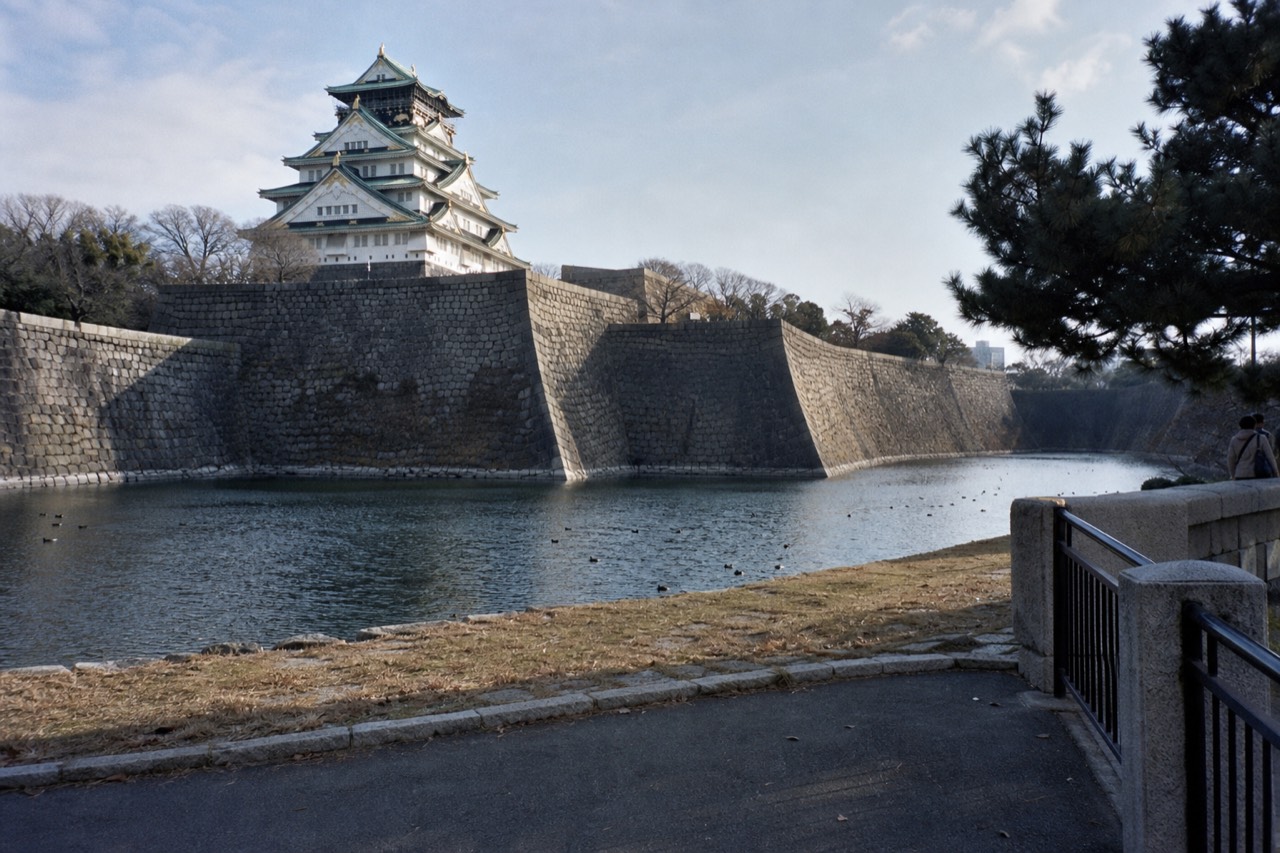
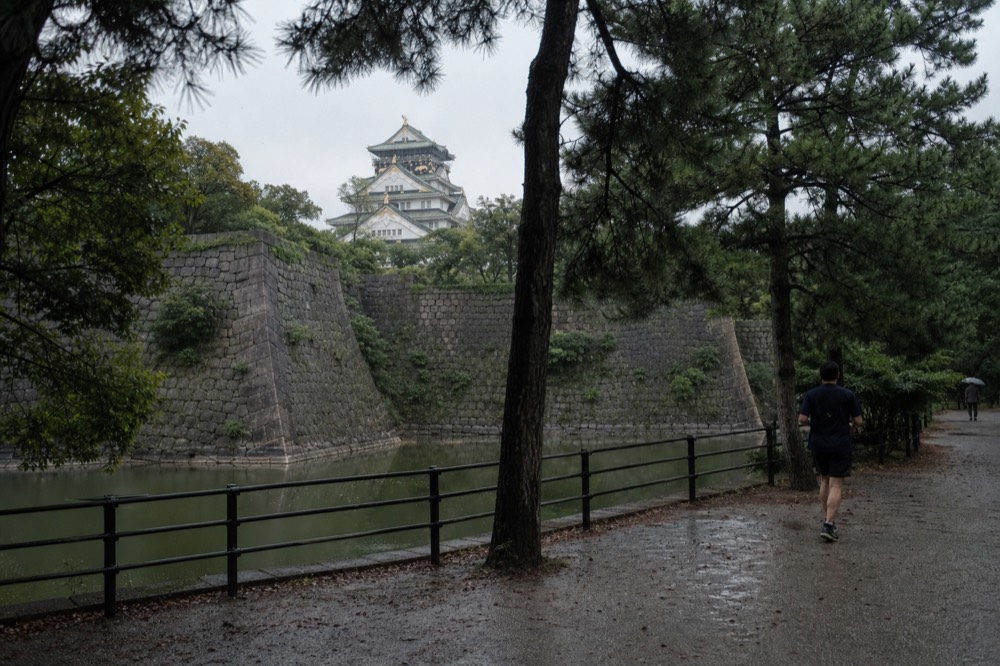
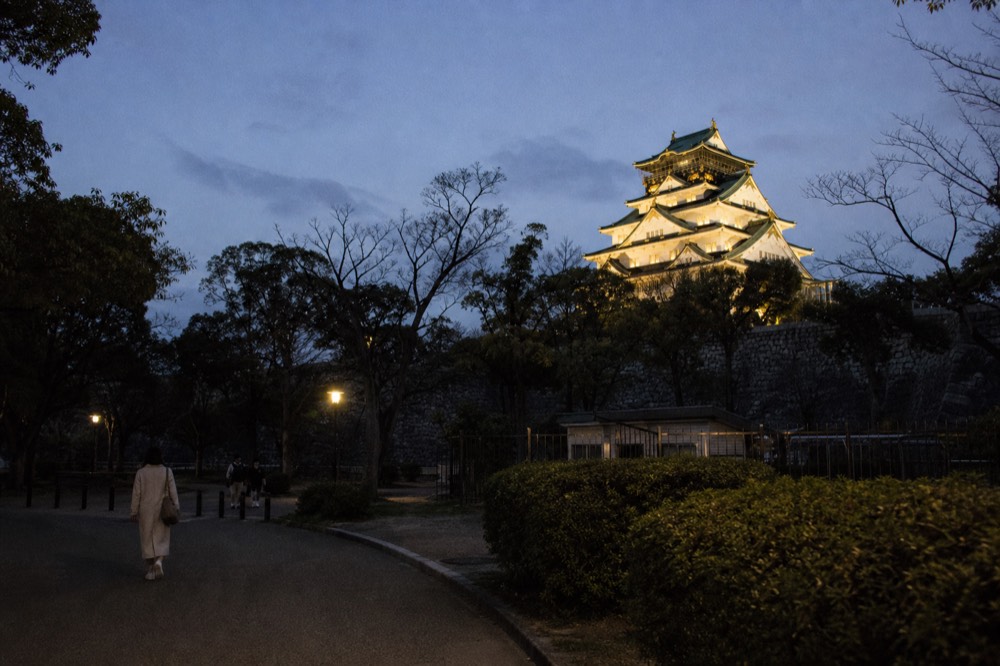
One thing to settle first, because it is the single most common surprise: everything above ground is a 1931 ferro-concrete reconstruction, and the tower has been a museum since the day it was rebuilt. The Tokugawa-era tenshu burned in 1665 and was never replaced. Knowing that changes what "inside" means. You are not walking through feudal rooms; you are walking through a well-run museum wrapped in a spectacular silhouette, with a genuinely rare underground gallery included in the same ticket. If that trade sounds fair, the next sections walk you up from 1F to 8F.
What Is On Each Floor Of The Main Tower?
Inside Osaka Castle the floors split cleanly: 1F holds the entrance, theater room and museum shop, 2F a castle information corner and a paid helmet try-on, 3F and 4F cover Hideyoshi and his era, 5F screens the Summer War of Osaka, 6F is a closed corridor, 7F presents the life of Toyotomi Hideyoshi, and 8F is the observation deck. The castle's own exhibition page is the source for that layout, and it comes with one quirk worth knowing before you climb: 6F is a closed corridor with no viewing floor and no public access, so the "eight floors" you enter are really seven you can use.
Theater renewed March 2025, five programmes in rotation
2F
Castle information corner, helmet and jinbaori try-on
Try-on costs ¥500 per person per session
3F
Hideyoshi and his era, exhibition room
Photography banned
4F
Hideyoshi and his era, exhibition room
Photography banned
5F
The world of the Summer War of Osaka folding screen
Video and miniature models
6F
Closed corridor
Off limits, no viewing floor
7F
The life of Toyotomi Hideyoshi
The historical narrative floor
8F
Observation deck, shop
About 50 m above ground
The 1F theater is worth ten minutes even if you are impatient. It was renewed in March 2025 and shows five short programmes about Hideyoshi and the castle in rotation, with Japanese, English, Chinese and Korean subtitles, so it is the one part of the interior that speaks to you directly in English without needing the audio guide. The 5F screen floor pairs the famous folding-screen depictions of the Summer War of Osaka with miniature models, which is the moment the 1615 siege stops being a date and becomes something you can picture.
Two special exhibitions are running in the tower's 3F and 4F exhibition rooms right now, per the castle museum's own announcements: a Hideyoshi summer special in the 3F room running to 7 October 2026, and an exhibition called Osaka Castle Zoo in the 4F room running to 8 October 2026. A third, a Sengoku siblings exhibition, takes over both the 3F and 4F rooms from 10 October to 23 November 2026. Those rooms are exactly the floors where photography is banned, so the exhibitions arrive with that rule attached.
If you are weighing whether the interior earns the ticket, the honest framing is in our is Osaka Castle worth it guide, and the full price breakdown is in the castle entrance fee guide.
What Can You See From The 8F Observation Deck?
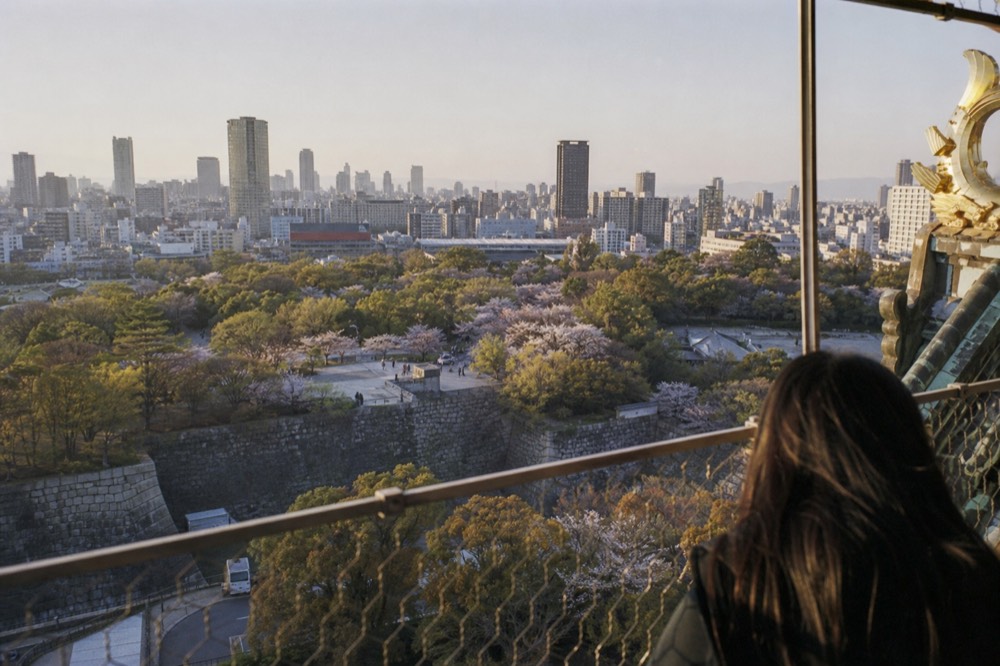
The 8F observation deck sits about 50 m above ground, and on a clear day it takes in the whole castle grounds laid out below, the Osaka city skyline, and the green expanse of Osaka Castle Park stretching away toward the mountains. The castle's own exhibition page uses the phrase "from 50 m above ground, a sweeping view of the vast castle and the city of Osaka", and that is the honest size of it. You are looking out from roughly the height a modern 15-storey building, which is high enough to read the moat system as a design rather than an obstacle.
The deck itself is an open walkway around the top of the tower, and it is where the crowds concentrate hardest. The castle's FAQ states plainly that viewing space narrows and becomes very crowded the higher you go, and this is the stated reason strollers are discouraged upstairs. Expect to wait your turn at the rail on busy days, and expect the queue for the deck to move slowly rather than not at all. There is a second museum shop on 8F, which is a quiet place to stand while the rail clears.
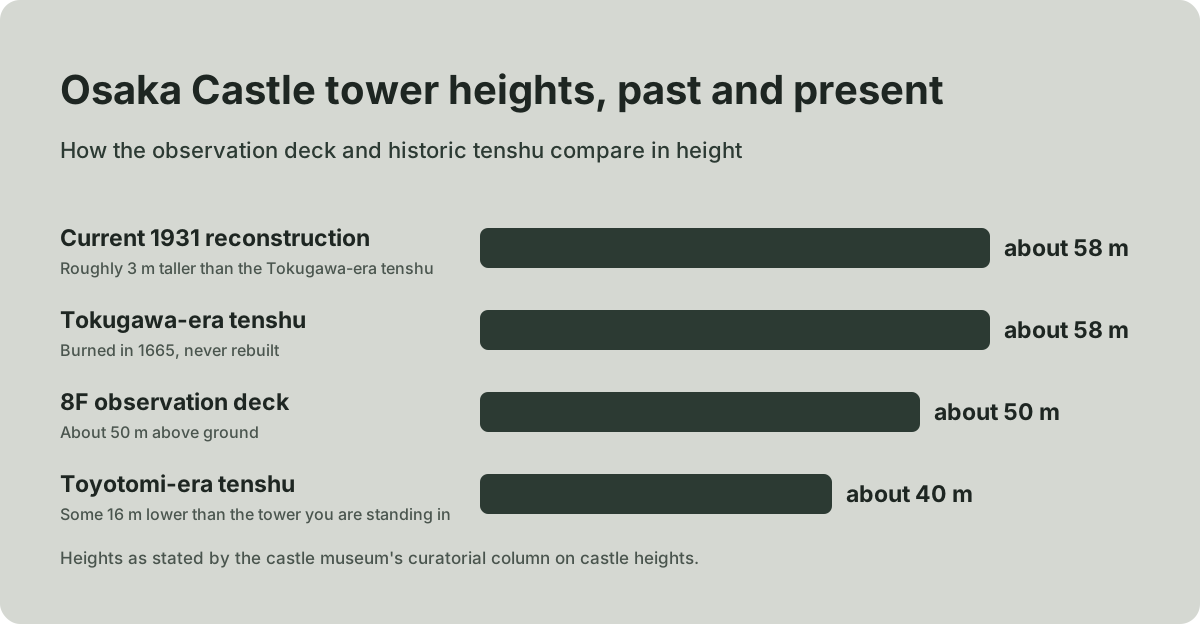
One height fact puts the view in perspective, and it comes from the museum's own curatorial column on the castle's heights: the Tokugawa-era tenshu was about 58 m tall, roughly 3 m taller than today's reconstruction, and Hideyoshi's original Toyotomi-era tenshu was about 40 m above the tsumenomaru surface, some 16 m lower than the tower you are standing in. The shachi ornaments on today's roof sit at 85.9 m elevation. So the deck view is the best view any generation of this castle has ever offered, even though the building offering it is the youngest of the three.
A castle e-ticket bought in advance uses QR entry and carries no fixed time slot, which matters here: the deck is at its emptiest in the first hour after the 9:00 opening and again after 16:00, and a flexible voucher lets you chase whichever window the day gives you.
Is The Inside Of Osaka Castle A Museum Or A Real Castle?
It is a museum in the shape of a castle: the current tower is a 1931 ferro-concrete reconstruction funded by public subscription, everything above ground is the Tokugawa rebuild, and the original Toyotomi castle lies buried under metres of fill, partially visible in the Stone Wall Museum. That is the answer the castle's own history gives, and it is better to walk in knowing it than to feel cheated on floor 3. The 1931 tower was built on the proposal of then mayor Seki Hajime and paid for by the citizens of Osaka, and it became a museum the moment it opened.
The timeline is the part most first-time visitors miss, so here it is in one table from the official park history:
Year
What happened
1583
Hideyoshi begins building Osaka Castle on the site of Ishiyama Honganji
1615
Summer War of Osaka, the Toyotomi castle burns
1620
Tokugawa shogunate begins a ten-year rebuild, 15 m taller
1665
The Tokugawa tenshu burns in a lightning strike, never rebuilt
1931
Citizens' donations fund the current reconstruction
1945
Air raids damage buildings; a near miss slippage still shows in the tenshudai wall
1997
The Heisei Great Repair restores the 1931 appearance
2025
The Toyotomi Stone Wall Museum opens beneath the honmaru
Annual Main Tower admissions, showing the FY2025 provisional record of 2,813,851, which passed the previous FY2017 peak of 2,754,395.
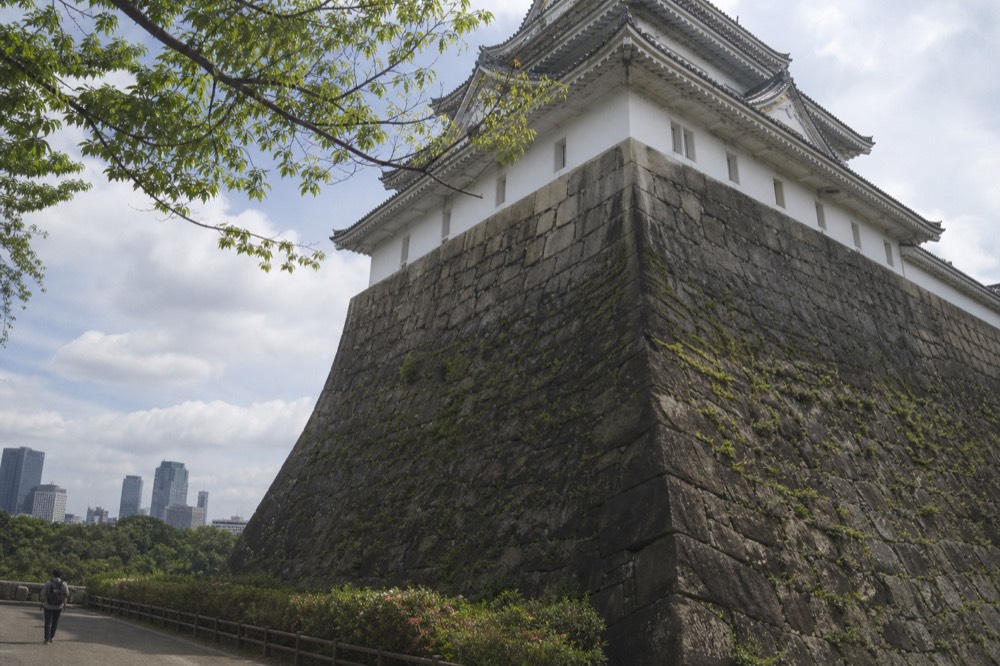
The buried original is what makes the ticket genuinely interesting now. When the Tokugawa shogunate rebuilt, it piled about six metres of fill over the Toyotomi stone walls at the nakanodan tier, deliberately, the official English leaflet says, as if to erase the authority of the Toyotomi family. The wall now displayed protected the tsumenomaru, the private quarters where Hideyoshi and his wife One lived, and where Yodo-dono and Hideyori lived at the end. You can walk down to it in the Osaka Castle Toyotomi Stone Wall Museum, which opened 1 April 2025 and has no separate admission: the ¥1,200 tower ticket includes it. Our Toyotomi Stone Wall Museum guide covers what you look at down there, from fire traces on the stone faces to temple foundation stones repurposed as backfill.
That museum opened in the middle of a wave of Toyotomi attention. The NHK taiga drama Toyotomi Brothers premiered 4 January 2026, and the linked special exhibition toured Nagoya, the Osaka Museum of History and Tokyo through 2026, while the castle's own summer Hideyoshi exhibition sits inside the same wave. Two and a half million people paid to go inside in the record FY2017; the provisional FY2025 figure is 2,813,851, the first time the tower has passed 2.8 million since 1931. The interior is being seen at a volume no previous generation matched.
Can You Take Photos Inside Osaka Castle?
Yes, photography is allowed throughout most of Osaka Castle's museum tower, including the 8F observation deck, the 2F shachihoko replicas, and the helmet try-on corner, and it costs nothing. The only exceptions are floors 3F and 4F, where photos are banned because Important Cultural Properties are displayed there. The rule is stated exactly that way on the castle's own guide page, and the FAQ names the 8F deck and the 2F life-size shachihoko and fukko replicas as the popular photo spots. So the photography story inside the tower is mostly good news: photos are free except on 3F and 4F; 6F is a closed corridor.
The one caution follows from the ban: the two exhibition rooms currently hosting the Hideyoshi summer special and the Osaka Castle Zoo exhibition are on 3F and 4F, so if seeing those shows and photographing them matters to you, the photographs will have to stop at the floor below. The ban also covers the 3F and 4F permanent displays of Hideyoshi-era material, where the protected objects sit.
No photography restriction of any kind has been published for the Toyotomi Stone Wall Museum: neither its own page nor its Japanese or English leaflet states one, so we state nothing here either. The one rule that is documented for that venue is practical rather than photographic: it has no toilets inside, so plan accordingly before you descend.
How Do You Get To The 8Th Floor?
The elevator is up-only for general visitors, running direct to 5F, with stairs for 5F to 8F upward and 8F to 1F downward, while wheelchair users and visitors with walking difficulties may use the lift in both directions on every floor, under staff guidance. The castle's guide page states both halves, and the exhibition page adds that wheelchairs can go out onto the 8F observation deck itself. There is also an outdoor lift up to 1F. So the climb for most visitors is three storeys of stairs on the way up, not seven, and the descent is stairs all the way.
The stairs are the reason the crowd pattern behaves the way it does. People bunch at the 5F lift exit, then thin as they climb, then bunch again at the 8F rail. If you are steady on your feet, going straight to the deck first, either at opening or late afternoon, and then working downward in reverse order, puts the worst congestion behind you before you hit the museum floors. The museum itself suggests the ordinary direction, 1F up, but nothing requires it.
The tower lends 5 wheelchairs for in-building use only, first come first served, with no reservations; more are available from the Osaka Castle Park Center on 06-6755-4146 in limited numbers. Accessible toilets sit on 2F inside the tower, with two more in the Honmaru plaza, and AEDs are stationed at the 1F and 5F information counters. The flat, wheelchair-viable approach is from Tanimachi 4-chome via the Otemon, the one route the castle endorses in those terms.
How Long Does The Inside Of Osaka Castle Take?
The castle's own FAQ says most visitors spend 50 to 60 minutes inside the tower, and 1.5 hours if you look properly, so a realistic budget for the tower plus the Stone Wall Museum is about two hours, with the grounds on top if the weather is kind. The 8F deck and the 1F theater are the two fixed time costs, roughly ten minutes each in ordinary conditions, and the museum floors between them flex to your interest. Reviews and visitor reports from 2025 and 2026 repeatedly land in the same band, 1.5 to 3 hours for tower plus grounds, with exterior-and-park-only visits reported at 45 minutes to an hour.
from $7.69The from-price you see online and the price at the castle window are the same adult admission, so booking ahead costs nothing extra.
Your ticket into the tower
Official E-Ticket
Adult, per person
Osaka Castle Main Tower entry
Osaka Castle Toyotomi Stone Wall Museum
QR code entry
Valid 30 days
No fixed time slot
No viewing time limit
Buying the official e-ticket ahead saves you the ticket-purchase line, not money, since the online price matches the window. You exchange nothing at the gate, you simply show the voucher and go in.
The real flexibility here is the voucher's 30-day validity, with no fixed time slot and no set viewing time limit.
Adult, per personGroup rate from 15 paying visitorsFree categories at the window
¥1,200
The window price is identical to the online price, so nothing is lost by paying in person. Students and under-15s should buy here, because proof-of-age discounts are handled face to face and not through an e-ticket.
Students with ID and visitors aged under 15, since discounted and free rates are only applied at the window.
One-day passOn sale 25 March 2026 to 31 March 2027
¥3,500
The one-day pass costs 3,500 yen against the 1,200 yen castle ticket on its own, so it only pays off with two or more other paid sights. Add transport and the maths tips further in its favor.
Visitors packing several paid sights plus metro and bus rides into one day, who will clear the pass price easily.
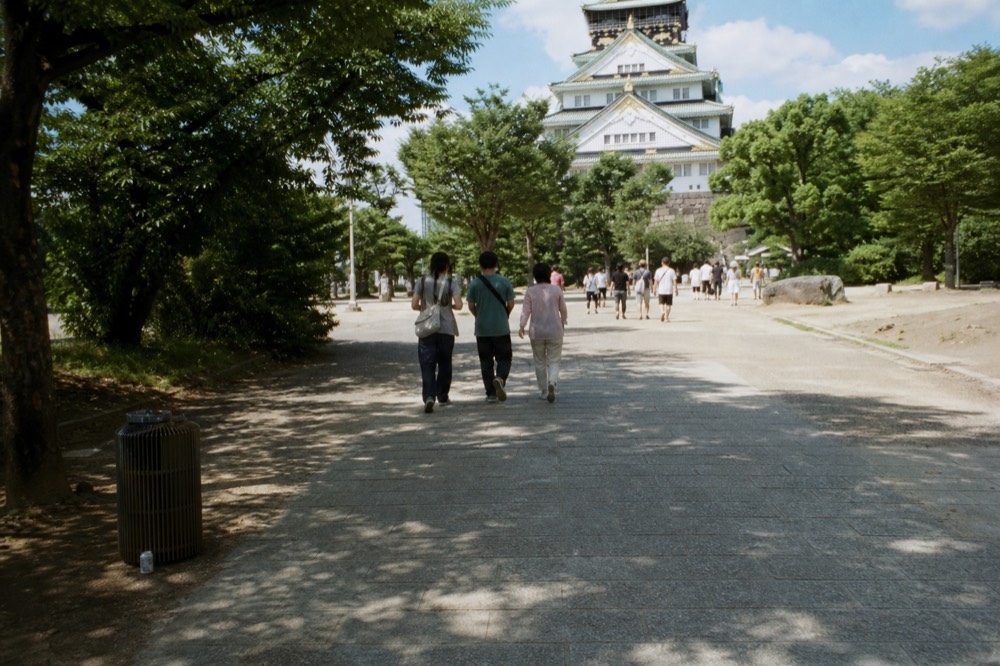
The park grounds, moats, stone ramparts and exterior views of the tower cost nothing at all, and they fill a half day on their own. The paid line falls only at the Main Tower entrance and the Toyotomi Stone Wall Museum.
Anyone who wants the castle views, moats and grounds without paying to go inside the buildings.
A few time facts sharpen the budget. Last admission is 17:30, hours run 9:00 to 18:00, and the guide page warns the ticket-purchase queue may be capped before 17:30, so a late-day visit needs margin, not precision. The museum has answered enough congestion enquiries that it now asks groups to phone ahead with their date and numbers. If your time is tight, the floor you would cut is 7F, which repeats material from the lower floors in narrative form, and the floor you would never cut is the underground Stone Wall Museum, which is the one thing inside the ticket that no other castle in Japan offers.
Our fuller time budget, including the park, Nishinomaru Garden and the food options around the grounds, is in the how long to spend at Osaka Castle guide.
What Practical Rules Apply Inside The Tower?
Inside the tower there are no coin lockers, bags are checked at the ticket counter at ¥100 per item between 9:00 and 17:30 for collection by 18:00, strollers are taken free at the gate, pets are not admitted (assistance dogs excepted), and free audio guides run in Japanese, English, Korean and Chinese from 1F and 5F. Those are the rules as printed on the castle's own guide page, and the audio guide detail is the one most visitors miss: reception is 9:00 to 17:00, return by 17:30, numbers are limited, and the loan is free.
The whole practical picture in one table:
Rule
Detail
Lockers
None inside the tower; use station lockers or your hotel
Bag check
¥100 per item, 9:00 to 17:30, collect by 18:00, large items refused
Strollers
Free check at the ticket-gate entrance, discouraged upstairs
Pets
Not admitted, assistance dogs excepted
Audio guides
Free, JA/EN/KO/ZH, 1F and 5F counters, limited quantity, return by 17:30
Photography
Banned 3F and 4F only, free elsewhere
Helmet try-on
2F, ¥500 per person per session
Payment at gate
Cash, credit cards, e-money and QR all accepted
The tower entry e-ticket is rated 4.5 across 3,768 reviews, and the feedback pattern in those reviews is consistent with what the interior actually is: praise clusters on the deck views, the grounds and the historical storytelling, while the recurring complaint is that the interior is modern rather than feudal. Both halves of that pattern are factually correct. A visitor who wants a guide's voice on the grounds rather than the audio guide's voice inside the tower should read our Osaka Castle guided tours comparison, since a guided walking tour covers the grounds and does not include tower admission, so the two products stack rather than substitute.
That stacking point matters enough to repeat plainly, because it is the one thing the product pages blur. The entry e-ticket is admission only: self-guided, covering the Main Tower and the Toyotomi Stone Wall Museum, no guide and no headphones bundled. The guided walking tour is a live English-speaking guide for the castle grounds, 1.5 to 3 hours, private or small group, and its base price does not include tower admission, the listing's own excludes line says so. A reader taking the walk still needs a ticket to come inside. The Osaka Castle Tickets homepage sells the e-ticket, from $7.69 per adult, which at about 156 JPY/USD is the same ¥1,200 the gate charges: the ticket buys a skipped ticket-purchase line and guaranteed entry, not a discount.
What Is Inside The Toyotomi Stone Wall Museum?
The Stone Wall Museum is an underground gallery where you walk down to a section of the stone wall that ringed Hideyoshi's tsumenomaru, buried under about six metres of Tokugawa fill, unseen above ground anywhere else, and it has been included in the ordinary tower ticket since it opened on 1 April 2025. The layout is a 1F entrance hall, theater room and guidance room, plus a basement floor holding the stone wall exhibition hall. The wall on display was rediscovered in 1984, about one metre below the then-current surface, by the survey that had first found a "mysterious underground stone wall" in 1959.
What you actually look at, from the official highlight list, is masonry and evidence rather than treasure: nozurazumi natural-face stones barely worked by masons, fire traces from the Summer War burnt onto the stone faces, backfill stones packed behind the wall for drainage, foundation stones repurposed from ancient temples, and an early example of the alternating rectangular-stone corner technique. The elevation figures from the curatorial column give the depth away: the 1959-discovered wall top sits at 23.9 m elevation, the 1984-discovered wall top at 29.8 m, and today's honmaru surface at 31.2 to 31.5 m. The ground Hideyoshi and Hideyori walked on lies about one metre below where you will be standing when you queue for the tower.
Practically, the museum keeps identical hours to the tower, 9:00 to 18:00 with last entry at 17:30, and it is closed the same days, 28 December to 1 January. Its own page notes that public access to the wall may be suspended without notice if the stone wall's condition requires it, which is a rare and honest caveat worth checking the news page for before a long trip. Its one amenity gap is toilets: there are none inside, so use the Honmaru plaza facilities first. For everything on the wall's rediscovery and the project that finally exposed it, see the inside Osaka Castle's museum collection guide and the history in our Osaka Castle history overview.
Taken together, the tower floors and the underground gallery answer the "what is actually in there" question with more substance than most castle interiors in Japan offer: a renewed theater, two live special exhibitions, a 50 m deck, and a buried 400-year-old wall, all on one ticket. Whether you go at 9:00 sharp or squeeze in before the 17:30 last entry, the same QR voucher covers both buildings, and the choice between a self-guided visit and a guided walk of the grounds is a choice about how you want the story told, not about what you get to see.
The questions below cover the floor layout, the photography rules, the elevator, the lockers and the modern-reconstruction question, answered from the castle's own guide and exhibition pages. Each answer keeps to the verified facts above, so you can check any detail against the floor guide, the practical rules table or the Stone Wall Museum section without rereading the whole article.
Common Questions About Inside Osaka Castle
What Is Inside Osaka Castle?
Eight floors of museum: a subtitled theater on 1F, an information corner and paid helmet try-on on 2F, Hideyoshi-era exhibits on 3F and 4F, the Summer War of Osaka screen on 5F, a closed corridor on 6F, the life of Hideyoshi on 7F, and an observation deck about 50 m up on 8F. The same ¥1,200 adult ticket includes the underground Toyotomi Stone Wall Museum.
Is The Inside Of Osaka Castle Modern?
Yes. The current tower is a 1931 ferro-concrete reconstruction, built by citizens' donations, and it has been a museum since it opened. The interior is exhibition space, not restored feudal rooms, and reviews that call it modern are describing it accurately. The genuinely old stone lies below ground in the Stone Wall Museum.
Can You Take Photos Inside Osaka Castle?
On every floor except 3F and 4F, where Important Cultural Properties are displayed and photography is banned. The 8F observation deck and the 2F replicas are the popular photo spots, and photography there is free.
How Many Floors Does Osaka Castle Have?
Five exterior tiers and eight interior floors, of which 6F is a closed corridor with no public access, so you can use seven. The general elevator runs up-only to 5F; wheelchairs can use it in both directions on every floor.
Is There An Elevator Inside Osaka Castle?
Yes, an up-only elevator for general visitors direct to 5F, with stairs from 5F to 8F and for the whole descent. Wheelchair users and visitors with walking difficulties may use the lift both ways on every floor, under staff guidance, and can reach the 8F deck.
Are There Lockers Inside Osaka Castle?
No coin lockers inside the tower. Bags are checked at the ticket counter for ¥100 per item, received 9:00 to 17:30 and collected by 18:00, with large items refused. The museum recommends station lockers or your hotel instead.
Should You Buy Your Castle Ticket In Advance?
The gate line can be capped before last admission at 17:30. An e-ticket skips the ticket-purchase queue with QR entry, and the voucher is valid 30 days with no fixed time slot. Check availability for today's date before you go.