Is Osaka Or Kyoto Better?
A base-choice comparison of Osaka and Kyoto: cost, sights, food, day-trip logic and how many days each needs, with the castle ticket priced in yen.
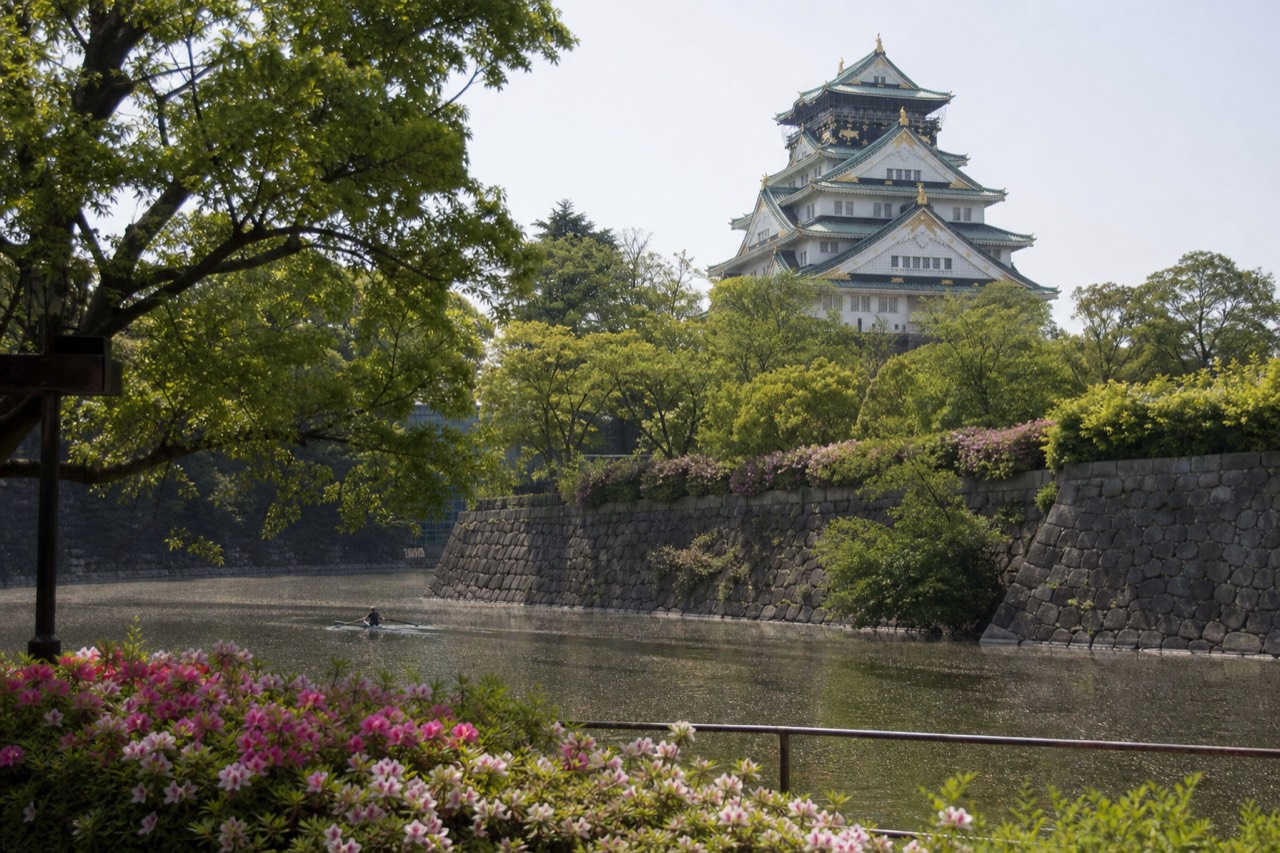
The Main Tower at Osaka Castle admitted 2,813,851 visitors in FY2025, a provisional all-time record, while a Navitime navigation-data analysis reported by Kyodo News in April 2026 found Osaka Castle was the most popular castle among foreign visitors to Japan in 2025. Kyoto has the temples, the geisha districts and the UNESCO density. Osaka has the castle, the food culture and the transport hub that makes Kyoto a 30-minute train ride away. The question "which is better" is really a question about where you sleep, and that is a decision with a price tag and a timetable attached.
Is Osaka Or Kyoto Better?
Neither city wins outright, and the comparison is usually asked the wrong way round: Kyoto is stronger as a sightseeing destination per day, while Osaka is stronger as a base, because it is cheaper to sleep in, better connected for day trips, and holds its own on sights with Osaka Castle, the food districts and the neon waterfront. A traveller with four or more days should do both, sleeping in Osaka and riding the frequent trains into Kyoto.
The case for Kyoto is real and does not need exaggeration. It was the imperial capital for over a thousand years, and the concentration of temples, shrines and gardens within one city is unmatched anywhere in Japan. Fushimi Inari's torii corridors, Kinkaku-ji's gold pavilion and the Gion district are genuinely singular. If your trip is two or three days total and your interest is overwhelmingly historical, Kyoto is the better use of that short window.
The case for Osaka is that it is a working city built for eating, drinking and moving around. The castle is the anchor sight, and since the Osaka Castle Toyotomi Stone Wall Museum opened on 1 April 2025, included in the same tower ticket, the castle visit has more depth than it did a few years ago. Around it sit Dotonbori, Shinsekai, the Umeda skyline and a street-food culture that most visitors rank above Kyoto's formal kaiseki tradition for everyday eating.
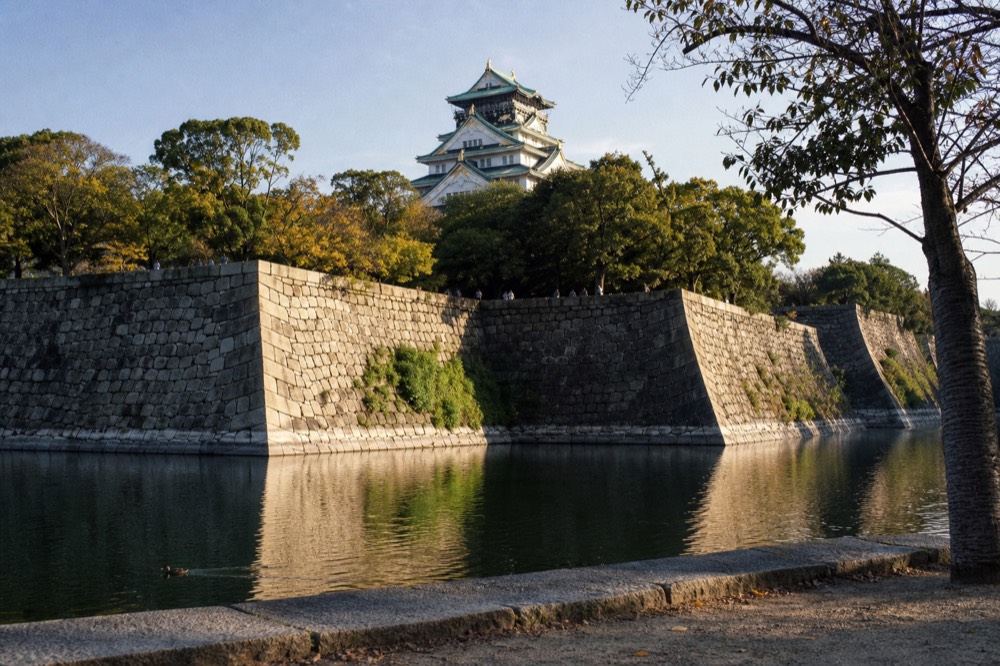
The practical tiebreaker is geography. Kyoto sits 30 to 45 minutes from Osaka by regular train on several lines, and the two cities share an airport gateway, so basing in Osaka costs you almost nothing in Kyoto access. Basing in Kyoto and day-tripping to Osaka works too, but Kyoto hotel rates run higher for equivalent rooms, and Osaka's rail hub reaches Nara, Kobe and Himeji as easily as it reaches Kyoto. For a fuller picture of the castle itself, see whether Osaka Castle is worth it, and for pacing, how many days in Osaka is enough.
Which City Is Cheaper To Stay In?
Osaka is reliably cheaper per night for equivalent hotels, typically by a noticeable margin, and the gap widened after September 2025 when Osaka Prefecture restructured its accommodation tax with bands of 200, 400 and 500 yen, while Kyoto's centrally located rooms carry both higher base rates and its own per-night levy. The tax difference is small, the room-rate difference is not, and it compounds over a week.
The accommodation tax detail matters more than its size suggests. Osaka Prefecture's own tax page states that from 1 September 2025 the exemption threshold dropped from 7,000 to 5,000 yen per person per night, with 200 yen charged on rooms of 5,000 to 14,999 yen, 400 yen on 15,000 to 19,999 yen, and 500 yen at 20,000 yen and over. Kyoto City has charged its own accommodation tax for years at similar scale. Neither levy will decide your trip, but both are a reminder that the sticker rate is not the final rate.
The real money is in the base rates. Kyoto's supply is constrained by a city that limits tall buildings in its historic core, and demand spikes hard in cherry-blossom and autumn-colour seasons, when central Kyoto rooms can double. Osaka's hotel market expanded sharply through 2025 and 2026: the Patina Osaka, with views toward the castle, opened on 1 May 2025, and the Waldorf Astoria opened in the Umekita development in April 2025, both adding supply at the top end while the existing mid-range stock stayed comparatively cheap. Trade reporting in 2026 has even noted occupancy and rates softening in Osaka after the Expo ended, which is the direction travellers want prices to move.
A week-long stay pencils out roughly like this, using planning ranges rather than operator promises:
| Cost line | Osaka (typical pattern) | Kyoto (typical pattern) |
|---|---|---|
| Mid-range central hotel, per night | Cheaper base rate for equivalent rooms; new 2025 supply has softened rates further | Higher base rate, spiking hard in blossom and autumn seasons |
| Accommodation tax, per person per night | 200-500 yen in the bands effective 1 September 2025 | Its own per-night levy at similar scale |
| Castle or headline sight ticket | 1,200 yen (tower and Stone Wall Museum) | 400-500 yen per temple, several per day |
| A filling street-food meal | Counter prices across Dotonbori and Shinsekai | Formal kaiseki and temple cuisine at sit-down prices |
| Train between the two cities, one way | A few hundred yen on regular lines | Same, it is the same train |
Treat those as planning patterns and check the live rates for your dates; temple prices in Kyoto are individually small but add up when you visit four in a day, and the castle's 1,200 yen covers a full morning on its own.
If the castle is the reason you are leaning Osaka, the entry ticket is the one to sort early. Check availability on the operator's live listing, and read more on the castle entry ticket page.
How Do The Sights Actually Compare?
Kyoto wins on density and variety of historic sights, with dozens of major temples and shrines in a compact area, while Osaka's sightseeing list is shorter but deeper at the top: the castle complex with its museum, the Stone Wall Museum's buried Toyotomi walls, and a food-and-neon nightlife layer Kyoto does not attempt. Osaka's sights also queue less outside peak days.
The castle deserves a specific word here because it is the sight most often undervalued in this comparison. The current tower is a 1931 ferro-concrete reconstruction, and travellers who expected a medieval interior sometimes say so bluntly in reviews. But everything above ground is the Tokugawa rebuild on a grand scale, the castle museum's own material calls it the castle with the greatest stone walls in Japan, and since April 2025 the same 1,200 yen ticket admits you to the underground gallery where a section of Hideyoshi's actual stone wall, buried under about six metres of fill in the 1620s, is on display. That is a Sengoku-period primary object, and Kyoto has nothing quite like it.
Kyoto's counterweight is volume. You can spend five full days in Kyoto and not run out of first-rank sights, and the atmosphere of places like Arashiyama or the Philosopher's Path is the product of centuries of accumulated landscape design. The honest summary is that Kyoto rewards the visitor who moves slowly, while Osaka rewards the visitor who wants a few strong experiences plus the energy of a big commercial city.
The castle's own operator warns that the ticket queue can be capped before the 17:30 last admission on busy days, so a morning arrival is the reliable play, and the tower is closed only 28 December to 1 January each year, per the official guide page.
How Many Days Does Each City Need?
Most travellers need two to three full days in Osaka, including a half-day at the castle complex, and three to four in Kyoto if temples are the priority, which is why the standard pattern is a five-to-seven-day Kansai trip based in Osaka with two or three of those days spent in Kyoto by train. Trying to day-trip into both from Tokyo is the one genuinely bad version of this plan.
The castle alone is a half-day when done properly. The castle museum's own FAQ says most visitors spend 50 to 60 minutes inside the tower and about 1.5 hours if you look properly, and that is before the Stone Wall Museum, the park, Nishinomaru Garden and the walk in through the gates. Add Dotonbori in the evening and Umeda or Shinsekai on another day, and Osaka's two to three days fill themselves. For a ready-made structure, see what to do in Osaka for a day.
Kyoto compresses badly. The individual sights are spread across a valley city with real distances between them, bus connections that jam up in peak season, and crowds at Fushimi Inari and Kinkaku-ji that are best beaten at opening time. Two rushed days in Kyoto produce photographs; three or four produce a trip. This is the strongest argument for the Osaka base: you can give Kyoto the days it needs without paying Kyoto hotel rates for all of them.
from $7.69 The from-price you see online and the price at the castle window are the same adult admission, so booking ahead costs nothing extra.
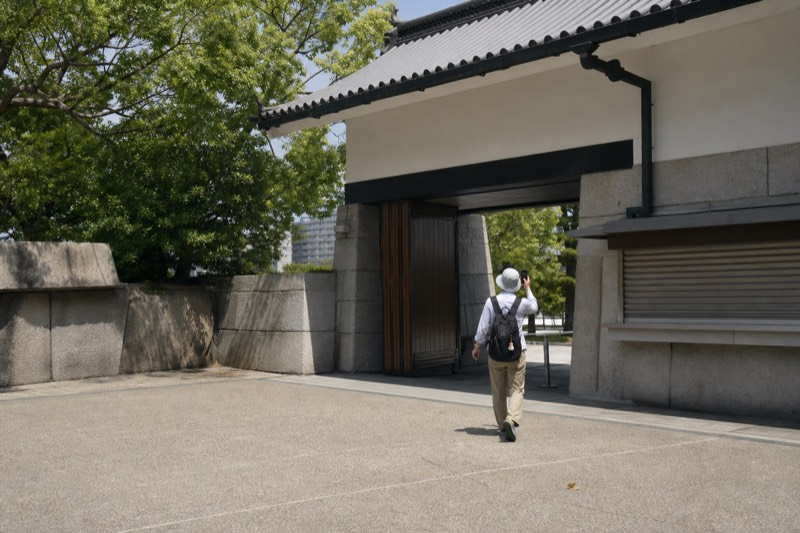
Your ticket into the tower
Official E-Ticket
- Osaka Castle Main Tower entry
- Osaka Castle Toyotomi Stone Wall Museum
- QR code entry
- Valid 30 days
- No fixed time slot
- No viewing time limit
Buying the official e-ticket ahead saves you the ticket-purchase line, not money, since the online price matches the window. You exchange nothing at the gate, you simply show the voucher and go in.
The real flexibility here is the voucher's 30-day validity, with no fixed time slot and no set viewing time limit.
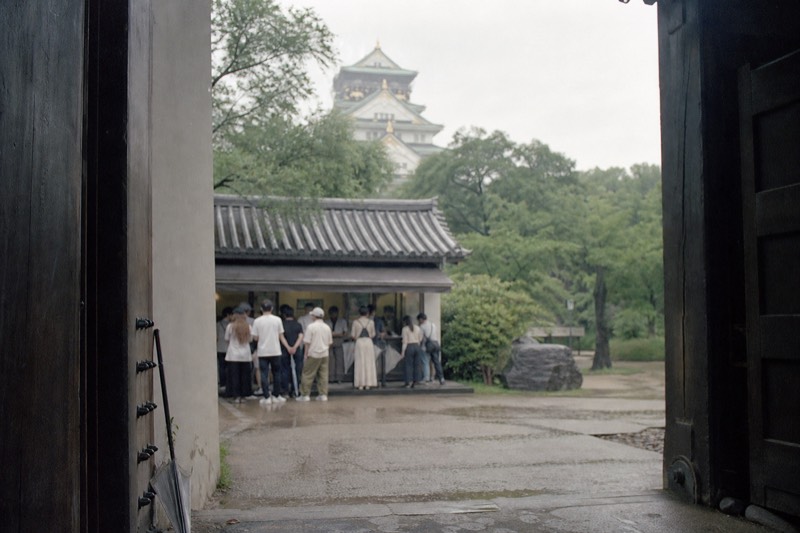
At The Gate
Adult, per person Group rate from 15 paying visitors Free categories at the window
¥1,200
The window price is identical to the online price, so nothing is lost by paying in person. Students and under-15s should buy here, because proof-of-age discounts are handled face to face and not through an e-ticket.
Students with ID and visitors aged under 15, since discounted and free rates are only applied at the window.
See what it covers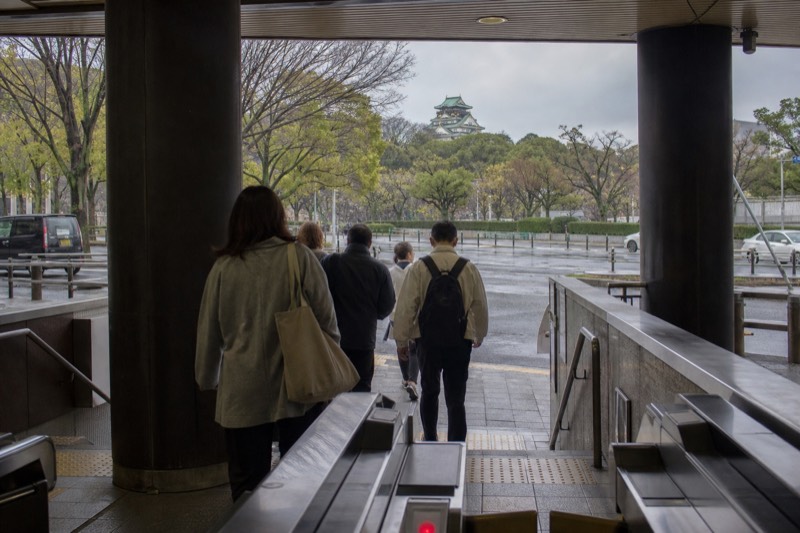
Osaka Amazing Pass
One-day pass On sale 25 March 2026 to 31 March 2027
¥3,500
The one-day pass costs 3,500 yen against the 1,200 yen castle ticket on its own, so it only pays off with two or more other paid sights. Add transport and the maths tips further in its favor.
Visitors packing several paid sights plus metro and bus rides into one day, who will clear the pass price easily.
See what it covers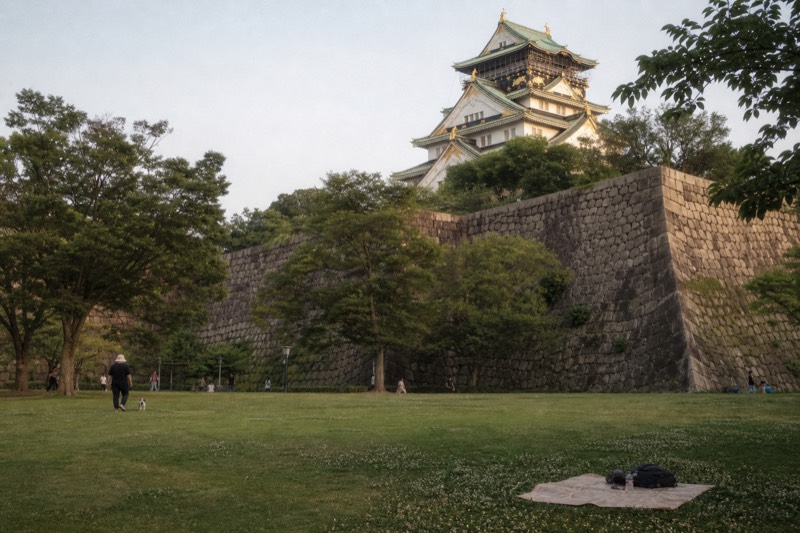
Free Park Areas
No admission charge
Free
The park grounds, moats, stone ramparts and exterior views of the tower cost nothing at all, and they fill a half day on their own. The paid line falls only at the Main Tower entrance and the Toyotomi Stone Wall Museum.
Anyone who wants the castle views, moats and grounds without paying to go inside the buildings.
See what it covers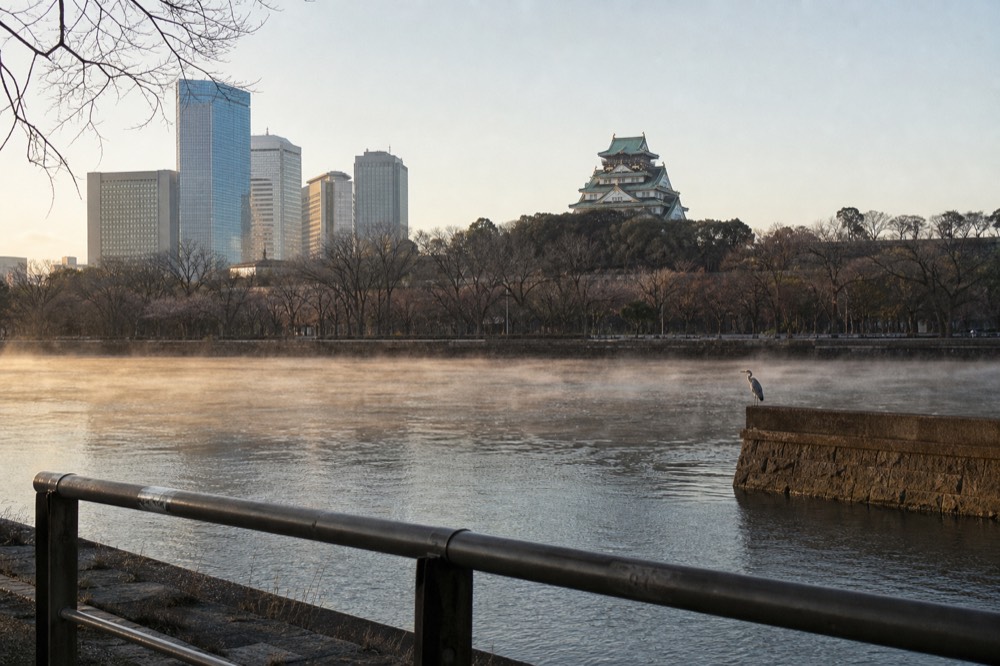
Which Has Better Food And Nightlife?
Osaka is the food city by wide consensus, both in its street-food tradition and in the sheer density of late-evening eating and drinking around Dotonbori and Umeda, while Kyoto's food culture is more formal, more seasonal and more about sitting down for it, with kaiseki and tofu cuisine near the temples and far less happening after 21:00.
Osaka's self-description as the nation's kitchen is not just civic pride. Takoyaki, okonomiyaki and kushikatsu are everyday foods here, sold from counters and windows at prices that make two or three meals a day cheap, and the Namba and Dotonbori districts run late into the night. Kyoto's eating is excellent but different in register: multi-course kaiseki, shojin ryori temple cuisine, and the tofu and obanzai traditions. It is food for a long lunch, not a bar crawl.
The nightlife gap is decisive for some travellers and irrelevant to others. Kyoto largely quietens in the evening outside a few pockets around Pontocho and Kiyamachi. Osaka does not. If your travelling style involves deciding at 21:00 where to eat next, that is an Osaka night, and it pairs naturally with the castle's free exterior illumination, which runs from sunset until 00:30 and lights the tower over the moat while the food districts are still going.
What About Weather And Crowds?
Both cities share the same Kansai climate, so weather is not a differentiator: the Japan Meteorological Agency's 1991-2020 normals put Osaka's August mean at 29.0 degrees against June rainfall of 185.1 millimetres, and Kyoto sits a few kilometres inland with hotter summers and colder winters. Crowds are the real difference, with Kyoto's peaks compressing into blossom and autumn colour while Osaka's castle spreads its record visitor numbers across the year.
The climate normals are worth reading properly because they kill several travel myths. The JMA's published normals for Osaka show the wettest month is June at 185.1 millimetres, not the typhoon-season autumn many assume, and August is the hottest at a 29.0-degree monthly mean. Kyoto, sitting in a basin, runs hotter in summer and colder in winter than Osaka's coastal plain. Whichever city you pick, the same wardrobe works.
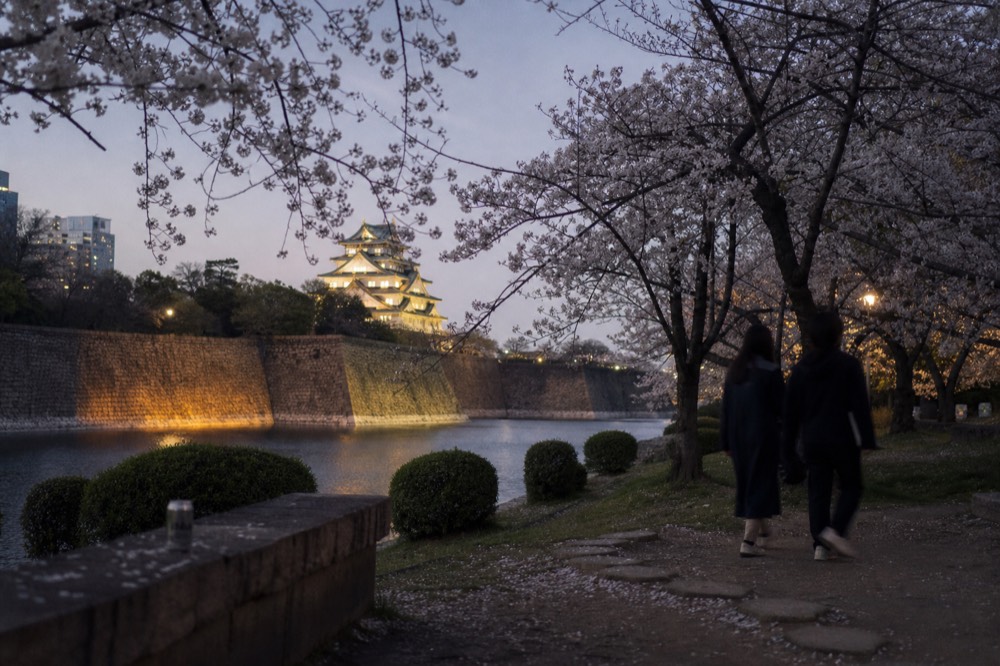
Crowd timing is where the choice gets practical. Kyoto's two great peaks, the cherry-blossom weeks and the autumn-colour weeks, are the busiest periods in Kansai travel, and within them the handful of famous sites jam hardest. The castle's own blossom mechanism is a good example of how Osaka handles the same season with more room: the park's official Somei-Yoshino specimen tree stands in Nishinomaru Garden, and the Japan Meteorological Agency declares Osaka's blossom opening when that tree shows five or six flowers, with the park scheduling its night viewing around the expected window rather than a fixed date. The park is 105.6 hectares in total, which is a lot of space for the roughly 3,000 cherry trees it holds.
One seasonal trap worth naming: Japanese holiday blocks. Golden Week in late April and early May and the September Silver Week, when a run of public holidays falls in one stretch, fill trains and hotels in both cities, and the castle's own guidance already warns the ticket queue can be capped before last admission on heavy days. Travellers posting about the 2026 blossom season described the tower as extremely crowded even late in the bloom. Off-peak weekdays in any month beat holiday weekends in either city.
Can You Do Both From One Base?
Yes, comfortably, and that is the answer this site recommends: base in Osaka for the cheaper rooms and the rail hub, give Kyoto two or three day trips by train, and keep the castle as an unhurried half-day in your home city rather than a rushed add-on. The train between the two runs frequently on multiple lines and costs a few hundred yen each way, so the only real cost of the two-city plan is planning.
The rail geography is the quiet hero of Kansai travel. The JR Kyoto Line, the Hankyu Line and the Keihan Line all link the two cities from different pairs of stations, so you can choose a route that starts near your hotel and finishes near the temple you are aiming at, and the same Osaka hub reaches Nara, Kobe and Himeji. Himeji in particular pairs naturally with the castle comparison, and its own admission changed on 1 March 2026, when Himeji City announced a pricing change that charges non-resident adults more than residents, a change no older comparison article will show you. Osaka Castle's 1,200 yen flat adult rate is, for now, the simpler arithmetic.
The castle half-day slots neatly into an Osaka-based plan. The official park map gives roughly 18 to 21 minutes on foot from every surrounding station to the Main Tower, because the walk crosses parkland and passes through gates rather than running along a street, so no station choice is dramatically better than another. The tower opens at 9:00, and a morning visit leaves the afternoon for Umeda or the river, with the free exterior illumination from sunset as the evening bookend. If you would rather have the grounds explained than walk them alone, the guided walking tour runs 1.5 to 3 hours with a live English-speaking guide over the castle grounds, and its base price does not include tower admission, so the two products stack rather than substitute.
The short answers below compress the whole comparison into six decisions: which city to sleep in, what each costs, whether Kyoto works as a day trip, how long the castle needs, where to eat, and whether the castle ticket should be bought ahead of time. Each one restates a point made in full above, so if an answer seems thin, the section it points back to has the detail.
Common Questions About Osaka Vs Kyoto
Is Osaka Or Kyoto Better?
For a short, history-focused trip of two or three days, Kyoto is the better single choice. For anything longer, base in Osaka: it is cheaper to sleep in, its rail links put Kyoto 30 to 45 minutes away, and its own sights, led by the castle and the Stone Wall Museum, plus Dotonbori's food culture, hold up well against a day of temples.
Is Kyoto More Expensive Than Osaka?
Generally yes, mainly on hotel base rates rather than taxes. Kyoto's central rooms cost more for equivalent quality and spike hard in blossom and autumn seasons. Osaka restructured its accommodation tax on 1 September 2025 with bands of 200, 400 and 500 yen, but the levy itself is minor next to the room-rate gap.
Can You Visit Kyoto From Osaka In One Day?
Yes, easily. Multiple lines link the two cities, the ride is under an hour, and trains run frequently through the day. Two or three such day trips cover Kyoto's headline sights without paying Kyoto hotel prices.
How Many Days Do I Need For Osaka Castle?
Half a day. The castle museum's own FAQ says most visitors spend 50 to 60 minutes inside the tower and about 1.5 hours if you look properly, and that excludes the Stone Wall Museum, the park and Nishinomaru Garden.
Which City Is Better For Food?
Osaka, by broad consensus, for street food and late-night eating: takoyaki, okonomiyaki and kushikatsu at counter prices, with Dotonbori running late. Kyoto's food culture is more formal and seasonal, built around kaiseki and temple cuisine, and its evenings are quieter.
Do I Need To Buy The Castle Ticket In Advance?
The gate sells tickets on the day, but the official guide page warns the ticket-purchase queue can be capped before the 17:30 last admission when conditions demand it. An e-ticket with QR entry, valid 30 days with no fixed time slot, removes the ticket-line risk; at $7.69 per person it covers one-time admission to both the Main Tower and the Toyotomi Stone Wall Museum, tax included.
Sources worth reading alongside this comparison include the castle's official visitor guide for hours, prices and queue warnings, the Osaka City announcement of the FY2025 record admissions, and the Osaka Prefecture accommodation tax page for the current levy bands. This article was prepared for Osaka Castle Tickets from official castle, park and city sources, with fresh reporting attributed inline.