Osaka Castle Toyotomi Stone Wall Museum: What It Is And How To Visit
Buried under about six metres of earth by the Tokugawa shogunate and unseen above ground anywhere else, the Toyotomi-era stone walls beneath Osaka Castle finally went on public display on 1 April 2025. The ¥1,200 tower admission includes them, and this guide explains what the underground gallery holds.
Short answer
The Osaka Castle Toyotomi Stone Wall Museum opened 1 April 2025 inside the castle honmaru. No separate ticket exists: the ¥1,200 adult Main Tower admission includes it, confirmed on the castle museum's own pages. Hours are 9:00-18:00, last entry 17:30, closed 28 December to 1 January.
What Is The Osaka Castle Toyotomi Stone Wall Museum?
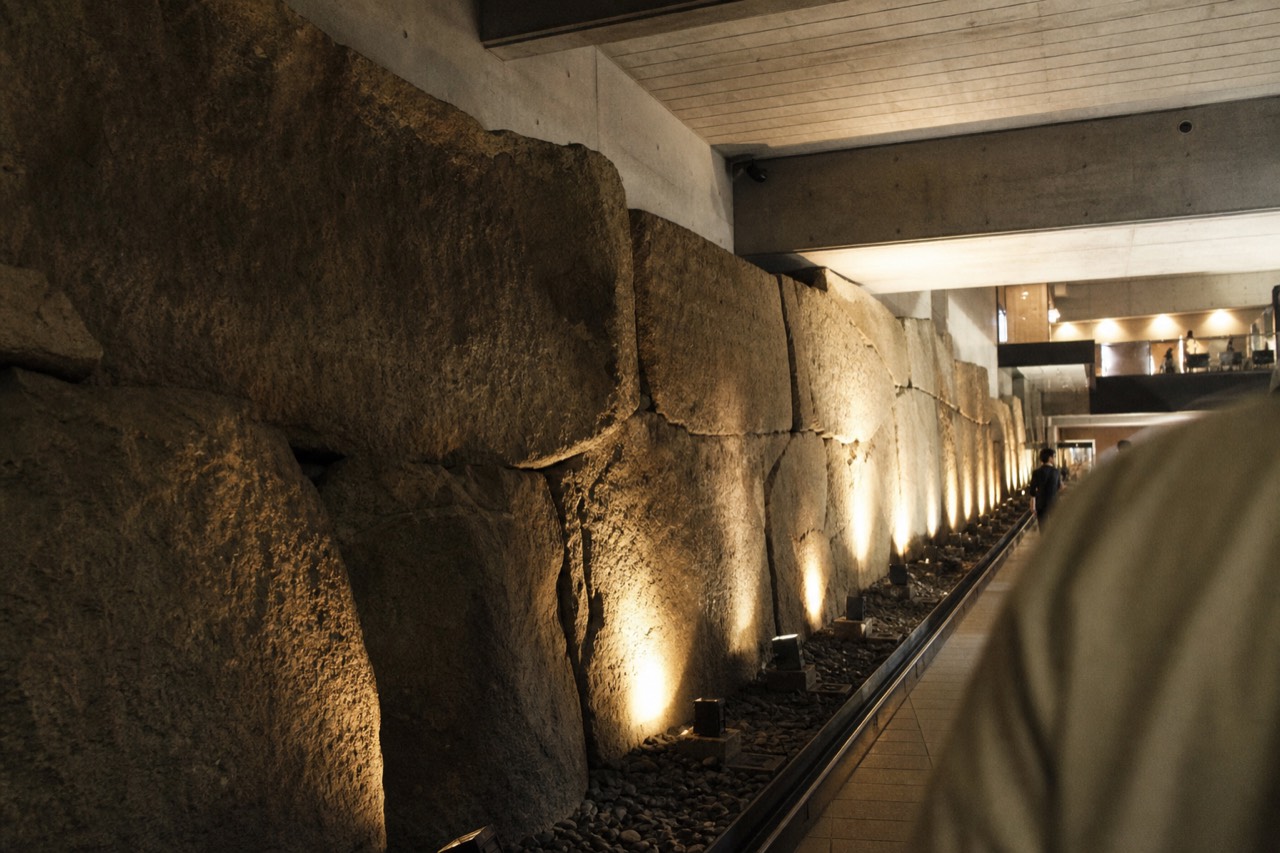
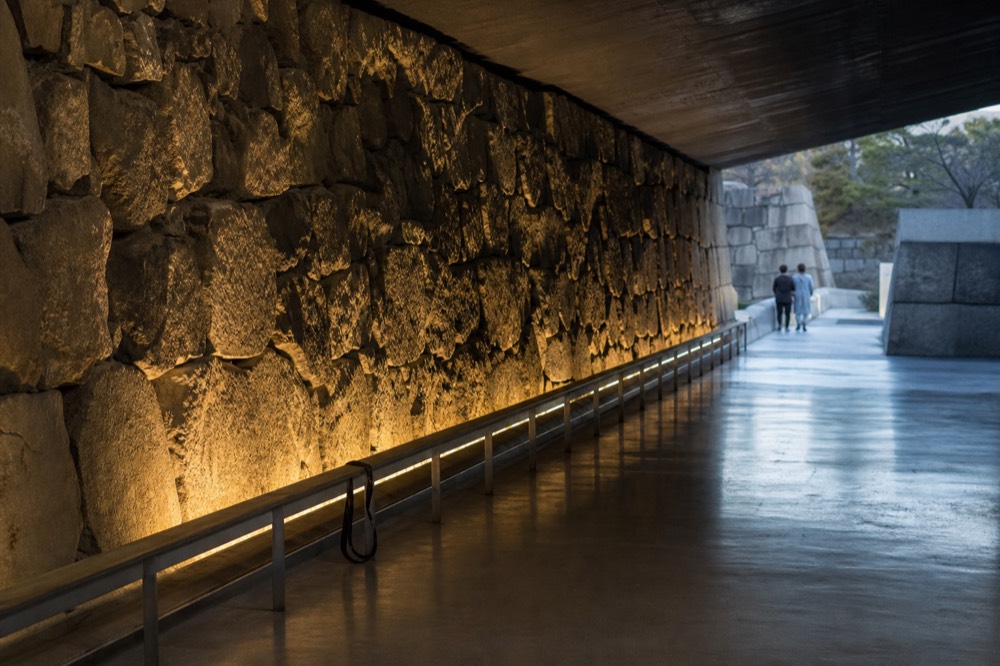
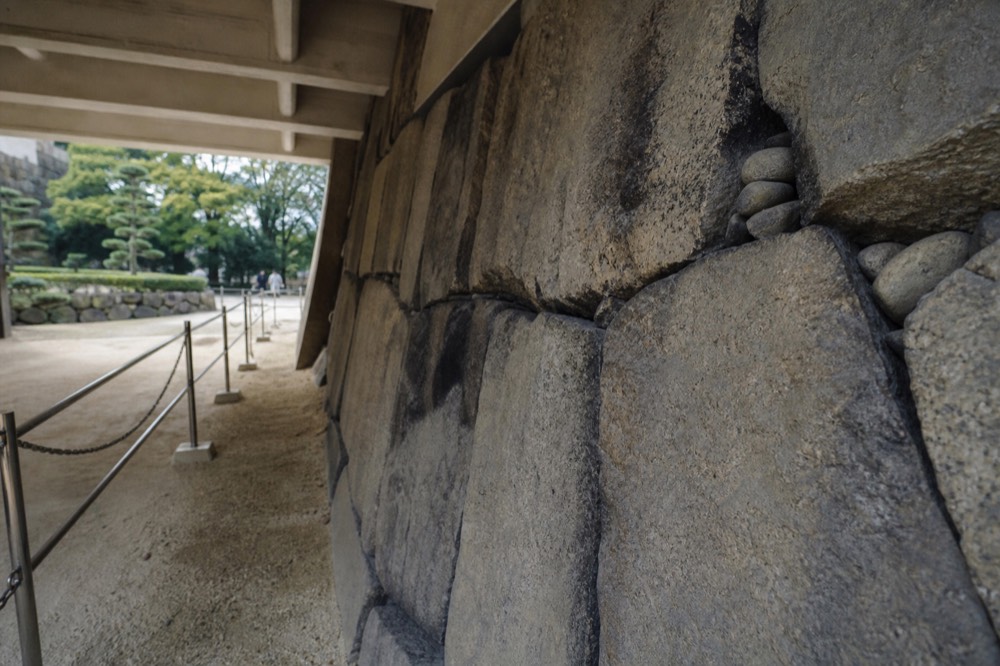
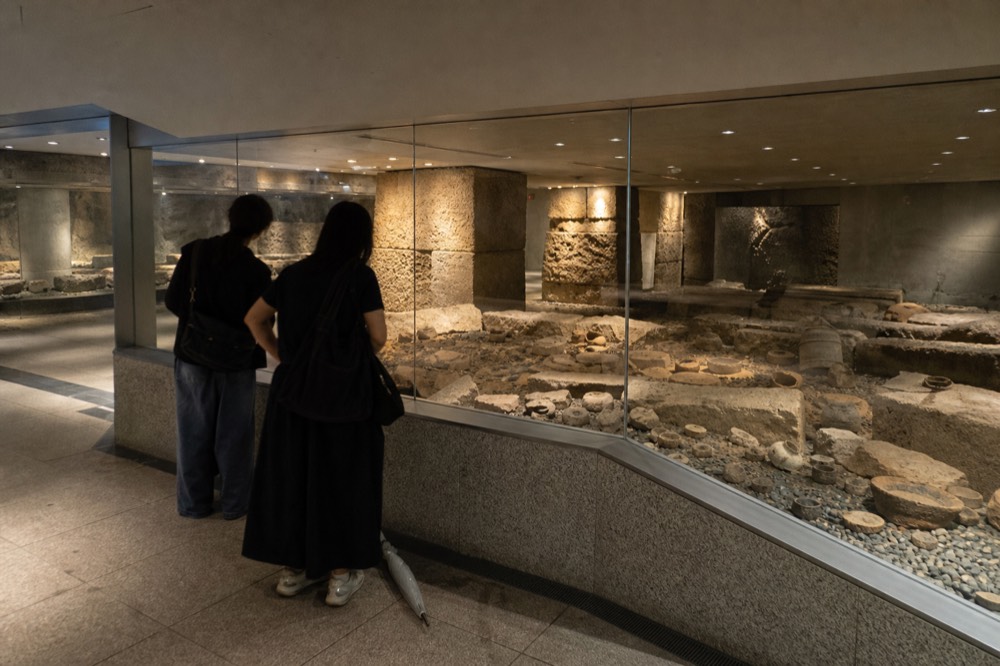
The Osaka Castle Toyotomi Stone Wall Museum is an underground gallery that opened on 1 April 2025 inside the castle's honmaru, displaying a section of the stone wall that ringed Hideyoshi's private quarters, the tsumenomaru, which the Tokugawa shogunate buried under fill during the 1620s rebuild and which cannot be seen above ground anywhere else.
Osaka City announced the opening on 13 December 2024, and the facility is the end point of the city's Toyotomi Stone Wall Public Display Project, which ran from 2013 to build it. The museum's own page states the essentials plainly: entering requires the Osaka Castle Main Tower admission fee, and the ¥1,200 adult ticket includes it. The park site's FAQ puts it the other way round with the same meaning, and the Osaka Amazing Pass facility list agrees, so the arrangement is confirmed three separate ways.
The name itself deserves a note. The official English name, taken from the facility's own English leaflet, is the Osaka Castle Toyotomi Stone Wall Museum. "Toyotomi Ishigaki Museum" is the transliteration that circulates in searches and appears on some booking listings, and it points to the same place. In body copy and headings we use the official name.
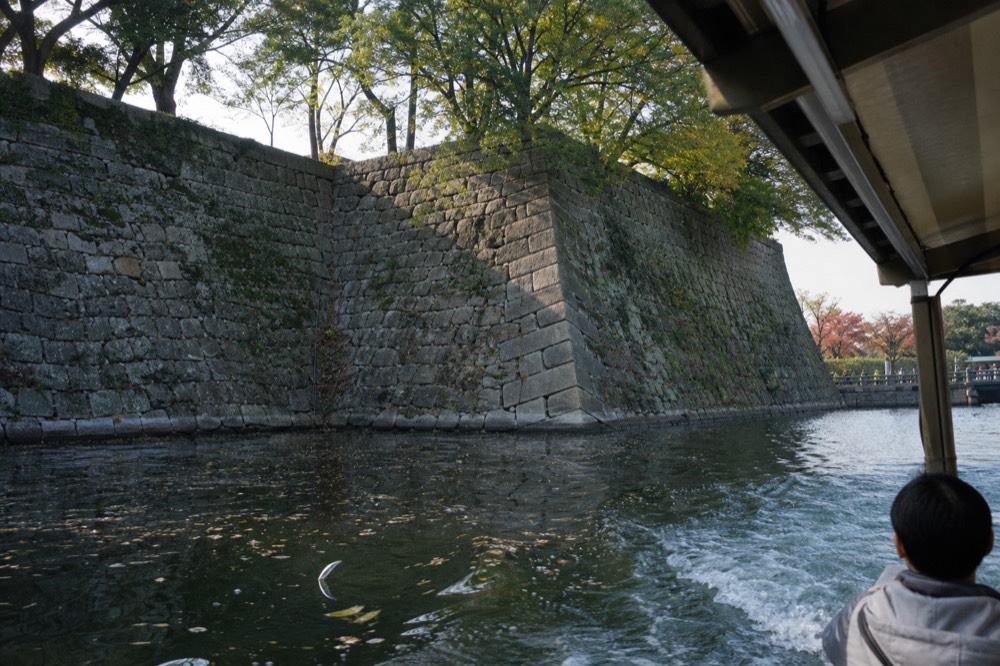
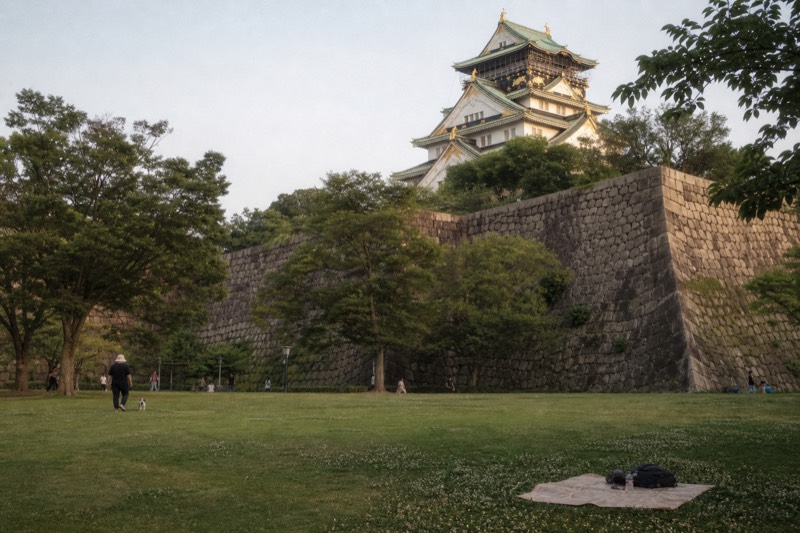
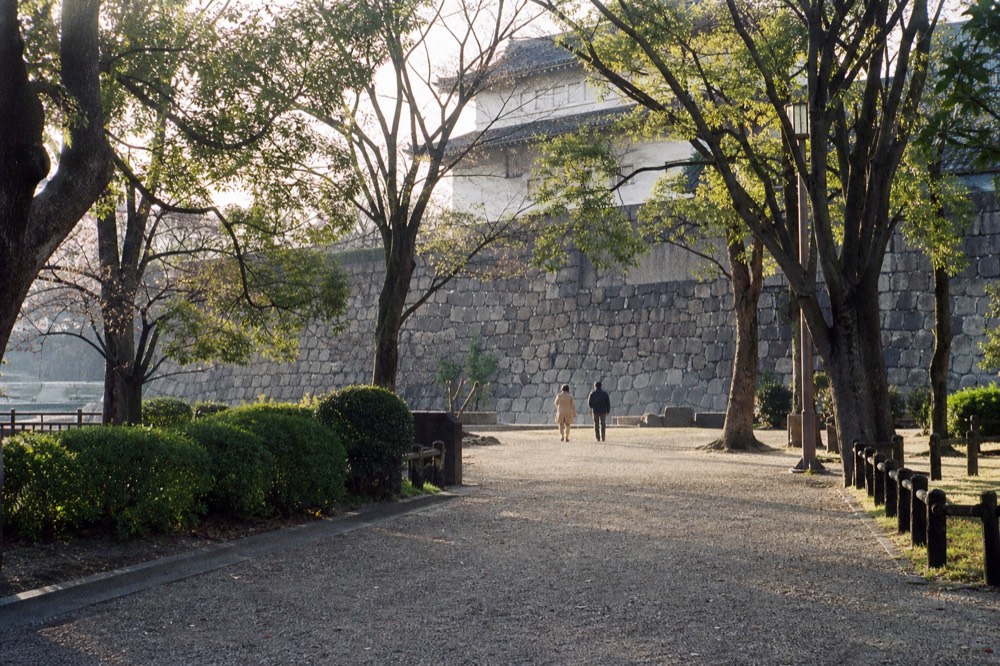
What makes the place unusual is not just the wall but the fact of its survival. When the Tokugawa shogunate rebuilt Osaka Castle after 1620, it buried the entire Toyotomi castle under a mass of fill, in the official wording of the English leaflet, as if to erase the authority of the Toyotomi family. Everything visible above ground today, walls and moats alike, belongs to the Tokugawa rebuild. The section on display was rediscovered by accident in 1984, roughly one metre below the present surface, and spent four decades waiting for a gallery to be built around it.
Where Is It, And How Do You Get In?
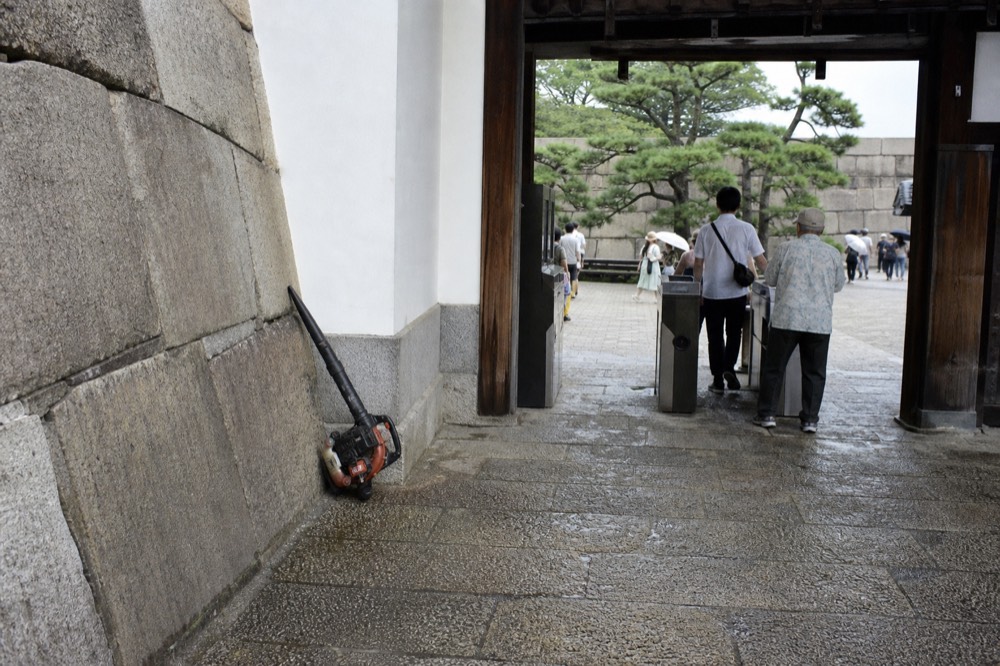
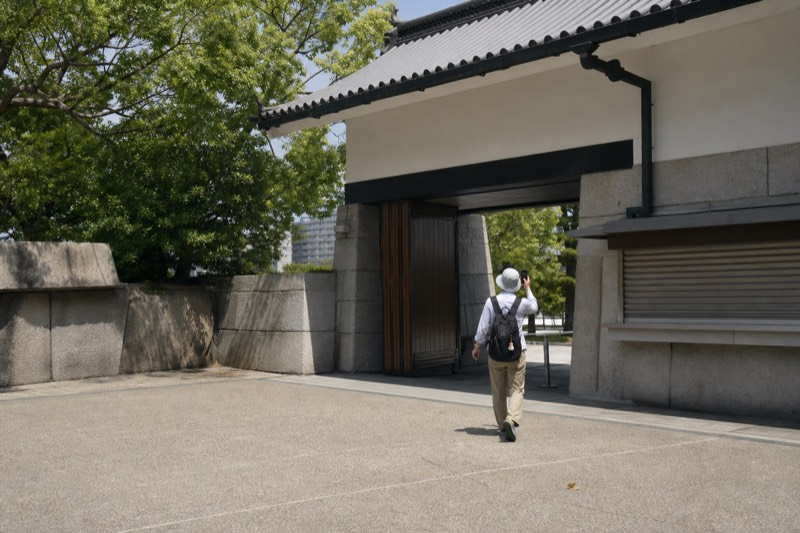
The museum sits inside the honmaru, the innermost enclosure that also holds the Main Tower, so you reach it through the same ticket gate as the tower: buy or show your tower admission, then follow the signs to the museum entrance hall. There is no separate entrance, queue or ticket office for the Stone Wall Museum itself.
The layout is compact. The facility has an entrance hall, a theater room and a guidance room on its 1F, and the stone wall exhibition hall in basement 1F, where you walk down to the wall itself. The castle's own practical notes add one detail worth planning around: there are no toilets inside the museum, so use the facilities in the honmaru plaza or inside the tower before you go down.
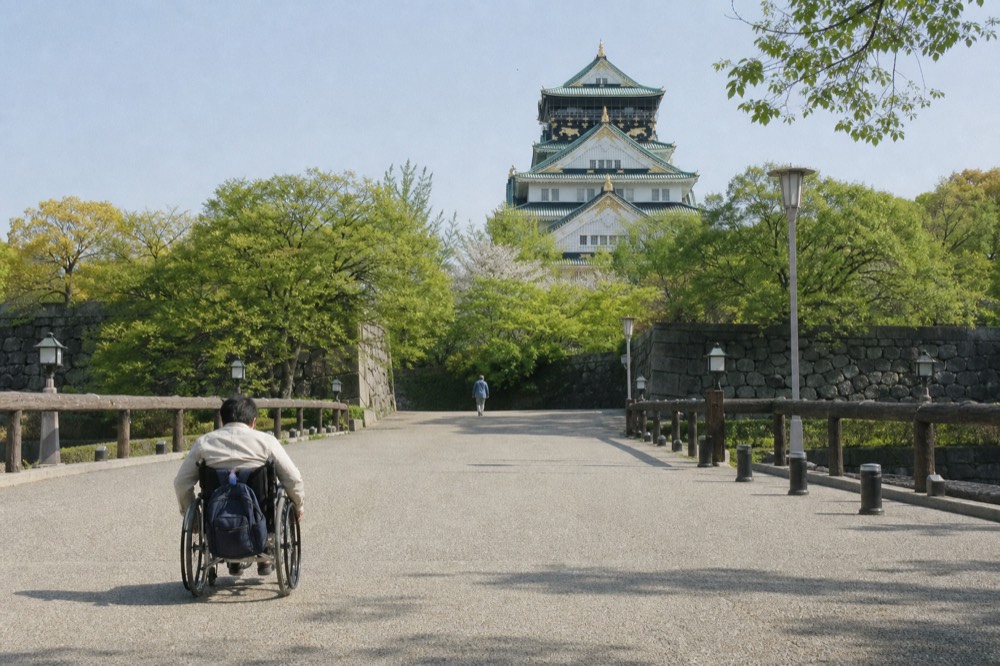
Getting to the honmaru is covered in full elsewhere on this site, but the short version is that every rail station serving the park sits 18 to 21 minutes on foot from the Main Tower by the castle museum's own map. The Tanimachi 4-chome approach through the Otemon is the one route the castle endorses as comparatively flat and wheelchair passable, which matters if you are combining the underground hall with a tower climb.
For readers who prefer to let someone else handle the orientation, there is also a live guided option that walks the castle grounds, and it is worth understanding how the two products relate: the guided walking tour covers the grounds with an English-speaking guide, and its base price does not include tower admission, so a visitor taking it still needs an entry ticket for the tower and the Stone Wall Museum. The two answer different questions and can stack.
What Does The Tower Admission Include, Exactly?
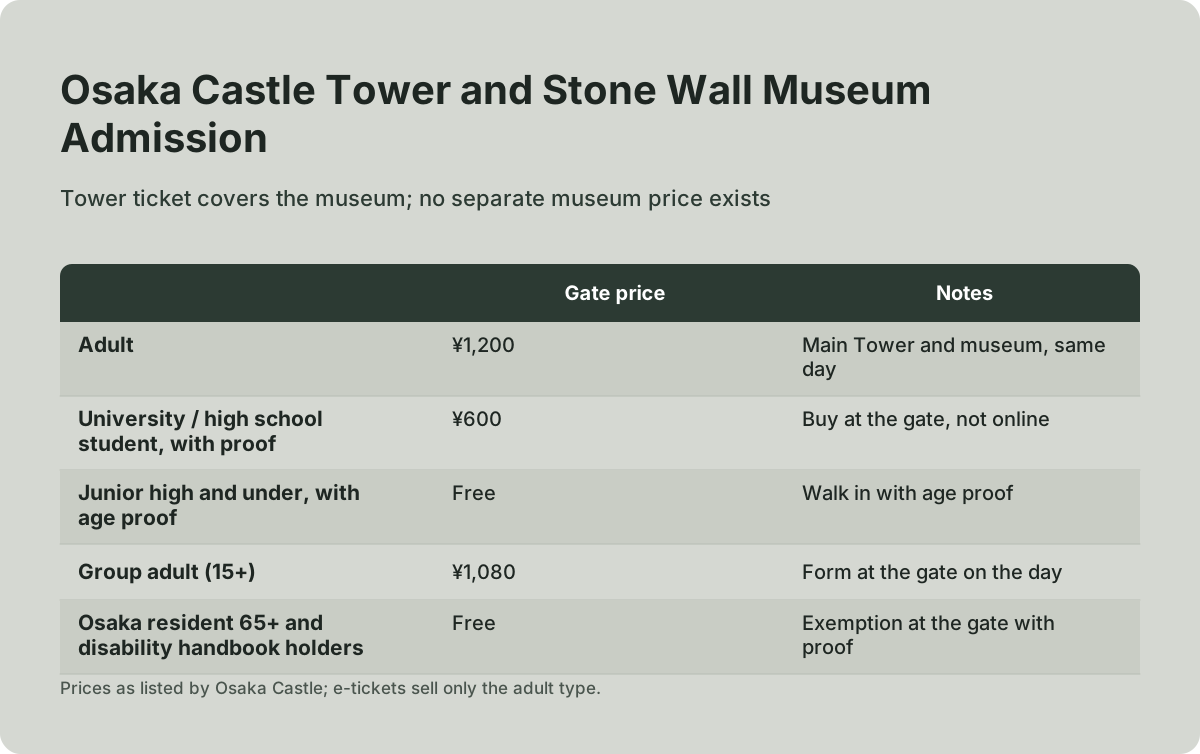
The ¥1,200 adult admission buys the Main Tower, all eight floors of it, and the Toyotomi Stone Wall Museum, used on the same day. High school and university students pay ¥600 with proof, junior high age and under are free, and there is no separate price, no combined ticket and no supplement for the museum.
If you are a student, one honest point saves money: the online e-ticket sells only the adult ticket type, so high school and university students should buy at the gate at ¥600, and junior high and younger simply walk in free with age proof. The group rate for 15 or more paying adults is ¥1,080, arranged with a form at the gate on the day, not a booking.
The e-ticket itself is straightforward: a QR-code voucher that skips the ticket-purchase line at the gate. It carries no markup over the gate price, so what it buys is the skipped queue and guaranteed entry, not a discount. Its genuine flexibility is elsewhere, in the voucher being valid 30 days, with no fixed time slot to pick and no set viewing time limit once you are inside.
Who
Gate price
What it covers
Adult
¥1,200
Main Tower and Stone Wall Museum, same day
University / high school student, with proof
¥600
Same coverage; buy at the gate
Junior high and under, with age proof
Free
Same coverage
Group adult (15+)
¥1,080
Same coverage, form at the gate
Osaka city resident 65+, disability handbook holders plus one carer
Free
Exemption applies at the gate with proof
Hours for the museum match the tower exactly: 9:00 to 18:00, last admission 17:30, closed only 28 December to 1 January. One caveat from the museum's own page is worth knowing: public access to the wall may be suspended without notice if the stone wall's condition requires it, which is a fair trade for preserving a four-hundred-year-old structure.
Should you secure your entry before the day? With the tower having just recorded 2,813,851 provisional admissions in FY2025, its highest ever, and the castle's own guide page warning that the ticket-purchase queue can be capped before 17:30, having a QR voucher in hand is the practical answer for anyone visiting at a busy hour. You can Check availability, or read our full inside the Main Tower guide for what waits on the upper floors.
What Do You Actually See On The Walk Down?
You see the exposed tsumenomaru wall face itself, built in the nozurazumi natural-stone style, with traces of the Summer War fires burnt onto the stone, backfill stones packed behind the wall, stones repurposed from ancient temple foundations, and an early form of sangizumi alternating corner masonry, all from the private quarters where Hideyoshi, his wife One, and later Yodo-dono and Hideyori lived.
The tsumenomaru was the most important core of the honmaru: the residential heart of the castle rather than its military showpiece. Walking down to its wall puts you at eye level with masonry that was last seen above ground when the Tokugawa rebuild entombed it. The castle's own highlight list is specific, and each item rewards a slow look.
Nozurazumi masonry uses stones barely worked at all, fitted by their natural faces, and it reads as rougher and older than the precisely cut Tokugawa walls you passed on the way in. Fire traces on the stone faces date from the Summer War of Osaka in 1615, when the Toyotomi house was destroyed and the castle burned. Uragome-ishi backfill stones packed behind the wall served as drainage, a genuine engineering detail rather than decoration. Some stones were carried in from ancient temple foundations, and the corners show sangizumi, alternating rectangular stones, in an early form.
The museum's own leaflet gives the burial depth as about six metres of earth at the nakanodan tier, which is why the wall sits in a basement gallery rather than in the open air.
The curatorial numbers behind that cross-section come from the castle museum's own column on the subject. The 1959-discovered wall top sits at 23.9 metres above Tokyo Bay mean sea level, the 1984-discovered wall top at 29.8 metres with its base at 24.1 metres, and the tsumenomaru interior surface at 30.0 metres. Today's honmaru surface stands at 31.2 to 31.5 metres, so the ground Hideyoshi and Hideyori walked on lies roughly one metre below where visitors stand today. Over the inner moat the burial is far deeper still: a 1969 boring struck stone about 25 metres below the surface, so on the moat line the Tokugawa rebuild moved more than 25 metres of fill.
Why Were Hideyoshi's Walls Buried At All?
Because the Tokugawa shogunate wanted the Toyotomi castle, and the authority it represented, erased: after the Summer War of Osaka ended the Toyotomi house in 1615, the rebuild that began in 1620 raised the entire site, buried the old walls and moats under massive fill, and produced a castle deliberately unlike Hideyoshi's, with a tenshu around 15 metres taller.
The sequence is documented on the park site's own official history pages. Hideyoshi began building on the site of Ishiyama Honganji in 1583, took about 15 years, and finished a castle four to five times the scale of the present one, with a gold-gleaming tenshu at the centre of the honmaru. In 1615 the Summer War destroyed the Toyotomi house and burned the castle. From 1620 the shogunate spent a decade rebuilding with large-scale earth fill, new stone walls and deepened moats.
The Tokugawa tenshu, about 58 metres tall by the castle museum's own curatorial reconstruction, burned in a lightning strike in 1665 and was never rebuilt. The tower that stands today is the third generation, a 1931 ferro-concrete reconstruction funded by public subscription from the citizens of Osaka and a museum since the day it opened. So the honest description of a visit is: above ground you walk a Tokugawa castle, below ground, in this one gallery, you meet Hideyoshi's. That contrast, not any single object, is the museum's real exhibit.
from $7.69The from-price you see online and the price at the castle window are the same adult admission, so booking ahead costs nothing extra.
Your ticket into the tower
Official E-Ticket
Adult, per person
Osaka Castle Main Tower entry
Osaka Castle Toyotomi Stone Wall Museum
QR code entry
Valid 30 days
No fixed time slot
No viewing time limit
Buying the official e-ticket ahead saves you the ticket-purchase line, not money, since the online price matches the window. You exchange nothing at the gate, you simply show the voucher and go in.
The real flexibility here is the voucher's 30-day validity, with no fixed time slot and no set viewing time limit.
Adult, per personGroup rate from 15 paying visitorsFree categories at the window
¥1,200
The window price is identical to the online price, so nothing is lost by paying in person. Students and under-15s should buy here, because proof-of-age discounts are handled face to face and not through an e-ticket.
Students with ID and visitors aged under 15, since discounted and free rates are only applied at the window.
One-day passOn sale 25 March 2026 to 31 March 2027
¥3,500
The one-day pass costs 3,500 yen against the 1,200 yen castle ticket on its own, so it only pays off with two or more other paid sights. Add transport and the maths tips further in its favor.
Visitors packing several paid sights plus metro and bus rides into one day, who will clear the pass price easily.
The park grounds, moats, stone ramparts and exterior views of the tower cost nothing at all, and they fill a half day on their own. The paid line falls only at the Main Tower entrance and the Toyotomi Stone Wall Museum.
Anyone who wants the castle views, moats and grounds without paying to go inside the buildings.
Summer War of Osaka; the Toyotomi castle falls and burns
1620
Tokugawa rebuild begins; the Toyotomi walls are buried
1665
The Tokugawa tenshu burns in a lightning strike
1959
An academic survey finds a mysterious underground stone wall
1984
The tsumenomaru wall, now on display, is discovered about 1 m below the surface
2025
The Toyotomi Stone Wall Museum opens
For the fuller story of the castle's destructions, rebuilds and the 1945 air raid that left a visible slippage in the tenshudai wall, read our Osaka Castle history guide, which follows the official timeline in detail.
How Long Does A Visit Take, And What Rules Apply?
The castle museum's own FAQ says most visitors spend 50 to 60 minutes inside the tower, and 1.5 hours if you look properly; the Stone Wall Museum itself is a focused stop, so a realistic combined budget is 1.5 to 2 hours for both, with the museum first if the tower queue is long.
There is no fixed viewing time limit once you are inside either venue, which matters for anyone who likes to linger on masonry. Inside the tower, photography is banned on floors 3F and 4F because Important Cultural Properties are displayed there, and free everywhere else. No coin lockers exist inside the tower; bags are checked at the ticket counter at ¥100 per item, received 9:00 to 17:30 and collected by 18:00, with large volumes refused. Free audio guides in Japanese, English, Korean and Chinese are lent at the tower from the 1F and 5F information counters, reception 9:00 to 17:00 and return by 17:30, in limited numbers. It is a castle facility, not something bundled with the ticket.
The tower's 1F theater room, renewed in March 2025, rotates five programmes about Hideyoshi and the castle with Japanese, English, Chinese and Korean subtitles, and on 2F there is a samurai helmet try-on at ¥500 per person per session. For accessibility, the tower lends 5 wheelchairs for in-building use only, first come first served, and wheelchair users and visitors with walking difficulties may use the elevator in both directions on every floor, out onto the 8F observation deck included, under staff guidance.
Practical point
Detail
Toilets
None inside the Stone Wall Museum; accessible toilets in the tower 2F and two in the honmaru plaza
Photography
Banned on tower 3F and 4F; free elsewhere; no stated rule at the Stone Wall Museum
Bags
¥100 per item check at the tower ticket counter, collect by 18:00
Wheelchairs
5 at the tower, in-building use, no reservations
Wall access
May be suspended without notice if the wall's condition requires it
Is The Stone Wall Museum Worth It?
For anyone with even a passing interest in why Osaka Castle exists, yes: it is the only place on earth where a Toyotomi-era Osaka Castle wall can be seen, it costs nothing beyond tower admission you were likely buying anyway, and 2025-2026 visitor commentary repeatedly names it as the highlight that made the ticket feel worth it again.
What recent visitors say about going inside the castle, from queues to what they found: posts praise the chance to see the buried Toyotomi walls up close, and one September 2026 comment contrasts the tower's focus on Toyotomi-era items with the Osaka Museum of History's heavier emphasis on later periods. Fair criticism exists too, and honesty demands repeating it: some recent reviews describe the tower interior as a modern museum rather than a historic castle interior, which is simply true, it is a 1931 reinforced concrete building housing a museum. The Stone Wall Museum is the strongest counterweight to that complaint, because underground there is nothing reconstructed about what you are looking at.
The Toyotomi wave this year adds context. The 2026 NHK taiga drama "Toyotomi Brothers!" premiered on 4 January 2026, and its linked special exhibition toured Nagoya, the Osaka Museum of History and Tokyo, per the exhibition's own site. Inside the tower itself, the castle museum's own account lists a Hideyoshi summer special running in the 3F exhibition room to 7 October 2026, "Osaka Castle Zoo" in the 4F room to 8 October 2026, and a Sengoku siblings exhibition across 3F and 4F from 10 October to 23 November 2026. The castle's own summer Hideyoshi exhibition sits inside the same wave, so the Stone Wall Museum is the permanent half of a moment that is currently everywhere.
Planning Your Visit: Hours, Timing And Crowd Sense
Go in the morning or late afternoon: the museum is open 9:00 to 18:00 with last admission 17:30, the ticket-purchase queue can be capped before 17:30 on busy days, and the tower's upper floors narrow and get very crowded, so the quiet underground hall is the better early stop.
The official annual closure is the only fixed one: 28 December to 1 January, for both the tower and the museum. Beyond that, the practical lever is timing. The tower's record FY2025 admissions, 105.8 percent of the prior year, mean the site is busier than most 2024 guide writing assumes, and recent commentary reports long morning ticket lines that shorten later in the day. The museum entrance hall is a calmer place to start while the tower queue burns down.
One more date worth carrying: the facility marked its first anniversary on 1 April 2026, and reporting from the time records a free concert by a traditional-instrument group at the museum entrance plus related events through mid-April. Nothing of the kind is promised for future years, and the castle announces such programming separately, so treat it as evidence of intent rather than a schedule.
If you are still weighing the total cost of the day, our Osaka Castle entrance fee guide breaks down every route in, including the Osaka Amazing Pass at ¥3,500 for one day, which covers the tower and the Stone Wall Museum as free-admission facility #18 and #19 alongside Nishinomaru Garden.
For the site's wider coverage of what the castle holds, start with our guide to the Osaka Castle Museum collections and the inside Osaka Castle floor-by-floor walkthrough. This page is part of Osaka Castle Tickets, the site that exists to get these two buildings, the tower above and the wall below, into one well-planned visit.
The short answers: the name is the Osaka Castle Toyotomi Stone Wall Museum, opened 1 April 2025, and the ¥1,200 adult tower ticket includes it with no separate admission, students pay ¥600 with proof and junior high and under enter free, hours run 9:00 to 18:00 with last entry 17:30 and one annual closure, and the wall itself lies about six metres under the Tokugawa fill. The details below fill in each answer.
Common Questions About The Toyotomi Stone Wall Museum
What Is The Toyotomi Ishigaki Museum?
It is the transliteration some searches and booking listings use for the Osaka Castle Toyotomi Stone Wall Museum, the official English name of the underground gallery that opened on 1 April 2025 inside the castle honmaru. Both names point to the same place.
Do I Need A Separate Ticket For The Stone Wall Museum?
No. There is no separate admission and no combined ticket: the ¥1,200 adult Main Tower ticket includes the museum, confirmed on the castle museum's own guide page, the park FAQ and the Osaka Amazing Pass facility list. Students pay ¥600 with proof and junior high age and under enter free.
What Are The Toyotomi Stone Wall Museum's Opening Hours?
The same as the Main Tower: 9:00 to 18:00, last admission 17:30, closed 28 December to 1 January. Public access to the wall itself may be suspended without notice if the stone wall's condition requires it.
How Deep Is The Buried Toyotomi Wall?
About six metres of earth were piled at the nakanodan tier during the Tokugawa rebuild, completely burying the Toyotomi-period stone walls, per the museum's English leaflet. In the tsumenomaru area the ground Hideyoshi walked on lies about one metre below today's surface, and over the inner moat the fill is more than 25 metres deep.
How Long Should I Spend At The Stone Wall Museum?
The castle museum's FAQ budgets 50 to 60 minutes for the tower, or 1.5 hours for a proper look, and the Stone Wall Museum is a focused stop within that. A realistic combined budget for both is 1.5 to 2 hours, with no set viewing time limit once inside.
Is The Stone Wall Museum Accessible?
The route from Tanimachi 4-chome via the Otemon is comparatively flat and passable by wheelchair, per the castle FAQ, and the tower lends 5 wheelchairs for in-building use only, first come first served. There are no toilets inside the museum itself; accessible toilets sit in the tower 2F and the honmaru plaza.
Ready To See The Buried Toyotomi Walls?
The e-ticket covers both the Main Tower and the Stone Wall Museum on the same visit. The voucher is valid 30 days, with no fixed time slot and no set viewing time limit once you are inside.