Is Osaka Castle A Replica?
The honest answer to whether Osaka Castle is a replica: the 1931 ferro-concrete tower on Tokugawa-era stone walls, what is original, and what that means for your visit.
Is Osaka Castle A Replica?
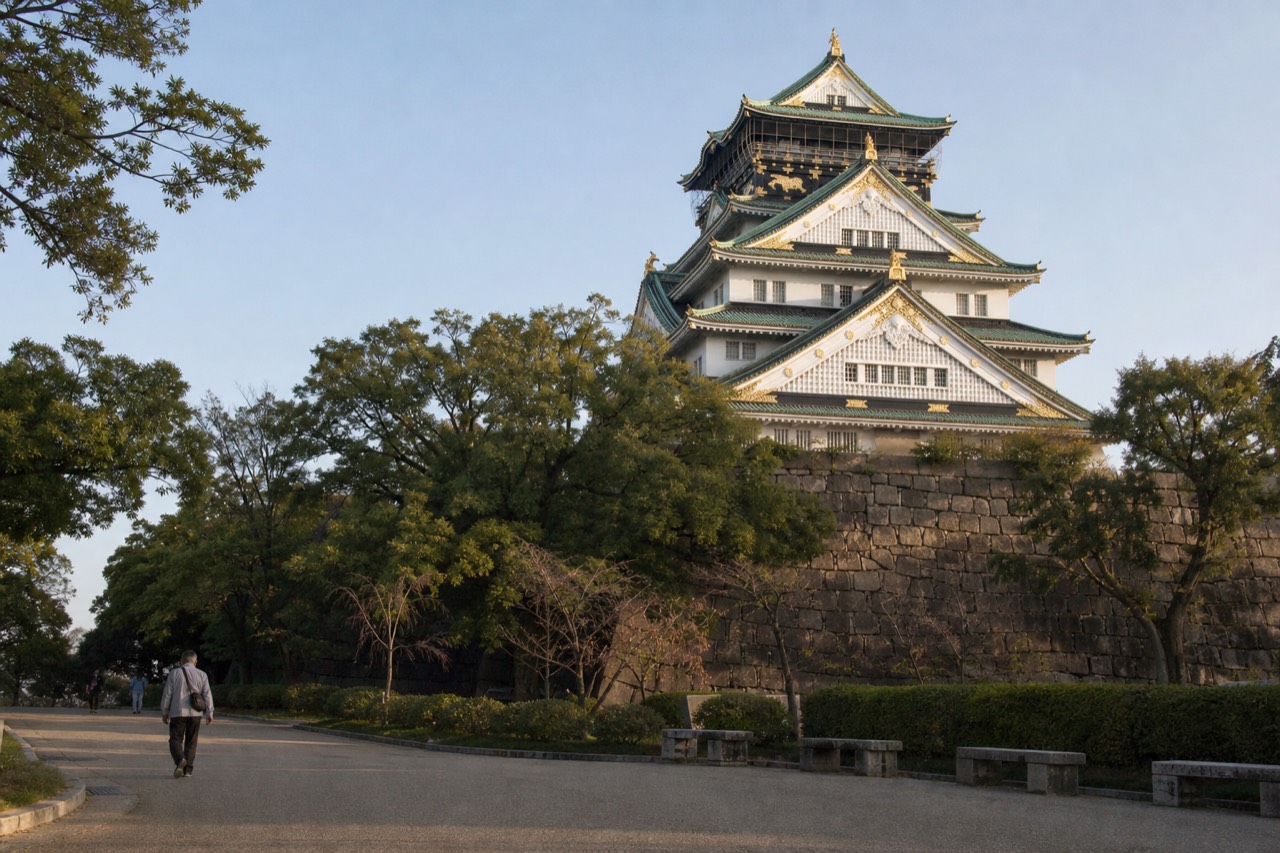
Yes, in the sense that matters most to a photograph: the tower you see above ground is not the 17th-century original. It is a ferro-concrete reconstruction completed in 1931, paid for by public subscription from Osaka's citizens, and it has functioned as a history museum since the day it opened. The previous Tokugawa-era tower burned after a lightning strike in 1665 and was never rebuilt.
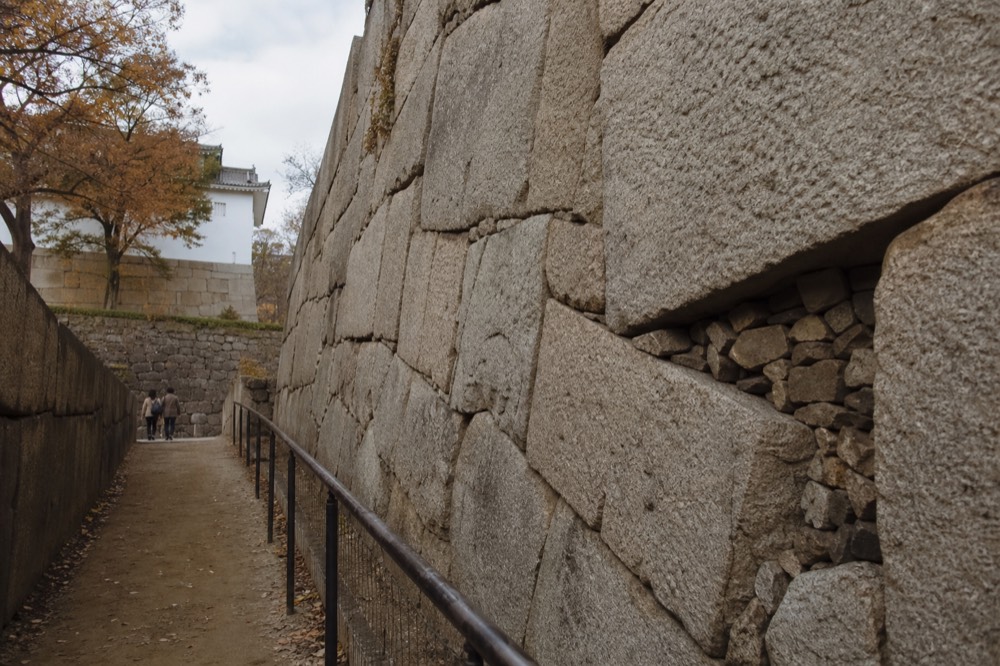
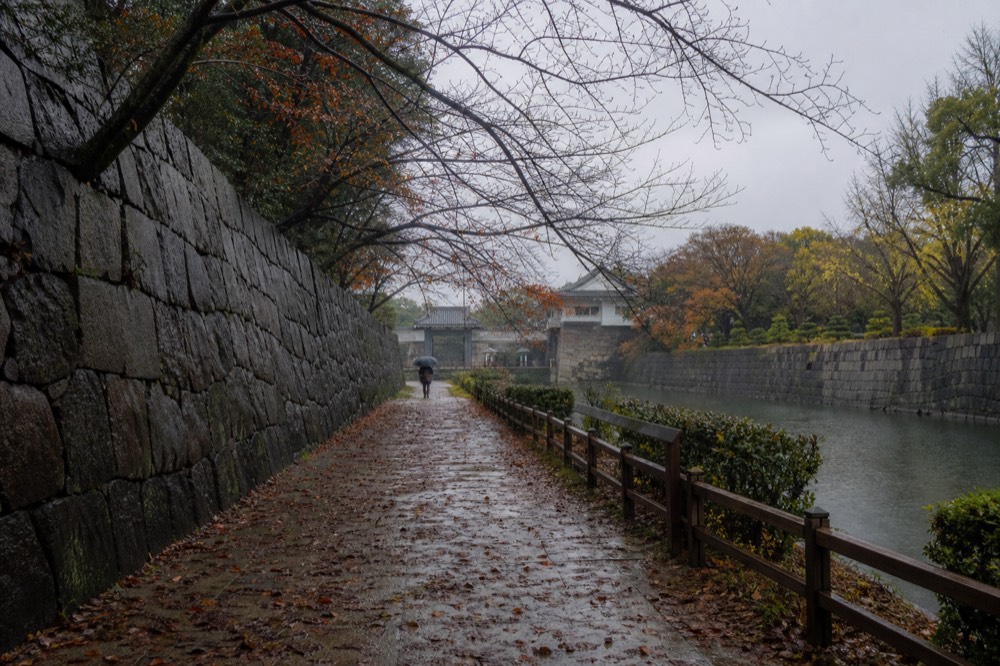
That is the straight answer, but it is only half of it. The tower sits on the original tenshudai, the stone base the Tokugawa shogunate raised in the 1620s, and everything around it, the massive stone walls, the moats, the Otemon gate and a dozen turrets and storehouses, is the genuine 17th-century castle. The park's own overview counts 13 structures there designated Important Cultural Properties in 1953. So a visitor who calls the whole site a replica is wrong; a visitor who calls the white tower a replica is right.
There is a third layer underneath. Hideyoshi's original castle of 1583 lies buried under the Tokugawa rebuild, and since 1 April 2025 you can actually walk down to a section of its stone wall in the Osaka Castle Toyotomi Stone Wall Museum. One site, three castles stacked. The Osaka Castle Tickets entry ticket covers the tower and that underground wall in a single admission.
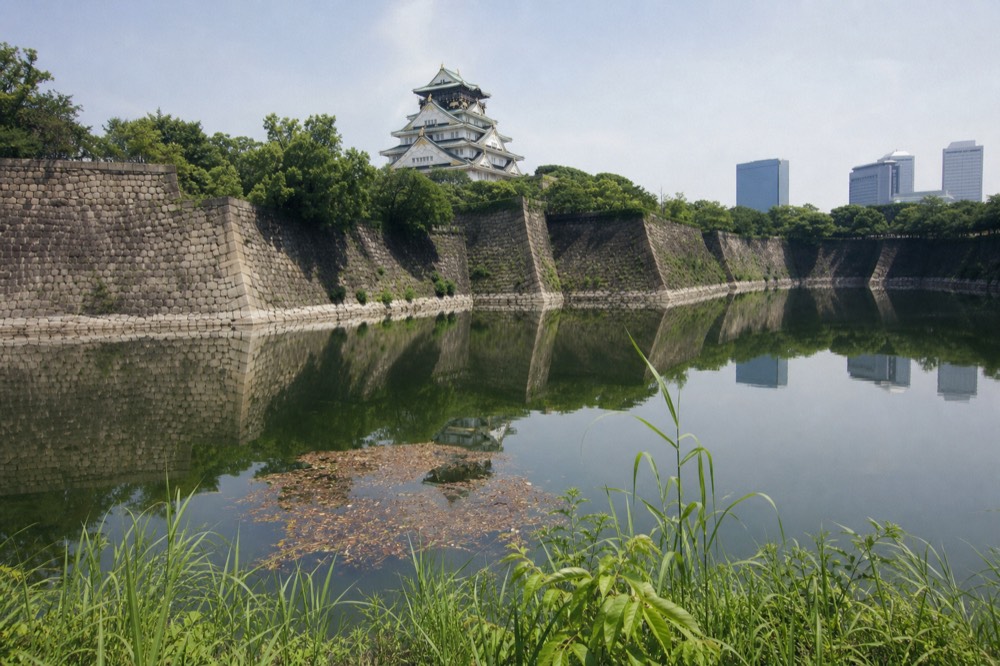
The distinction is not pedantry. It is the exact thing the worth-it decision rests on, and it explains why reviews of the tower split so sharply. People who expect to walk into a 400-year-old keep find a museum with an elevator; people who expect a museum with a 50-metre view over genuine Tokugawa stonework tend to come away satisfied. Knowing which of those you are is most of the battle. It also explains why the tower reads differently from Himeji, whose keep is the original wooden structure, a comparison worth making before you decide how much authenticity you personally need from a castle visit.
There is one more honest framing that helps. The 1931 tower is not a fake pretending to be old; it is a genuine artefact of its own period, the era of civic reconstruction, and Osaka City now recognises it as exactly that. The question to ask is not "is it real?" but "which of the three castles here am I actually looking at?" Most visitors are looking at all three within a single hour without noticing.
What Parts Of Osaka Castle Are Original?
The stone base under the tower, the surrounding walls and moats, and 13 surviving buildings are original Tokugawa-era work from the 1620s onward. The Otemon gate, the Tamon-yagura and Sengan-yagura turrets, the Inui-yagura and the Ensho-gura powder magazine are all genuine and designated Important Cultural Properties. The white tower itself is the 1931 rebuild. And below everything sits the buried Toyotomi castle of 1583.
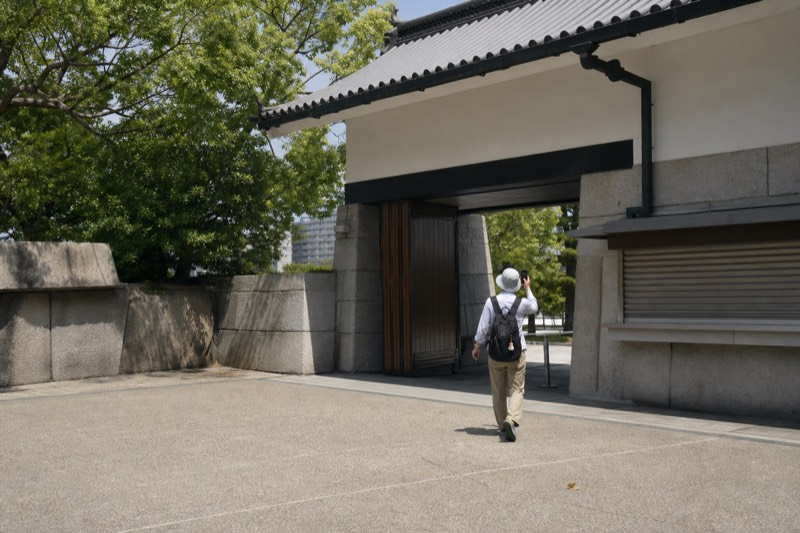
Walk in through the Otemon and you pass under a gate that has stood since the 1620s. The Sengan-yagura and Inui-yagura, both built in Genna 6 (1620) under the master builder Kobori Enshu, are together the oldest surviving buildings at the castle. The Ensho-gura powder magazine, finished in 1685, is the only stone powder magazine of its kind in Japan, with walls about 2.4 metres thick. None of that is replica work.
| Generation | Built | Fate | What you can see today |
|---|---|---|---|
| Toyotomi castle | 1583, by Hideyoshi | Burned in the Summer War of Osaka, 1615 | A section of stone wall, underground in the Toyotomi Stone Wall Museum |
| Tokugawa castle | 1620s rebuild, 10 years of work | Tenshu burned by lightning 1665; other buildings burned 1868 and were damaged in 1945 | The tenshudai base, walls, moats, Otemon and 12 other structures |
| 1931 reconstruction | Ferro-concrete tower funded by public subscription | Standing, repaired in the Heisei Great Repair of 1997 | The white tower itself, all eight floors |
The number that surprises most people is the depth of the burial. When the Tokugawa shogunate rebuilt the site, it piled about six metres of fill over the Toyotomi-era wall at the nakanodan tier, deliberately, as the castle's own English leaflet puts it, as if to erase the authority of the Toyotomi family. On the inner moat line a 1969 boring struck stone more than 25 metres below the surface. The 1984 discovery of the tsumenomaru wall about one metre below today's surface is what now forms the Stone Wall Museum exhibit, and the museum's own page documents the full timeline.
What you look at down there is masonry with a story attached. The official highlight list includes nozurazumi, natural-face stones barely worked at all, traces of the Summer War fires burnt onto the stone faces, and repurposed foundation stones carried in from ancient temples. A visitor standing at the wall is standing in front of stones that Hideyoshi's own labourers set in place, and that the Tokugawa shogunate spent a decade burying. It is the opposite of a replica: it is the original, deliberately hidden for four centuries and rediscovered by accident twice, in 1959 and 1984.
Why Was The Tower Rebuilt In 1931?
The 1931 reconstruction was the idea of the then mayor, Seki Hajime, and it was paid for by donations from the citizens of Osaka rather than by the government. The previous Tokugawa tower had been gone for over 260 years, and the ferro-concrete method was chosen because it could recreate the 17th-century silhouette without loading the fragile original stone base. It has been a museum since it opened.
After the lightning fire of 1665, the shogunate never rebuilt the tenshu, and the Meiji turmoil of 1868 destroyed most of the remaining buildings apart from the Otemon and parts of the Tamon-yagura. By the early 20th century the castle was a barracks site with an empty stone base. The citizens' campaign changed that, and the park itself opened on 7 November 1931, the same year as the tower.
Because the 1931 structure was deliberately built not to load the tenshudai, it survived something the stone base did not. In the air raid of 14 August 1945, the day before the surrender, a bomb landed a few metres north of the tower and shifted the stone wall visibly from its north face round to the east. The tower stood; corrective work on the wall followed in 1964. That story is covered in more detail in was Osaka Castle damaged in WWII.
The civic-funding detail deserves a beat of its own, because it is what separates this reconstruction from a theme-park imitation. Public subscription meant ordinary Osaka residents paid for their own tower, on the base of the castle their city was built around, as a museum rather than a military or government building. That is why the 2025 cultural-property designation treats the 1931 structure as historically significant in its own right: it records a real moment in the city's history, not an attempt to pass for something older.
How Many Times Has Osaka Castle Been Rebuilt?
Counting strictly, the castle has been built once by Hideyoshi in 1583, rebuilt once by the Tokugawa from 1620, and had its tower reconstructed once more in 1931. The 1615 Summer War destroyed the first, lightning destroyed the second's tower in 1665, the Meiji fires took the rest in 1868, and air raids damaged the site in 1945. That history of repeated destruction is exactly why people ask.
from $7.69 The from-price you see online and the price at the castle window are the same adult admission, so booking ahead costs nothing extra.
Your ticket into the tower
Official E-Ticket
- Osaka Castle Main Tower entry
- Osaka Castle Toyotomi Stone Wall Museum
- QR code entry
- Valid 30 days
- No fixed time slot
- No viewing time limit
Buying the official e-ticket ahead saves you the ticket-purchase line, not money, since the online price matches the window. You exchange nothing at the gate, you simply show the voucher and go in.
The real flexibility here is the voucher's 30-day validity, with no fixed time slot and no set viewing time limit.
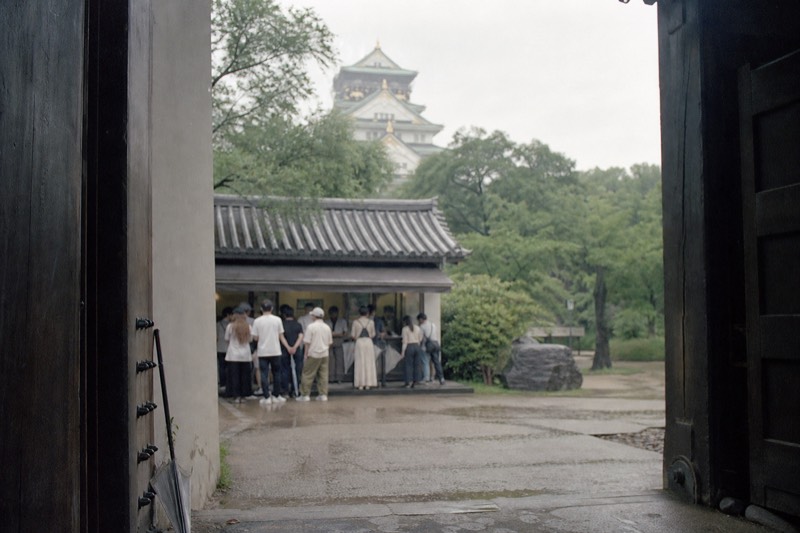
At The Gate
Adult, per person Group rate from 15 paying visitors Free categories at the window
¥1,200
The window price is identical to the online price, so nothing is lost by paying in person. Students and under-15s should buy here, because proof-of-age discounts are handled face to face and not through an e-ticket.
Students with ID and visitors aged under 15, since discounted and free rates are only applied at the window.
See what it covers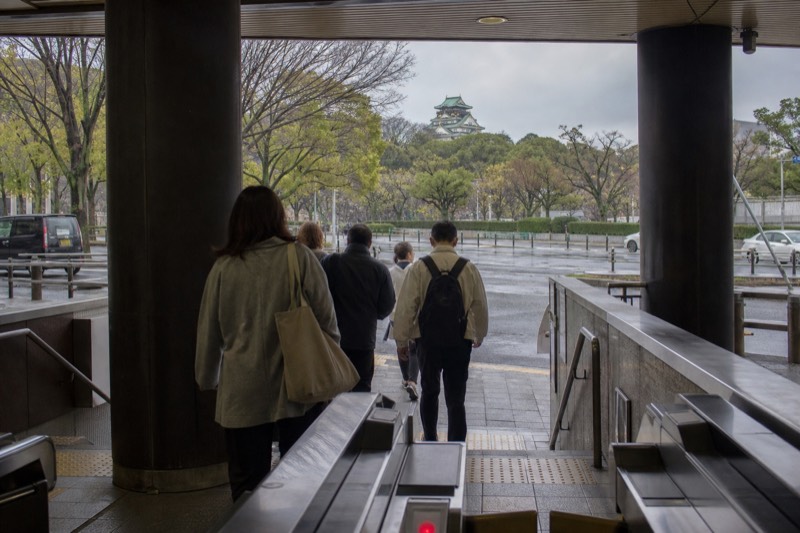
Osaka Amazing Pass
One-day pass On sale 25 March 2026 to 31 March 2027
¥3,500
The one-day pass costs 3,500 yen against the 1,200 yen castle ticket on its own, so it only pays off with two or more other paid sights. Add transport and the maths tips further in its favor.
Visitors packing several paid sights plus metro and bus rides into one day, who will clear the pass price easily.
See what it covers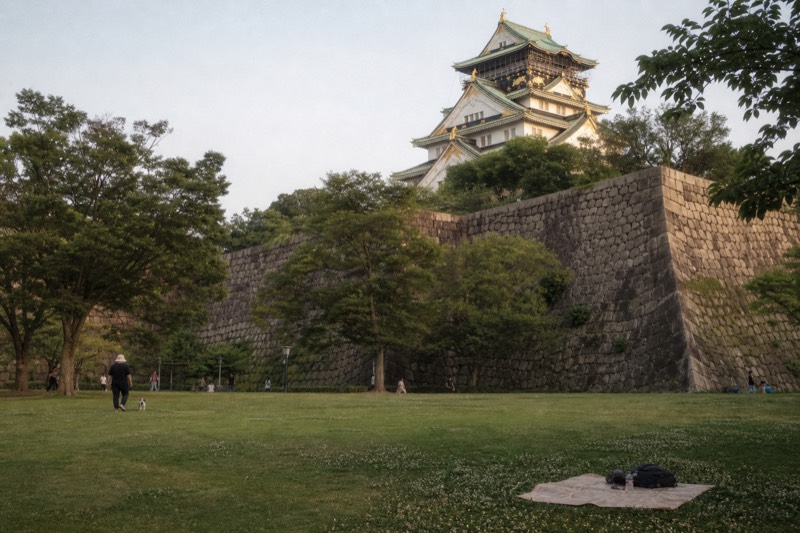
Free Park Areas
No admission charge
Free
The park grounds, moats, stone ramparts and exterior views of the tower cost nothing at all, and they fill a half day on their own. The paid line falls only at the Main Tower entrance and the Toyotomi Stone Wall Museum.
Anyone who wants the castle views, moats and grounds without paying to go inside the buildings.
See what it coversThe Tokugawa rebuild deserves its own emphasis, because it was not a repair. It took ten years, involved large-scale earth fill across the entire site, deepened the moats and produced a tenshu about 15 metres taller than Hideyoshi's, completely different in scale and character from the castle it replaced. The result was, in the museum's own curatorial figures, about 58 metres tall with its top at roughly 89 metres elevation, about 3 metres above today's reconstructed tower. If you want the full sequence of destructions and rebuildings, it is laid out in how many times Osaka Castle has been rebuilt.
Hideyoshi's original, by the same curatorial reckoning, is reconstructed at about 40 metres above the tsumenomaru surface, with its top at about 70 metres elevation, roughly 19 metres lower than the Tokugawa tower. Height alone understates it, the curatorial column notes, because it stood on a three-tier structure with a further wall beneath it, which is why contemporaries called it unrivalled. So even the "original" that the replica question assumes is a fixed reference point turns out to have been a different building at a different height on a different footprint.
One more wrinkle from the 1945 raid: the slippage in the tenshudai stone wall is still visible to a careful eye, a physical record of the war sitting directly under a tower most people file under "replica". The Heisei Great Repair of 1997 restored the 1931 structure to its original appearance, and the 2025 cultural-property designation recognised it as a genuine artefact of its own era, the civic-reconstruction era, rather than a fake Tokugawa tower.
What Does The 1931 Tower Actually Look Like Inside?
Inside it is a museum, and it always has been: a five-tier, eight-floor ferro-concrete building with an elevator, a theatre room on 1F, exhibitions on Hideyoshi and the Sengoku period on the middle floors, and an observation deck on 8F about 50 metres above ground. Photography is banned on floors 3 and 4, where Important Cultural Properties are displayed, and free everywhere else.
The floor guide from the castle's own exhibition page runs: 1F entrance, theatre room and museum shop; 2F castle information corner, with the life-size shachihoko replicas that are a popular photo spot; 4F and 3F, Hideyoshi and his era; 5F, the Summer War of Osaka folding screen with video and models; 7F, the life of Hideyoshi; 8F, the deck. Floor 6 is a closed corridor with no viewing floor and no public access. The 1F theatre was renewed in March 2025 and shows five programmes with Japanese, English, Chinese and Korean subtitles.
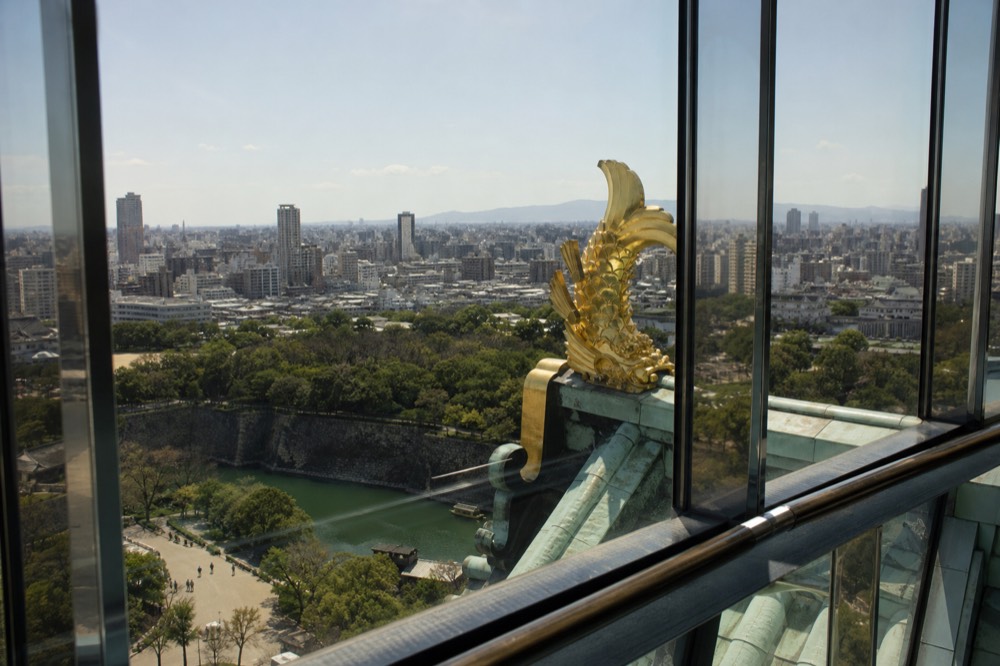
This is where the replica question turns practical. A concrete interior with an elevator is exactly what some visitors mean when they complain, in recent guest reviews, that the inside feels like a modern museum rather than a castle. It is a modern museum; it was designed as one. What it holds is not modern at all: Sengoku-era artefacts, the Summer War screen, and, since April 2025, an entire underground gallery of the 1583 wall that no 2024 guide could mention. If the interior layout is your main interest, the floor-by-floor detail is in inside Osaka Castle.
A couple of practical notes fall out of the museum character. The lift is up-only for general visitors, direct to 5F, with the rest of the climb and the whole descent by stairs; wheelchair users and visitors with walking difficulties may use it in both directions under staff guidance, and wheelchairs can go out onto the 8F deck. The tower lends 5 wheelchairs, in-building use only, no reservations. There are no coin lockers inside; bags are checked at the ticket counter at ¥100 per item. None of this says "castle keep", and all of it says "museum built in 1931 and managed like one ever since".
Does The Replica Answer Make It Less Worth Visiting?
The record says no: 2,813,851 people entered the tower in FY2025, a provisional all-time high, and the Osaka Castle Toyotomi Stone Wall Museum opened on 1 April 2025 inside the Honmaru and is covered by the Main Tower adult ticket of 1,200 JPY with no separate fee. The honest framing is that you are buying a museum with a view and an underground original, not a 400-year-old keep.
The worth-it verdict, in reporting voice, splits along expectations. Recent reviews praise the exterior, the deck view and the Toyotomi stone wall as the highlight that makes the ticket feel earned; the recurring criticism is the concrete interior and the crowds on the upper floors. Both halves are describing the same building. The castle's own admission figures come from the Osaka City announcement, and the figure should always be read as provisional until the confirmed count lands.
The exterior, it is worth adding, is the part that costs nothing and is in no sense a replica. The stone walls, the gates and the moats are free to walk, the park around them covers 105.6 hectares, and the tower is floodlit from sunset until 00:30 every night of the year bar one inspection day. A visitor who decides the tower is not for them can still spend a rewarding hour with the original castle outside the ticket gate, which is exactly what many of the less satisfied reviewers end up recommending to others.
So the practical advice is to reverse the question. Instead of asking whether the tower is real, ask what a ticket buys: admission to the 1931 museum, the 8F deck at about 50 metres, and the buried Toyotomi wall that is as real as castle stonework gets, all on one QR-coded entry with a 30-day validity window and no fixed time slot. Students should still buy at the gate, since high school and university students pay ¥600 with proof and junior high and under enter free, rates the online ticket does not sell.
For the fuller argument on both sides, including what recent visitors say in their own words, see is Osaka Castle worth it. The short version: nobody leaves disappointed by the walls, and the tower rewards people who arrive knowing it is a museum.
These are the questions visitors ask most after learning the tower is a 1931 reconstruction, answered directly from the castle's own published material. The short answers: only the tower is a replica, everything in stone around it is original, the buried Toyotomi wall is viewable underground, and the concrete construction is the reason the tower survived the war damage that shifted the stone base beneath it.
Common Questions About Osaka Castle Being A Replica
Is Osaka Castle A Replica?
Partly. The white tower is a 1931 ferro-concrete reconstruction funded by public subscription, and it has been a museum since it opened. The stone base under it, the walls, moats, Otemon gate and a dozen turrets and storehouses are original Tokugawa-era structures from the 1620s, and the Toyotomi-era wall has been on display underground since April 2025.
Is The Current Osaka Castle Tower The Original?
No. The original Toyotomi tower fell in 1615, the Tokugawa tower burned in 1665, and the present structure is the third generation, rebuilt in 1931 and restored in the 1997 Heisei Great Repair. The tenshudai stone base it stands on is original.
Can You See Anything From The Original Toyotomi Castle?
Yes. A section of the tsumenomaru stone wall, buried under about six metres of Tokugawa fill and rediscovered in 1984, is on display in the Osaka Castle Toyotomi Stone Wall Museum, which opened on 1 April 2025 and is included in the standard tower admission.
Why Did Osaka Castle Rebuild Its Tower In Concrete?
The 1931 rebuild, proposed by mayor Seki Hajime and funded by citizens' donations, used ferro-concrete so the tower would recreate the 17th-century silhouette without loading the fragile original stone base. That design choice is why the tower survived the 1945 air raid that shifted the stone wall beneath it.
Do The Crowds And The Replica Status Make It Not Worth It?
The crowd level is real: the castle warns the ticket queue may be capped before 17:30, and the upper floors get very congested. Still, 2,813,851 people entered in FY2025, a provisional record, so the answer for most visitors is that it is worth it when you know what you are buying, a museum, a 50-metre view and an underground original wall.