What Is The Rainiest Month In Osaka?
June is Osaka's rainiest month on the JMA climate normals, and rainy season changes how a visit to Osaka Castle and its park actually feels. Here is what the data says and how to plan around it.
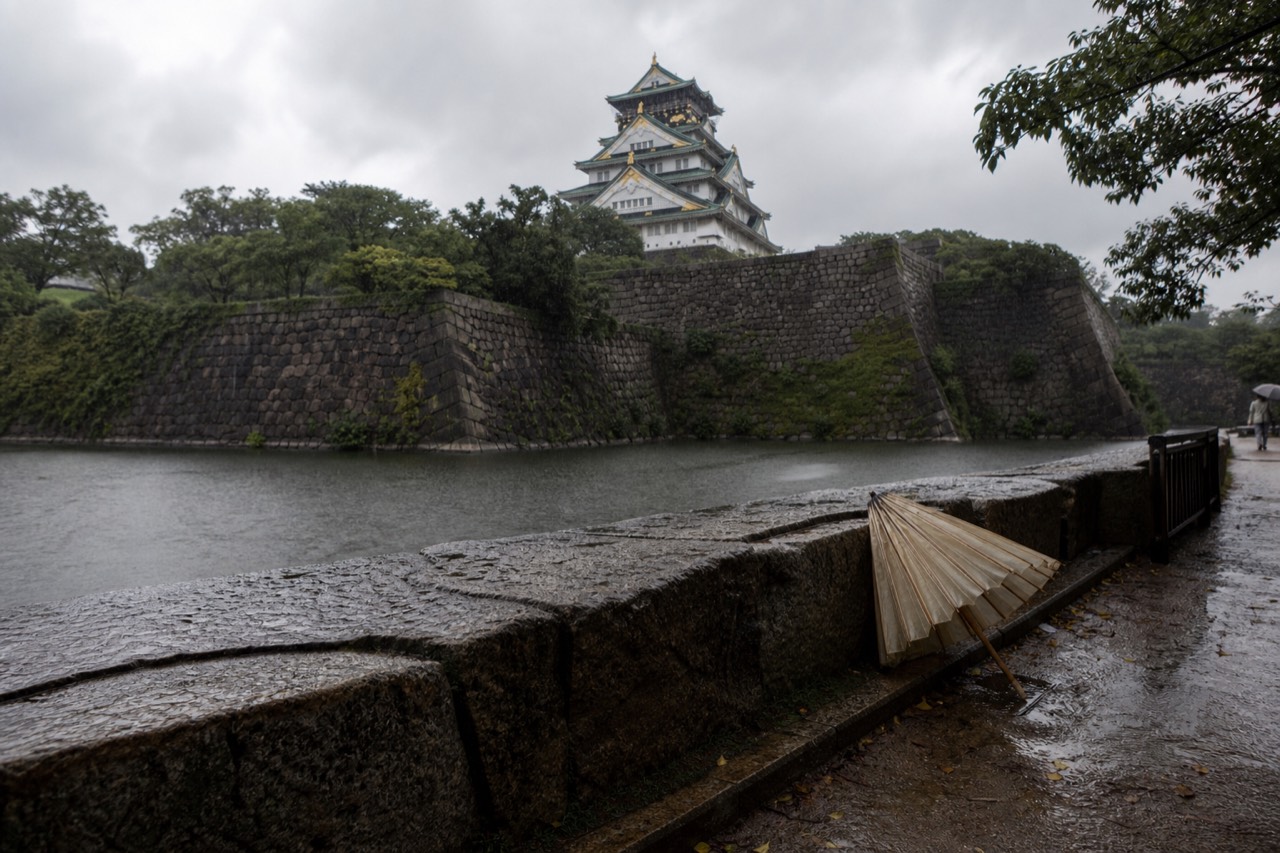
What Is The Rainiest Month In Osaka?
June is the rainiest month in Osaka, averaging about 185.1 mm of precipitation in the Japan Meteorological Agency's 1991-2020 climate normals, with July close behind at 174.4 mm and September third at 152.8 mm. The June and July peaks line up with tsuyu, the East Asian rainy season, which stalls over Kinki every early summer.
Those three figures come from the JMA's own published normals, viewable station by station in the agency's ClimatView normals graph for Osaka. Normals are 30-year averages, not a forecast: they describe what the city's rain has typically added up to between 1991 and 2020, and the agency reissues them roughly each decade. That matters here, because the honest answer to "which month is wettest" is a climatological one, and the honest framing is "on average," never "every year."
The shape of Osaka's rain year is a double peak. The first is the June-July rainy season, when a stationary front sits over the Japanese archipelago and delivers long, grey, drizzling days rather than dramatic storms. The second is September, which carries typhoon-season rainfall and often the single wettest days of the year, even though its monthly total lands below June's. Between and around those peaks, August is comparatively dry at about 113.0 mm on the normals, and winter is the driest stretch of all.
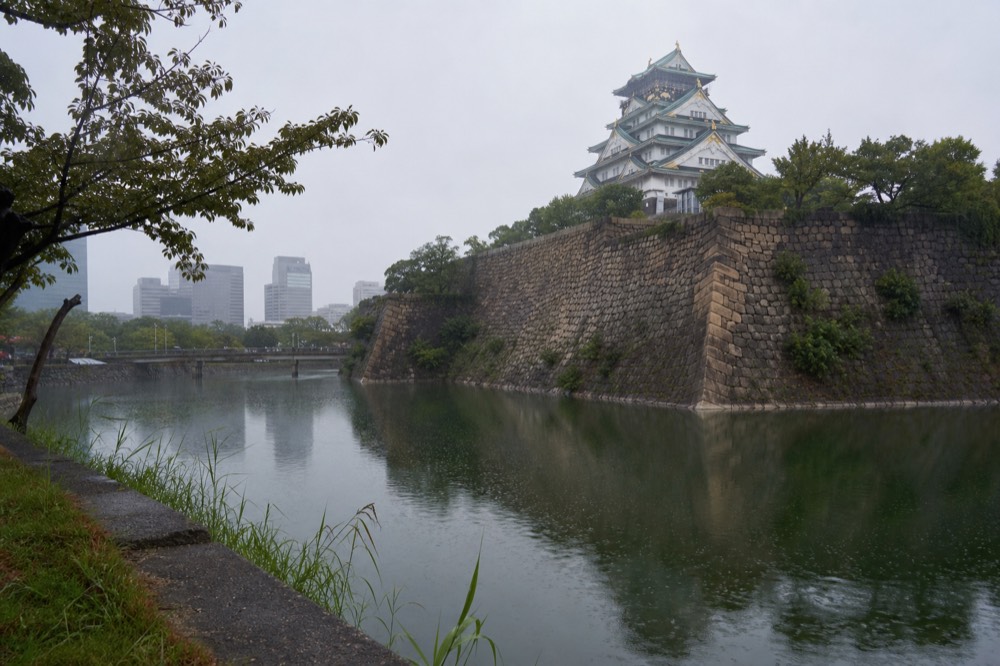
For a castle visitor the practical reading is simple. If your trip falls in June, plan for sustained damp rather than one washout day. If it falls in September, plan for the possibility of a heavy event, but also for bright, dry intervals between systems. The rest of the year, rain is a matter of luck more than climate.
| Month | Mean precipitation (JMA 1991-2020 normals) | Mean temperature | What it means for a castle day |
|---|---|---|---|
| January | 47.0 mm | 6.2°C | Driest month, but cold |
| February | 60.5 mm | 6.6°C | Dry, cold, occasional snow |
| March | 103.1 mm | 9.9°C | Mixed, blossom season begins |
| April | 101.9 mm | 15.2°C | Peak blossom, showers common |
| May | 136.5 mm | 20.1°C | Warm, increasingly wet |
| June | 185.1 mm | 23.6°C | Rainiest month, tsuyu |
| July | 174.4 mm | 27.7°C | Tail of tsuyu, then heat |
| August | 113.0 mm | 29.0°C | Hot, driest of summer |
| September | 152.8 mm | 25.2°C | Typhoon-season rain |
| October | 136.0 mm | 19.5°C | Mild, changeable |
| November | 72.5 mm | 13.8°C | Drying out, autumn colour |
| December | 55.5 mm | 8.7°C | Dry, illumination season |
A note on how to read that table: it is a summary of the same JMA normals described above, expressed in millimetres of monthly precipitation. It is not a promise about any particular year. The 2026 rainy season, for instance, behaved differently from the 30-year mean in both timing and length, which is exactly why you should treat normals as a baseline and check a live forecast for your own dates.
When Does The Rainy Season Start And End In Osaka?
On the 2026 season, the Kinki region's tsuyu, the rainy season that normally settles over Osaka through June and into July, brings the heaviest and most persistent rain of the year. On the climate normals, June and July carry the rain, and the front usually clears by late July.
The distinction in that answer matters, so it is worth slowing down. The start and end dates of the rainy season are not calendar facts; they are meteorological declarations the JMA issues only after assessing the season, and they are provisional when issued. The specific 2026 dates above were returned by a forecaster's summary, tenki.jp, in a rainy-season page, not read from a JMA page directly, so they are reported here with that attribution rather than stated as the agency's own words. The general pattern, a June onset and a July clearance across Kinki, is consistent year to year and is the part you can plan around.
What tsuyu actually feels like is not what visitors from, say, Northern Europe picture as "a rainy month." The rainfall total is high, but it arrives as long stretches of low cloud, drizzle, mugginess and the occasional heavier day, with temperatures in the mid-twenties. Umbrellas are universal, and the humidity, not the water, is what most visitors complain about in June. Osaka's low-lying, heat-retaining cityscape makes the weeks either side of tsuyu famously oppressive, and the JMA's monthly normals show July and August mean temperatures of 27.7°C and 29.0°C, with June at 23.6°C.
The castle park in the wet weeks is a particular experience. The 105.6-hectare park drains slowly in places, the stone-paved approaches to the gates run with a fine film of water, and the castle's operators warn that the ticket-purchase queue can be capped before the 17:30 last admission when crowds run late in the day, which rain does little to relieve if the day is otherwise busy. Some visitors find the moody, wet version of the moat and walls genuinely atmospheric. It is. But it is also the month where footwear choices earn their keep.
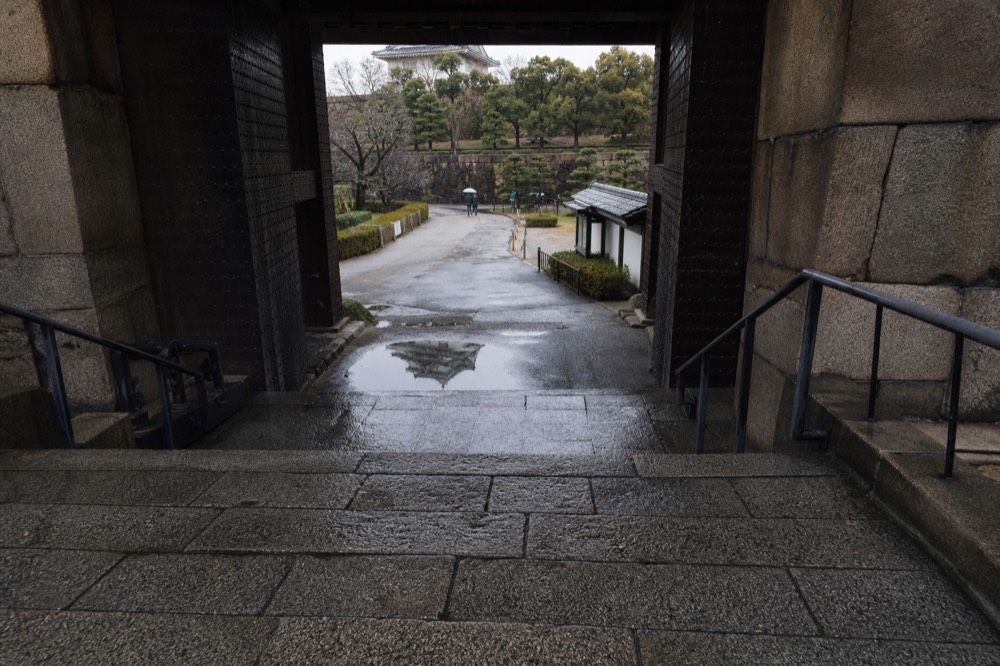
If you are choosing between June and an alternative for a castle-focused trip, the honest comparison is against the two adjacent summers. July buys you the end of tsuyu and the start of serious heat. August buys you the driest summer month and peak heat. June buys you rain and the greenest, lushest version of the park, with hydrangea along the paths and far thinner crowds than either neighbour. Trade-offs, all of them.
Does Rain Ruin A Visit To Osaka Castle?
Rain does not close the Main Tower: it is a 1931 ferro-concrete museum open 9:00 to 18:00 with last admission 17:30, closed only 28 December to 1 January. What rain costs you is the outdoor half of the day: 105.6 hectares of park, the stone-wall approaches, and open-air transport across the grounds, all of it wetter and slower.
The single most useful thing to know about Osaka Castle in bad weather is that the paid attraction is indoors. The ¥1,200 adult tower ticket, the same admission the Osaka Castle Tickets entry e-ticket covers at from $7.69, buys you a purpose-built museum building: eight floors of exhibition space, an elevator running up to the 5th floor, and an 8F observation deck about 50 m above ground behind glass. The current tower has been a museum since it was rebuilt in 1931, and it was built to be walked through in any weather. The 1F theater room, renewed in March 2025, screens programmes on Hideyoshi and the castle with Japanese, English, Chinese and Korean subtitles, a genuinely good rainy-hour activity.
The ticket also covers the Osaka Castle Toyotomi Stone Wall Museum, which opened 1 April 2025 and has no separate admission. That is an underground gallery built around a section of the stone wall from Hideyoshi's castle that the Tokugawa shogunate buried under roughly 6 m of fill, invisible above ground anywhere else. It is, by construction, an indoor attraction, and it is arguably the best wet-weather exhibit on the site: the wall you look at predates the Tokugawa burial by more than two centuries.
Two practical cautions for a wet day inside. First, photography is banned on the 3rd and 4th floors because Important Cultural Properties are displayed there, and free elsewhere. Second, there are no coin lockers inside the tower; the bag check costs ¥100 per item, runs 9:00 to 17:30 and must be collected by 18:00, and large volumes can be refused, so a dripping oversized umbrella or a soaked daypack is better left in a station locker. Free audio guides in Japanese, English, Korean and Chinese are lent from the 1F and 5F information counters, with reception until 17:00 and return by 17:30.
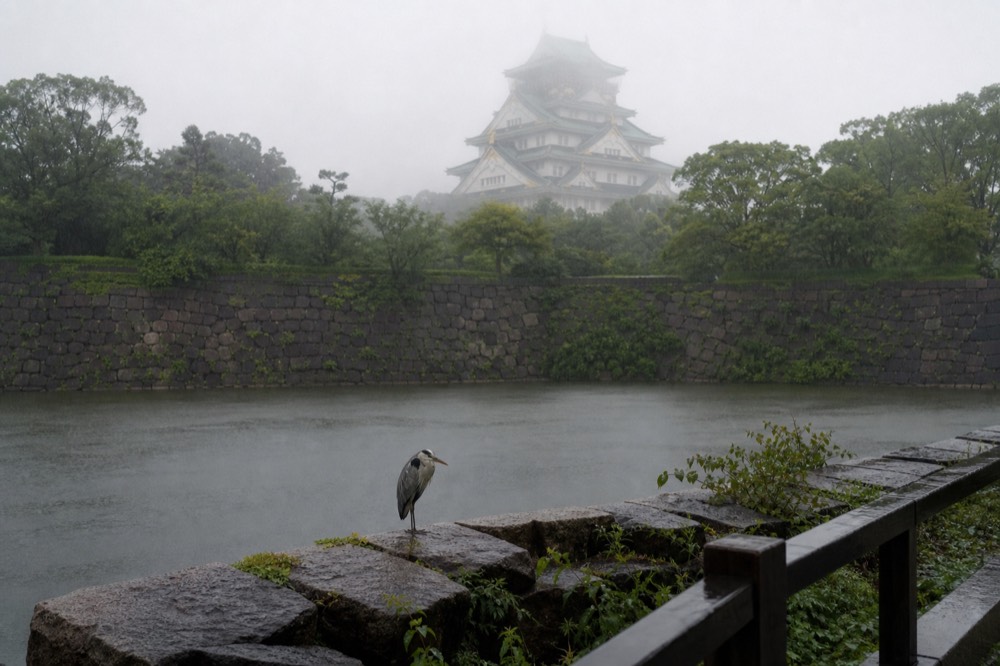
The part rain genuinely degrades is the grounds. The walk from any station to the tower is a park route, not a street route; the castle museum's own map gives about 18 to 21 minutes on foot from every rail station, across open ground and through gates. The park's Road Train and Electric Car, the little shuttle services that loop the grounds, are open-air vehicles, and waits lengthen in wet peak periods. If mobility or a small budget of patience is part of your group's picture, a rainy June day at the castle is a plan you build around, not one you improvise. The flat, wheelchair-passable route the castle itself endorses runs from Tanimachi 4-chome station via the Otemon, which is worth knowing on a slick day even for able-bodied visitors, since the stone steps near other gates are the first surfaces to turn treacherous.
One consolation unique to wet weather: the castle's exterior illumination is free, runs from sunset until 00:30, and there is something quietly spectacular about the white tower floodlit above a rain-dark moat. The castle's own FAQ is the source for those hours. If the rain eases after dark, that view costs nothing.
from $7.69 The from-price you see online and the price at the castle window are the same adult admission, so booking ahead costs nothing extra.
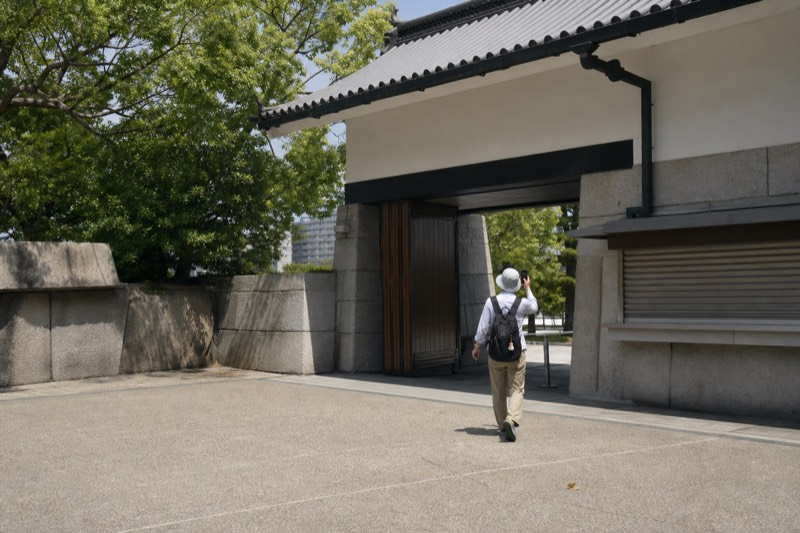
Your ticket into the tower
Official E-Ticket
- Osaka Castle Main Tower entry
- Osaka Castle Toyotomi Stone Wall Museum
- QR code entry
- Valid 30 days
- No fixed time slot
- No viewing time limit
Buying the official e-ticket ahead saves you the ticket-purchase line, not money, since the online price matches the window. You exchange nothing at the gate, you simply show the voucher and go in.
The real flexibility here is the voucher's 30-day validity, with no fixed time slot and no set viewing time limit.
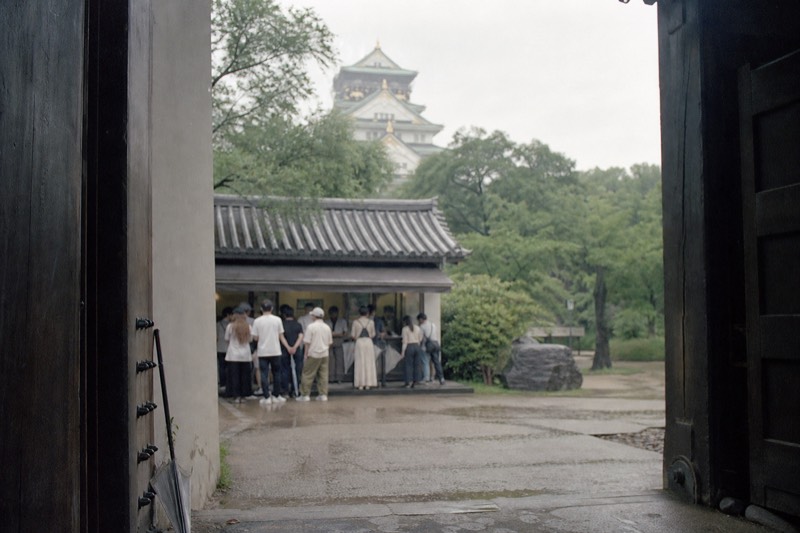
At The Gate
Adult, per person Group rate from 15 paying visitors Free categories at the window
¥1,200
The window price is identical to the online price, so nothing is lost by paying in person. Students and under-15s should buy here, because proof-of-age discounts are handled face to face and not through an e-ticket.
Students with ID and visitors aged under 15, since discounted and free rates are only applied at the window.
See what it covers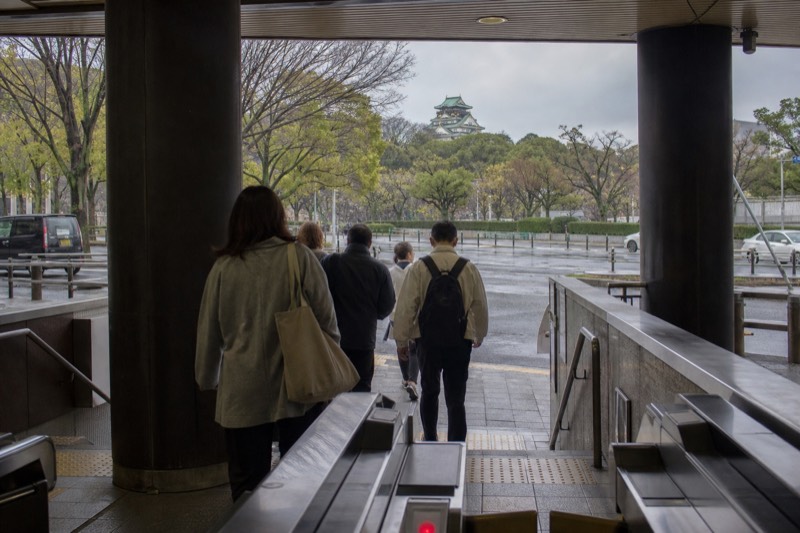
Osaka Amazing Pass
One-day pass On sale 25 March 2026 to 31 March 2027
¥3,500
The one-day pass costs 3,500 yen against the 1,200 yen castle ticket on its own, so it only pays off with two or more other paid sights. Add transport and the maths tips further in its favor.
Visitors packing several paid sights plus metro and bus rides into one day, who will clear the pass price easily.
See what it covers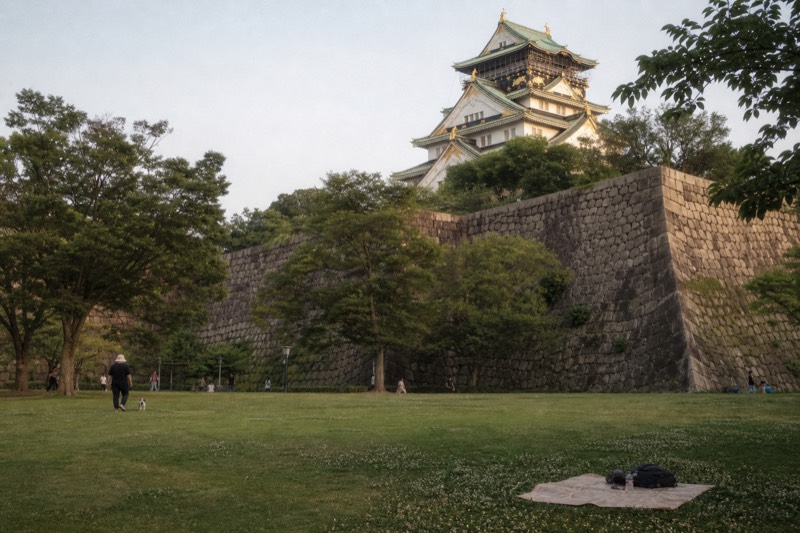
Free Park Areas
No admission charge
Free
The park grounds, moats, stone ramparts and exterior views of the tower cost nothing at all, and they fill a half day on their own. The paid line falls only at the Main Tower entrance and the Toyotomi Stone Wall Museum.
Anyone who wants the castle views, moats and grounds without paying to go inside the buildings.
See what it coversWhat Should You Do In Osaka On A Rainy Day?
On a wet June day, the strongest plan is the indoor half of the castle site first, the tower and the Stone Wall Museum, then Nishinomaru Garden's covered spots or a move indoors to the Osaka Museum of History, which sits beside the park at ¥600 adult admission. Recent traveller reports of time spent inside the tower run about 50 to 60 minutes, or 1.5 hours for careful readers.
Sequence matters on a wet day, because the queue behaves differently from the weather. The castle's official guide warns that the ticket-purchase line can be restricted before the 17:30 last admission when conditions demand it, and morning is when the line is longest, so a mid-morning or early-afternoon arrival often trades a little queue time for a drier window. An advance e-ticket removes the ticket-purchase line itself, though you still pass the entry gate in turn. The museum's own practical guidance is that most visitors spend 50 to 60 minutes inside, and about 1.5 hours if you read properly, so budget the tower and Stone Wall Museum together as a solid two-hour indoor block.
After that, the honest wet-day options near the castle are these. Nishinomaru Garden, a separate ¥300 adult ticket, is mostly open lawn, but it holds some of the oldest surviving buildings at the castle, the Sengan-yagura and Inui-yagura turrets, built in 1620, and the Ensho-gura, a granite powder magazine from 1685 whose stone walls run about 2.4 m thick. The garden closes at 17:00 from March to October and is shut Mondays, so it is a daylight, partly exposed option. The Osaka Museum of History, a short walk west, is the nearest full indoor neighbour, and note that its old combined ticket with the castle ended on 27 December 2024, so budget the ¥600 separately. The tower's own facilities round out the list: the theater room on 1F, the samurai helmet try-on on 2F at ¥500 per session, and the museum shops on 1F and 8F.
If the day is fully written off by rain, the guided walking option changes shape rather than dying. The Osaka Castle Walking Guided Tour runs 1.5 to 3 hours with a live English-speaking guide over the castle grounds, in private or small-group formats, from $28.85; its base price does not include tower admission, which is exactly why a wet-day plan can pair it with the entry ticket or swap it for an indoor-first itinerary. The two products answer different questions, and a rainy June day is the scenario where that distinction becomes practical: some visitors take the walk in the lighter rain and duck into the tower when it heavy. If your alternative is a day trip, the Himeji comparison changes too, since Himeji Castle's interiors are far less museum-like; our Osaka versus Himeji castle comparison works through that trade-off, including Himeji City's 1 March 2026 move to charge non-resident adults 2,500 JPY where residents pay 1,000 JPY.
Which Months Are Driest, And When Should You Visit Instead?
January is Osaka's driest month on the same JMA 1991-2020 normals, about 47.0 mm, with February second at 60.5 mm and December third at 55.5 mm. The trade for dry ground is winter light, a cold wind off the moat, and early sunsets, though the castle's free illumination runs from sunset to 00:30 and winter nights give it the longest stage.
Between the wet peak and the dry trough, two shoulder windows do the most work for castle visitors. March and April carry similar monthly totals on the normals, wet enough to pack for but mild, and they hold the plum and cherry seasons: the Plum Grove holds about 1,245 trees of 105 varieties on the park's own count, and the park-wide cherry display is about 3,000 trees, mainly Somei-Yoshino. The park does not publish a fixed blossom date range; it publishes a mechanism, the JMA's official Somei-Yoshino specimen tree inside Nishinomaru Garden, whose opening blossoms trigger Osaka's declaration. The nearest official proxy for a viewing window is the Kan'o Nighter, the garden's blossom-night opening, which in 2026 ran 20 March to 12 April at ¥350 admission. October and November, at 136.0 mm and 72.5 mm, are the autumn counterpart: changeable, then drying, with the park's maple garden turning and the tower's autumn special exhibition season running.
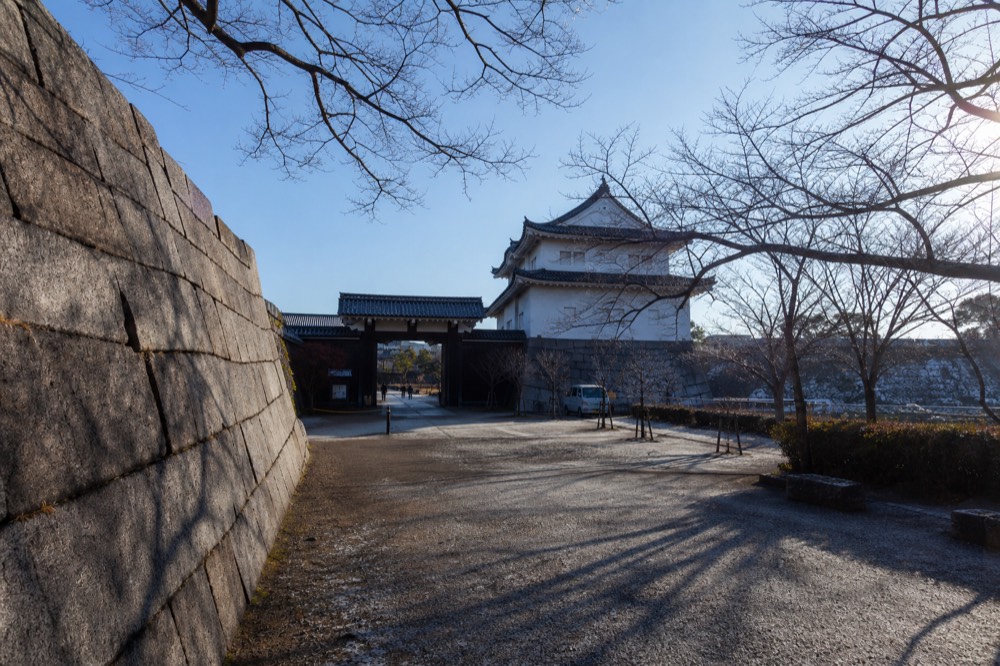
If you want the driest realistic castle day rather than the driest calendar month, late autumn into early winter is the strongest play: November's 72.5 mm and December's 55.5 mm come with stable highs, thin crowds, and the illumination switched on from sunset. The one winter closure to plan around is the tower's 28 December to 1 January shutdown, the only scheduled closure in its year, and Nishinomaru Garden's slightly longer 28 December to 4 January closure plus its Monday shut days.
For a fuller month-by-month crowd and weather picture, our best month to visit Osaka guide works through the trade-offs, and our piece on which month to avoid in Osaka covers the holiday blocks that matter more than rain for queue times. Rain, in the end, is the one variable you can dress for. Golden Week crowds you cannot.
The last word on the rain itself: the JMA normals are the only figures in this article presented as climatological fact, and they deserve their attribution. Everything about a specific season, including the 2026 tsuyu dates, is reported reporting, not a law. Pack for June accordingly, and check the forecast before you commit your castle day to it.
The two options above cover both halves of a wet-weather day: the entry ticket is the indoor anchor, and the guided walk is the outdoor half you take only if the radar gives you a window. A rain plan is really just a sequencing problem, and June is the month that rewards solving it before you leave the hotel.
These are the questions visitors actually ask about Osaka's rain, answered from the JMA normals and the castle's own published rules: which month is wettest, whether the rainy season rains all day, whether the castle stays open, which month is driest, and where typhoons fit in. Each answer below is short, sourced and practical for planning a castle day.
Common Questions About Rain In Osaka
What Is The Rainiest Month In Osaka?
June, on the Japan Meteorological Agency's 1991-2020 climate normals: about 185.1 mm of precipitation on average, ahead of July at 174.4 mm and September at 152.8 mm. June coincides with tsuyu, the East Asian rainy season, which typically sits over Kinki from early June into July.
Does It Rain All Day During The Rainy Season?
Not usually. Tsuyu tends to deliver long spells of drizzle, low cloud and high humidity rather than continuous downpours, broken by dry intervals. Some days are fully wet, others fully dry. Carry an umbrella daily and plan one or two indoor anchors, such as the castle tower and the Toyotomi Stone Wall Museum, for the wet ones.
Is Osaka Castle Open In The Rain?
Yes. The Main Tower is a 1931 ferro-concrete museum, open 9:00 to 18:00 with last admission 17:30 and closed only 28 December to 1 January. The outdoor park and its open-air shuttle stay open too, though the stone steps and paved approaches get slippery and the ticket-purchase queue can be capped before 17:30 when late-day crowds run heavy.
What Is The Driest Month In Osaka?
January, at about 47.0 mm on the same JMA normals, with February at 60.5 mm and December at 55.5 mm behind it. Winter brings the driest ground and the castle's free exterior illumination from sunset to 00:30, at the cost of cold weather and the tower's short 28 December to 1 January closure.
Are Osaka's Typhoons In The Rainy Season?
No, they mostly come after it. Typhoon risk in Kinki concentrates in August and especially September, which is why September still averages 152.8 mm even though tsuyu is long over. If a typhoon approaches during your trip, the castle may close temporarily for natural disasters, a possibility the Osaka Amazing Pass facility terms state explicitly for the tower.