Osaka Castle Museum Exhibits: Armour, Folding Screens And The Buried Toyotomi Walls
The Main Tower has been a museum since the day it was rebuilt in 1931, and the ¥1,200 adult ticket now covers two museums: the exhibit floors of the tower itself and the underground Osaka Castle Toyotomi Stone Wall Museum.
Short answer
The Osaka Castle Museum is the history museum inside the Main Tower, a museum since its 1931 rebuilding. Admission is ¥1,200 for adults, about $7.69, covering the tower exhibits and the Toyotomi Stone Wall Museum. Highlights include the Summer War folding screens, Hideyoshi-era displays and an observation deck about 50 m up.
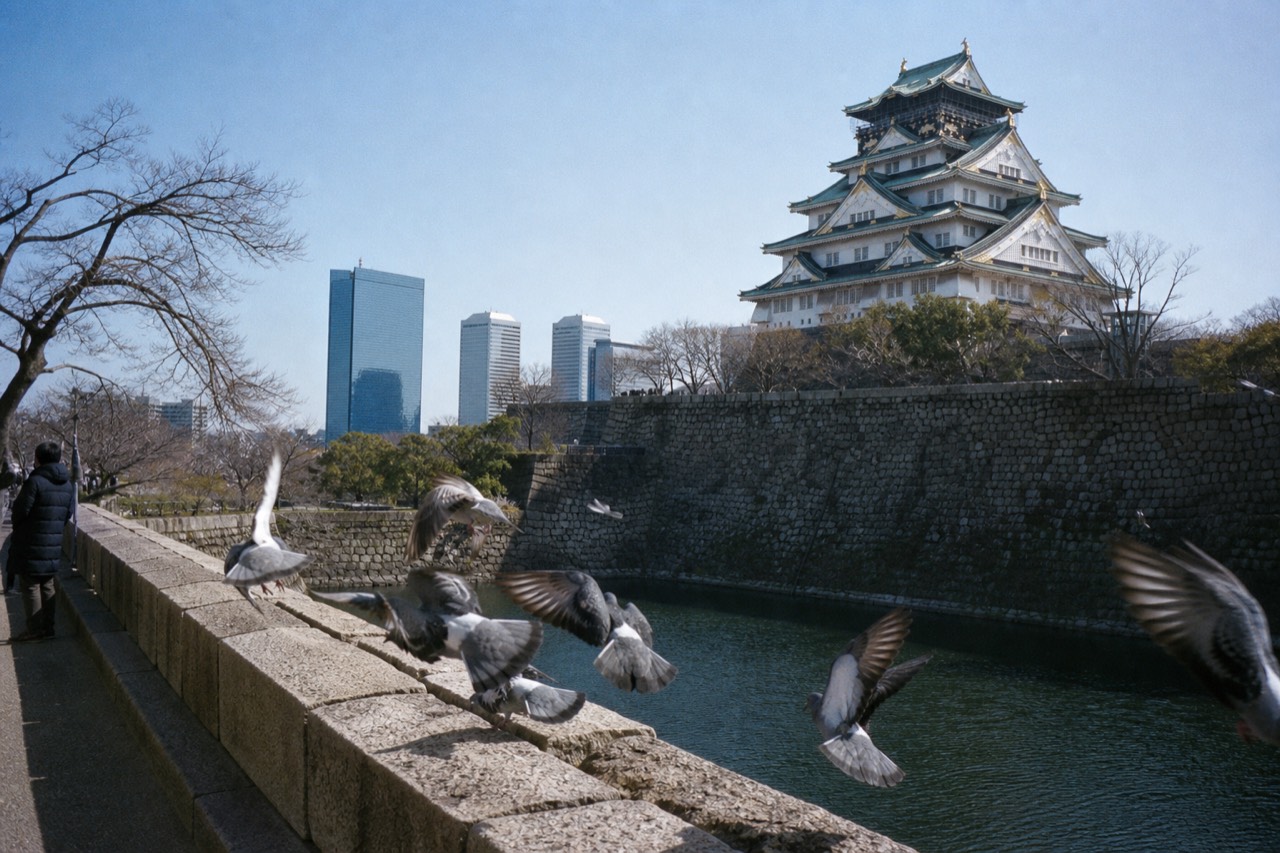
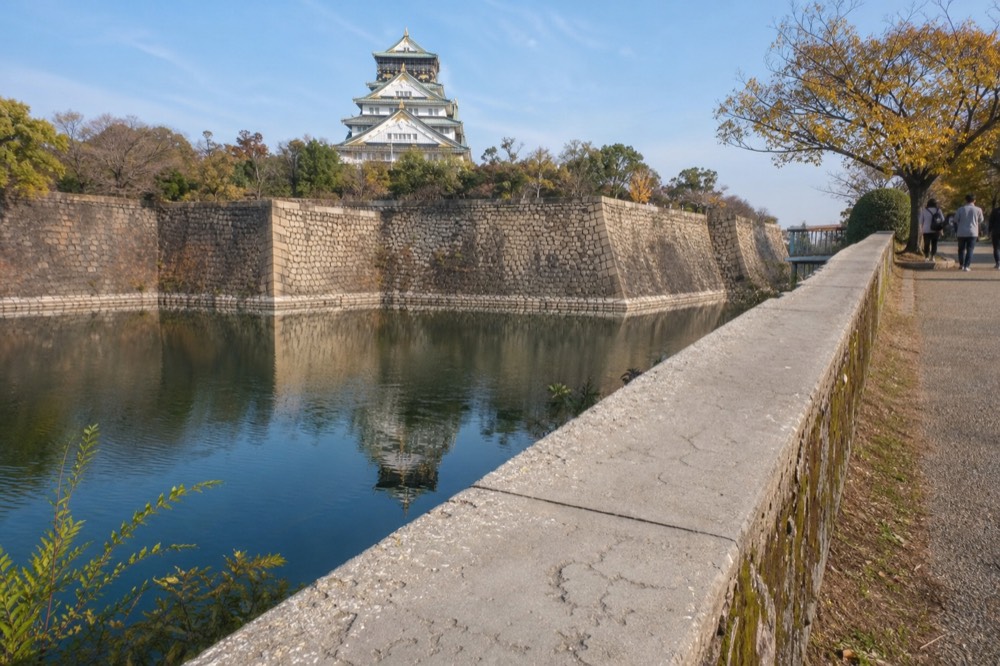
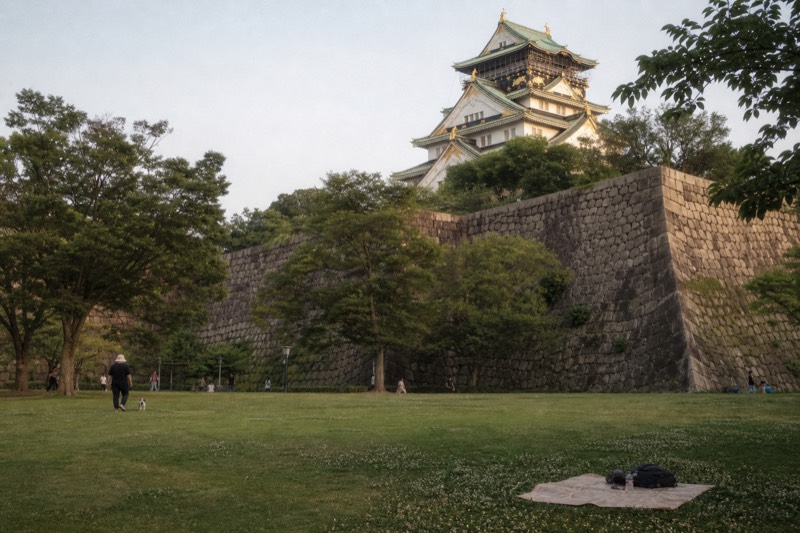
The Main Tower of Osaka Castle has been a museum since the day it opened in 1931. It was rebuilt by public subscription from the citizens of Osaka, on the proposal of the then mayor Seki Hajime, and it was conceived from the start as a place to hold and rotate collections relating to Hideyoshi, the Sengoku period and the castle's own history. That is still what it is. The building people photograph from the moat is a five-tier, eight-floor ferro-concrete reconstruction, and the reason to go inside is not the architecture, which is modern, but the collection and the view.
This guide is deliberately about the exhibits rather than the visit. For the floor-by-floor practical walkthrough, see the companion page inside the Main Tower; here we take the collection seriously: the Summer War folding screens, the Toyotomi-era material, the golden aesthetic Hideyoshi built his reputation on, and the underground Stone Wall Museum that opened on 1 April 2025 and quietly changed what the ticket buys.
What Is The Osaka Castle Museum?
The Osaka Castle Museum is the history museum operating inside the reconstructed Main Tower, and it has been one since the tower was rebuilt in 1931 as a purpose-built home for collections relating to Hideyoshi, the Sengoku period and the castle's own story. The castle's own operator, which runs the tower at osakacastle.net, describes the whole site as a National Special Historic Site whose surviving gates and turrets are mostly National Important Cultural Properties. The tower itself is the third generation, registered as a National Registered Tangible Cultural Property in 1997 and designated an Osaka City Tangible Cultural Property on 10 July 2025. Everything above ground is the Tokugawa rebuild; the Toyotomi castle lies buried beneath it.
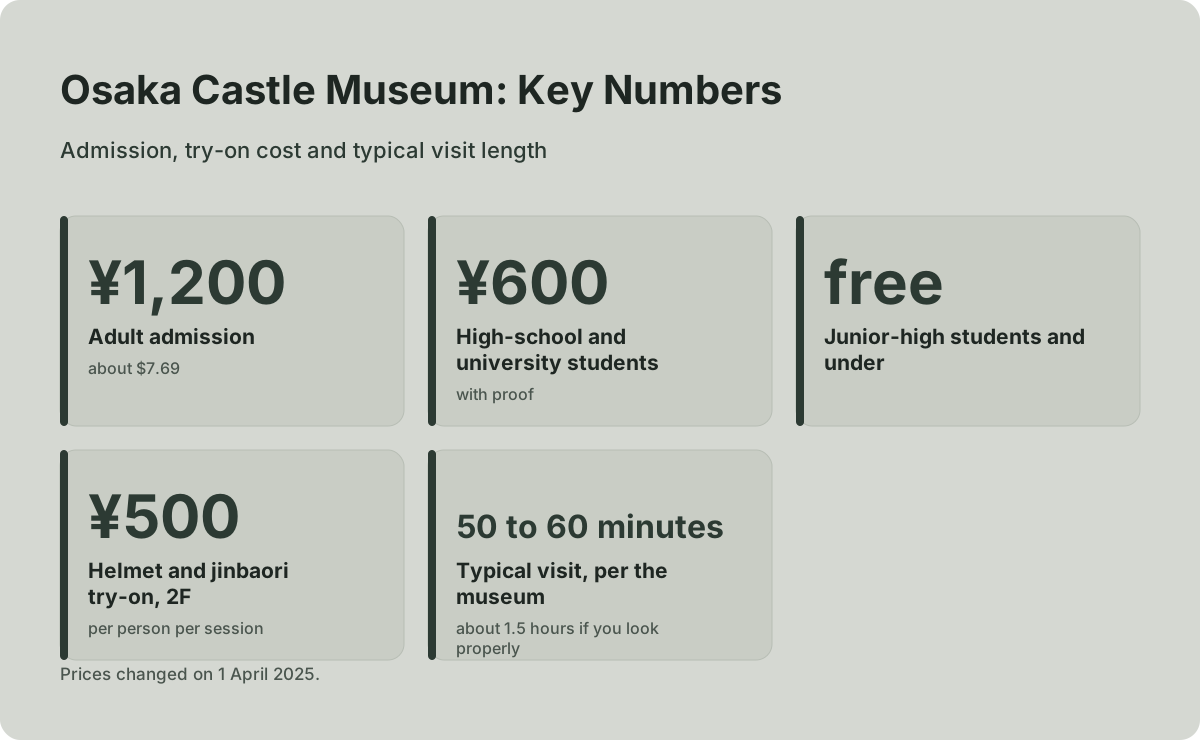
Admission is ¥1,200 for adults, about $7.69, changed on 1 April 2025. High-school and university students pay ¥600 with proof, and junior-high students and under enter free, so families with young children pay only for the adults. The same ticket includes the Osaka Castle Toyotomi Stone Wall Museum, the underground gallery in the honmaru, with no separate fee and no separate combined ticket to buy. Hours are 9:00 to 18:00 with last admission at 17:30, closed only 28 December to 1 January.
The museum's own framing of the castle is grander than most visitors expect. Its press material calls Osaka Castle "the castle with the greatest stone walls in Japan", and the collection is built around the two families who made the site: the Toyotomi, who built the original castle from 1583, and the Tokugawa, who destroyed it in 1615, buried it, and rebuilt it bigger over the decade that followed, producing a castle completely different from the one before. The exhibits tell that double story, and the Stone Wall Museum now tells the buried half of it physically.
For context on how the two castles relate, the history of Osaka Castle walks the full timeline. The short version for the museum visitor: Hideyoshi's castle was four to five times the scale of the present one, its gold-gleaming tenshu at the centre of the honmaru, and after the Summer War of Osaka the shogunate piled earth over the whole thing as if to erase the Toyotomi family's authority.
What Are The Star Exhibits On Each Floor?
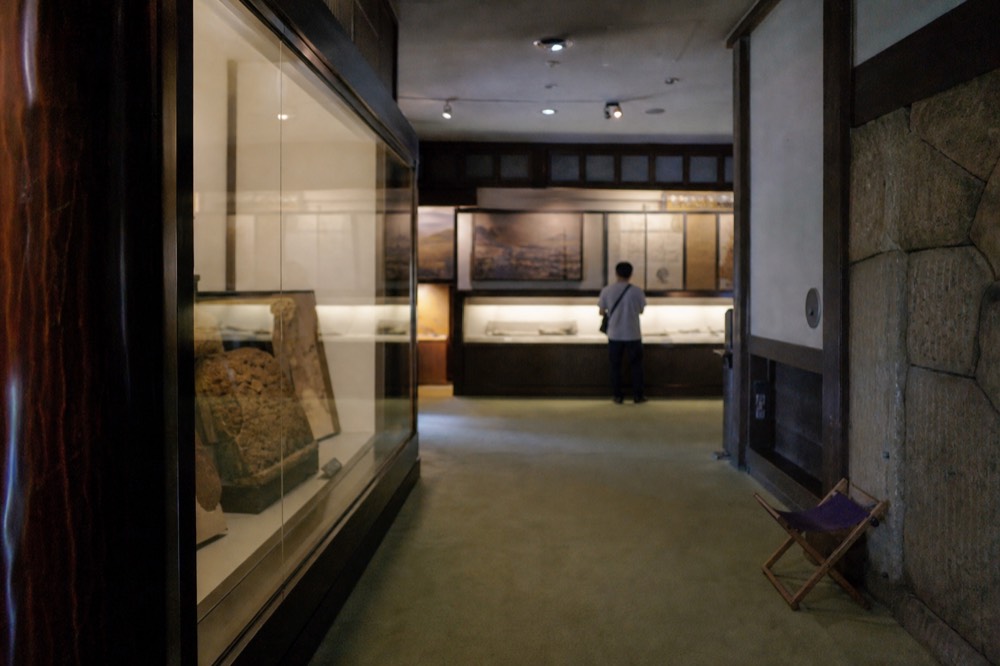
The permanent collection runs from a theater room and shop on 1F up to the observation deck on 8F, with the historical substance on 3F, 4F, 5F and 7F: Hideyoshi and his era on 3F and 4F, the Summer War folding screen with video and miniature models on 5F, and the life of Toyotomi Hideyoshi on 7F. The 6F is a closed corridor with no viewing floor, and 2F holds the castle information corner plus the try-on corner. The castle's own exhibition page, osakacastle.net/exhibition, is the authoritative floor guide.
The shape of the visit matters. The museum says most visitors spend 50 to 60 minutes inside, and about 1.5 hours if you actually look at things properly. The floors are small and the route is vertical: the lift is up-only for general visitors, direct to 5F, with stairs from 5F to 8F and stairs all the way down. Wheelchair users and visitors with walking difficulties can use the lift in both directions on every floor under staff guidance, and wheelchairs can go out onto the 8F deck itself.
Floor
What is there
Notes for visitors
8F
Observation deck, about 50 m above ground
The panoramic payoff; photography allowed
7F
The life of Toyotomi Hideyoshi
The biographical heart of the collection
6F
Closed corridor
No viewing floor, off limits
5F
The Summer War of Osaka folding screen, video and miniature models
The battle floor
4F
Hideyoshi and his era
Photography banned, Important Cultural Properties displayed
3F
Hideyoshi and his era, plus the special exhibition room
Photography banned
2F
Castle information corner, helmet and jinbaori try-on
Try-on is ¥500 per person per session
1F
Entrance, theater room, museum shop
Theater renewed March 2025, four-language subtitles
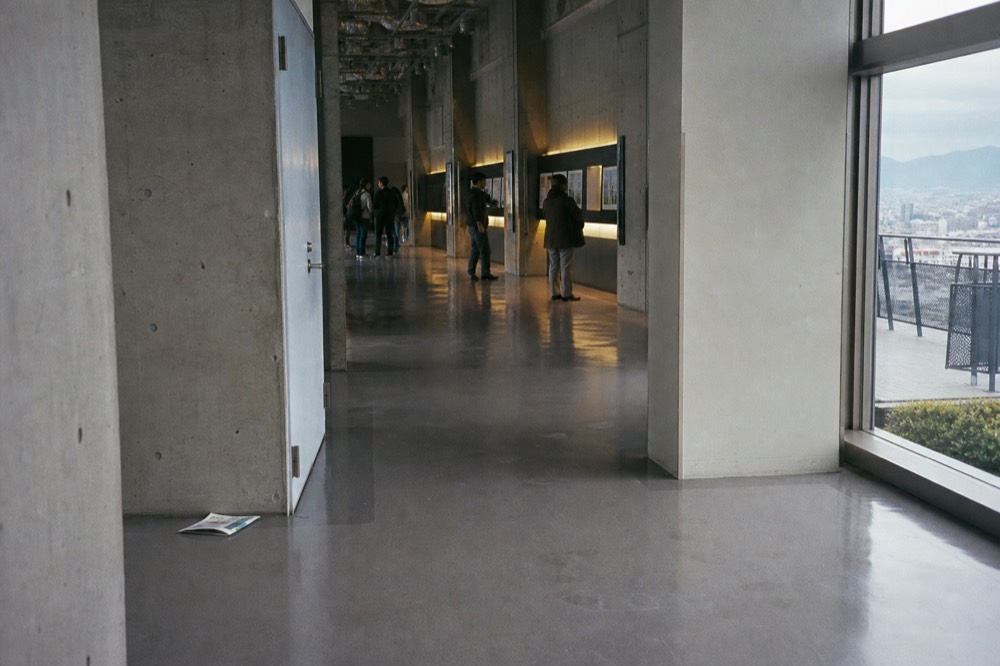
Two rules shape the visit more than most blogs mention. Photography is banned on 3F and 4F because Important Cultural Properties are displayed there, and free everywhere else, which is why the photo spots everyone shares are the 8F deck and the 2F life-size shachihoko and fukko replicas. And the upper floors narrow: the museum's own FAQ warns that viewing space narrows and becomes very crowded the higher you go, which is the stated reason strollers are discouraged upstairs and checked free at the ticket gate.
If you would rather have someone else carry the narrative, a live guide is a different product from this ticket: the guided walking tour covers the castle grounds with an English-speaking guide, and its base price does not include tower admission, so the two stack rather than substitute.
What Are The Summer War Of Osaka Folding Screens?
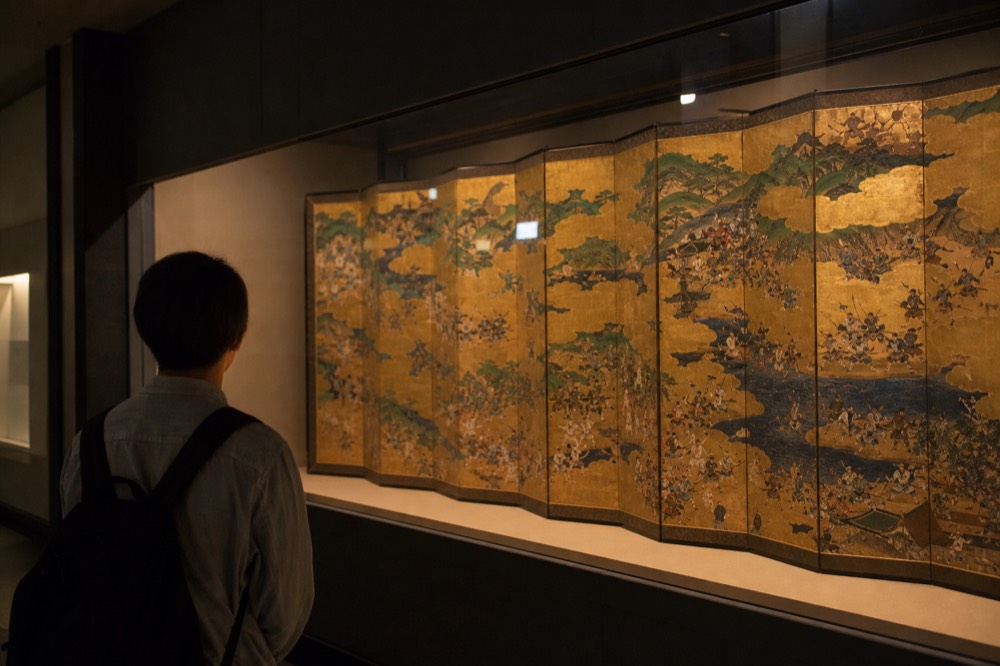
The 5F is built around the folding screen depicting the Summer War of Osaka, the 1615 siege that destroyed the Toyotomi house and burned the original castle, presented with video and miniature models that stage the battle across the floor. It is the single most concentrated piece of storytelling in the tower: the screen itself, the models that translate its bird's-eye view into three dimensions, and the video that animates the campaign. For visitors who arrive knowing only that Osaka Castle is famous, this floor is where the fame is explained.
The war it depicts was the end of a decade of confrontation. Hideyoshi died in 1598; his young son Hideyori held the castle as the Tokugawa shogunate consolidated power; and in 1615 the Summer War ended with the Toyotomi house destroyed and the whole castle burned. The Tokugawa rebuild began in 1620, took ten years, involved mass earth fill across the entire site and a tenshu 15 m taller than Hideyoshi's, and produced a castle completely different from the one on the screen. That Tokugawa tenshu burned in a lightning strike in 1665 and was never rebuilt, which is why nothing original stands above ground today.
The screens reward slow looking. The miniature models do the explanatory work for visitors who cannot read the Japanese inscriptions, and the video loop gives the campaign its chronology. Give this floor real time if the Sengoku period is why you came; it is the densest historical material in the building, and the crowd thins here compared with the deck above because many visitors ride the lift straight to the top and work downward.
If the war itself is what draws you, the companion piece is what happened at Osaka Castle, which follows the siege in detail, and who destroyed Osaka Castle, which takes the question apart. The museum's 5F is the artefact-level version of the same story.
What Toyotomi-Era Armour And Objects Can You Actually See?
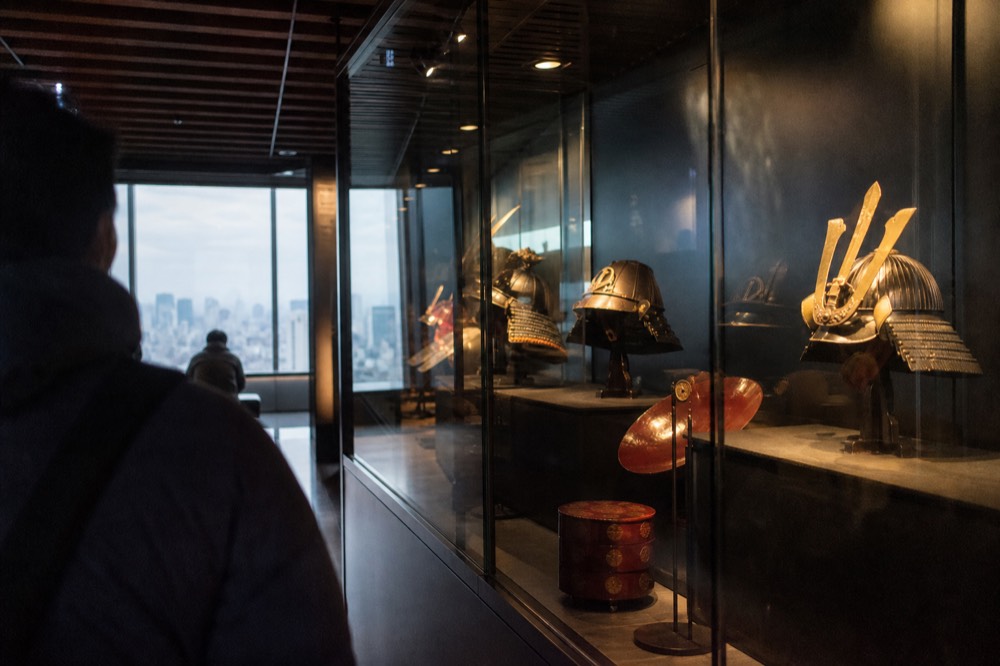
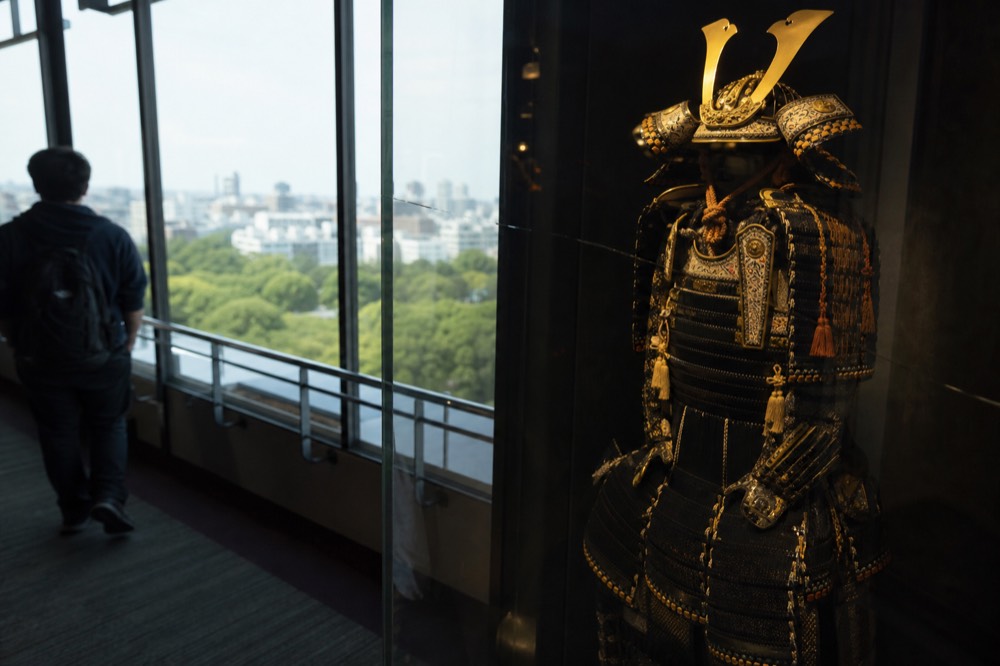
The Toyotomi material concentrates on 7F, the life of Toyotomi Hideyoshi, and on 3F and 4F, Hideyoshi and his era, where the Important Cultural Properties are displayed and photography is banned; alongside the armour and period objects, the museum presents Hideyoshi's golden aesthetic, including a reconstruction evoking his famous golden tea room, the gold-leafed mobile tea space that advertised his power as deliberately as any castle. The 2F try-on corner lets visitors wear a samurai helmet and jinbaori themselves, at ¥500 per person per session, with photography.
The golden tea room deserves its reputation as an idea rather than an object. Hideyoshi had a portable tea room covered in gold leaf assembled and disassembled as he moved, a statement that the tea ceremony's austere ideals could be turned into a display of supremacy. The museum's treatment connects that gesture to the gold-gleaming tenshu of the original castle: both were the same politics in different materials. Visitors who come expecting a full gold room to walk into should calibrate expectations; the presentation is exhibit-scale, interpretive and tied to the Hideyoshi biography on 7F.
The 3F and 4F photography ban is worth knowing in advance because it changes how people tour. Everything on those two floors exists only in memory and in the museum's own imagery once you leave; the replicas on 2F and the view on 8F are the shareable half of the visit. The ban is not arbitrary: the floors carry the designated objects, and the museum protects them accordingly.
For the man behind the armour, what Toyotomi Hideyoshi was famous for covers the ascent from sandal-bearer to unifier, and why he was called a monkey takes on the nickname. The 7F floor is the museum's own telling of the same life, with the objects the biography is built from.
What Is The Toyotomi Stone Wall Museum?
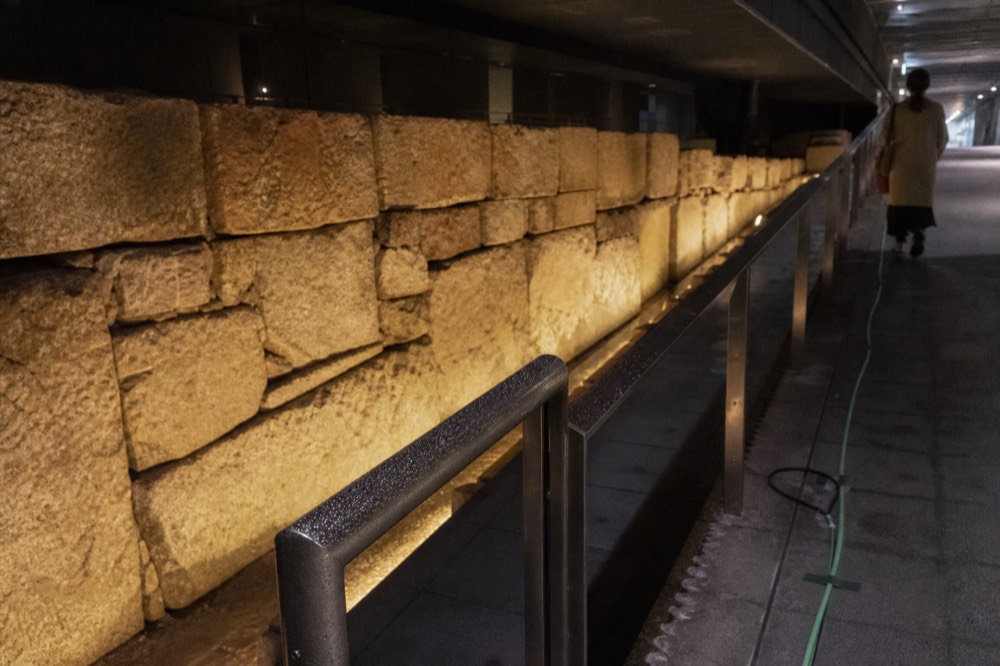
The Osaka Castle Toyotomi Stone Wall Museum is an underground gallery inside the honmaru where visitors walk down to a section of the stone wall that protected the tsumenomaru, the private quarters where Hideyoshi and his family lived, buried under about 6 m of Tokugawa fill and unseen above ground anywhere else. It opened on 1 April 2025, and the ¥1,200 tower ticket includes it, same day only. Its own page, osakacastle.net/toyotomi_stone_wall, states the access rule plainly: the Main Tower admission fee is required to enter, and there is no separate price.
The wall on display was rediscovered in 1984, about 1 m below the current surface, during the survey work that began after the "mysterious underground stone wall" of 1959 first showed a Toyotomi-era castle lying under the park. The Tokugawa rebuild buried the entire original castle: about 6 m of fill at the nakanodan tier, and over the inner moat more than 25 m, per a 1969 boring that struck stone at that depth before the EXPO'70 Time Capsule was buried. The museum's curatorial column gives the elevations: the 1984-discovered wall top at 29.8 m against today's honmaru surface of 31.2 to 31.5 m, meaning the ground Hideyoshi and Hideyori walked on lies roughly a metre beneath the lawn visitors cross today.
What you actually look at is masonry, and the museum teaches you to read it. Nozurazumi, natural-face masonry with barely worked stones. Traces of the Summer War fires burnt onto the stone faces. Uragome-ishi backfill stones packed behind the wall for drainage. Repurposed stones, including foundation stones carried in from ancient temples. Sangizumi, the alternating rectangular-stone corner technique, in an early form. The floor map is 1F, entrance hall, theater room and guidance room, plus basement 1F, the stone wall exhibition hall. There are no toilets inside the museum itself, a detail worth knowing before you descend.
The Tokugawa rebuild buried Hideyoshi's castle under about 6 m of fill at the nakanodan tier and more than 25 m over the inner moat; the tsumenomaru wall was found again about 1 m below the surface in 1984 and went on display in 2025.
The Stone Wall Museum is the strongest single argument that the ticket has changed for the better since 2024. For a fuller treatment of the venue itself, see the dedicated Toyotomi Stone Wall Museum guide, which covers the rediscovery history and what the wall section was. The two experiences stack in one visit: tower exhibits first, then the descent to the wall, or the reverse if the queue upstairs is long.
The entry e-ticket covers both venues, and the voucher is valid 30 days with no fixed time slot and no set viewing time limit once inside, which suits a museum visit whose length varies with the crowds.
What Special Exhibitions Are Running In The Tower Now?
The tower runs rotating special exhibitions in its 3F and 4F exhibition rooms, and the 2026 programme is unusually rich because of the year's Toyotomi moment: per the castle museum's own announcements, a Hideyoshi summer special runs in the 3F room to 7 October 2026, an exhibition titled Osaka Castle Zoo runs in the 4F room to 8 October 2026, and a Sengoku siblings exhibition follows across both floors from 10 October to 23 November 2026. The first two are live as of this writing; the third is announced and upcoming.
The wave behind this programming is no accident. The 2026 NHK taiga drama "Toyotomi Brothers!", which premiered on 4 January 2026, has put the Toyotomi family back at the centre of Japanese popular history, and a linked special exhibition toured Nagoya from 18 April to 14 June 2026, the Osaka Museum of History from 8 July to 31 August 2026, and Tokyo from 15 September to 8 November 2026, per the exhibition's own site. The castle's own summer Hideyoshi exhibition sits inside the same wave, and the tower's record FY2025 admissions, 2,813,851, provisional, coincided with it.
2026 special exhibition
Room
Run dates
Status
Hideyoshi summer special
3F exhibition room
To 7 October 2026
Running
Osaka Castle Zoo
4F exhibition room
To 8 October 2026
Running
Sengoku siblings exhibition
3F and 4F exhibition rooms
10 October to 23 November 2026
Announced, upcoming
from $7.69The from-price you see online and the price at the castle window are the same adult admission, so booking ahead costs nothing extra.
Your ticket into the tower
Official E-Ticket
Adult, per person
Osaka Castle Main Tower entry
Osaka Castle Toyotomi Stone Wall Museum
QR code entry
Valid 30 days
No fixed time slot
No viewing time limit
Buying the official e-ticket ahead saves you the ticket-purchase line, not money, since the online price matches the window. You exchange nothing at the gate, you simply show the voucher and go in.
The real flexibility here is the voucher's 30-day validity, with no fixed time slot and no set viewing time limit.
Adult, per personGroup rate from 15 paying visitorsFree categories at the window
¥1,200
The window price is identical to the online price, so nothing is lost by paying in person. Students and under-15s should buy here, because proof-of-age discounts are handled face to face and not through an e-ticket.
Students with ID and visitors aged under 15, since discounted and free rates are only applied at the window.
One-day passOn sale 25 March 2026 to 31 March 2027
¥3,500
The one-day pass costs 3,500 yen against the 1,200 yen castle ticket on its own, so it only pays off with two or more other paid sights. Add transport and the maths tips further in its favor.
Visitors packing several paid sights plus metro and bus rides into one day, who will clear the pass price easily.
The park grounds, moats, stone ramparts and exterior views of the tower cost nothing at all, and they fill a half day on their own. The paid line falls only at the Main Tower entrance and the Toyotomi Stone Wall Museum.
Anyone who wants the castle views, moats and grounds without paying to go inside the buildings.
One caveat belongs here, and it comes from the pass terms rather than the castle: when a facility is running a special exhibition, entry to the permanent exhibition alone may not be possible, and special exhibitions can cost extra. That caveat is printed on the Osaka Amazing Pass's own terms page, and it applies to pass holders planning a visit around a show they specifically want to see. Check the castle's news pages for the current 3F and 4F programme before building a day around it.
For visitors weighing the whole question, is Osaka Castle worth it takes the decision apart honestly, including the recurring criticism that the interior is a modern museum rather than a historic castle interior, and the praise for the exterior, the park and the Toyotomi story that keeps the record crowds coming anyway.
What Practical Rules Shape A Museum Visit?
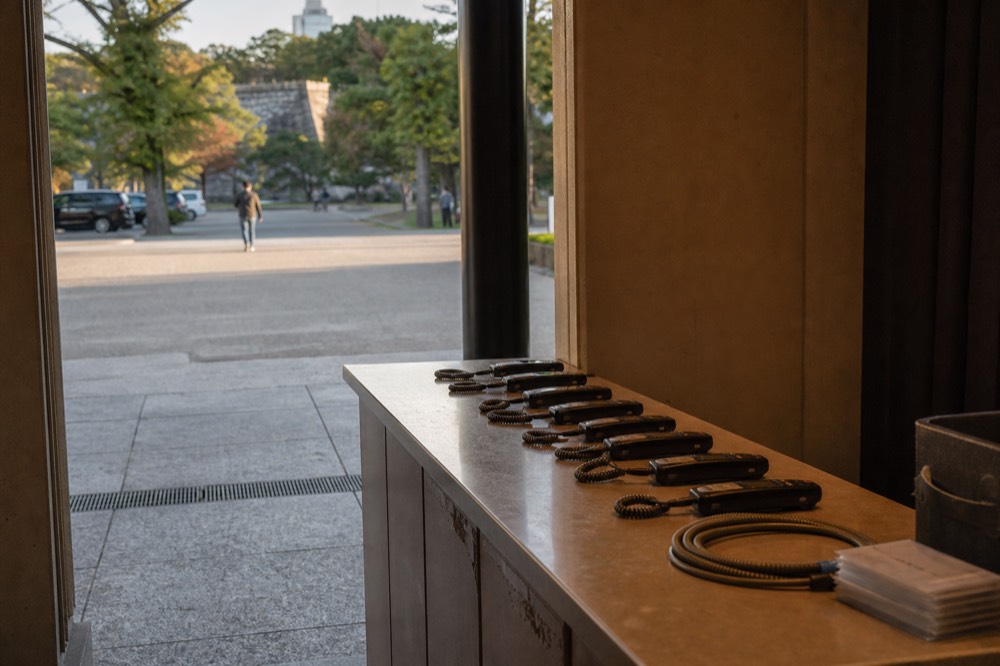
Photography is banned on floors 3 and 4 but free elsewhere; the lift runs up-only to 5F for general visitors, with stairs above and below; audio guides are lent free in Japanese, English, Korean and Chinese from the 1F and 5F information counters, received 9:00 to 17:00 and returned by 17:30; and with no coin lockers inside the tower, bag check costs ¥100 per item, 9:00 to 17:30, collected by 18:00. The museum's FAQ at osakacastle.net/question is the source for all of it.
The bag rule catches day-trippers with luggage. Space at the check counter is limited and large volumes are refused, and the museum itself directs visitors to station lockers or their hotel. The tower lends 5 wheelchairs for use inside the building only, first come first served, no reservations, with more available through the park's own centre. Accessible toilets sit on 2F inside the tower and in two places in the Honmaru plaza. AEDs are at the 1F and 5F counters. Pets are not admitted, assistance dogs excepted.
Practical item
The rule
Where it bites
Photography
Banned 3F and 4F, free elsewhere
Plan photos for 2F and 8F
Lift
Up-only to 5F for general visitors; stairs 5F to 8F and all the way down
Anyone with knee trouble
Audio guides
Free, JA/EN/KO/ZH, limited quantity, return by 17:30
Busy mornings run out
Bags
No lockers; ¥100 per item check, collect by 18:00
Day-trippers with luggage
Strollers
Checked free at the ticket gate, discouraged upstairs
Families
Last admission
17:30, and the ticket queue may be capped before then
Late-afternoon arrivals
The last-entry warning deserves its own line because it is official and specific: depending on conditions, the castle may cap the ticket-purchase queue before 17:30. On record-crowd days, arriving for the final hour is a gamble. The museum says congestion enquiries have risen enough that groups are now asked to phone ahead with their date, time and numbers, and no official real-time crowd page exists on either the castle or park site, so the honest advice is simply to come early.
How Long Should You Give The Museum, And Is The Collection Worth The Ticket?
The museum's own figures say most visitors spend 50 to 60 minutes inside, and about 1.5 hours if you look properly; add the Stone Wall Museum descent and a slow pass at the 5F screens and the honest budget is closer to two hours for the ticketed interior alone, before any time in the park. Recent visitors report a similar spread, from under an hour for the deck-and-down crowd to half a day for people who pair the tower with the grounds. The how long to spend at Osaka Castle guide builds full budgets around those numbers.
Whether the collection is worth ¥1,200 depends on what you came for. The criticism is real and recurring: the interior is a modern museum in a concrete shell, and reviewers say so in those words. The praise is equally specific: the exterior, the views from the 8F deck, the park, and the historical context of the Toyotomi-Tokugawa story, which the 5F and 7F floors deliver in concentrated form. Since 1 April 2025 the calculation has shifted, because the same ticket now buys the Stone Wall Museum, and the buried Toyotomi wall is the one thing at this castle that is genuinely original, unseen above ground anywhere, and impossible to photograph from the moat.
For students the answer is different, and the site says so plainly: high-school and university students pay ¥600 with proof, and junior-high and under are free, so a student visit costs half or nothing. Osaka-city residents aged 65 and over enter free with proof, and disability-handbook holders enter free with one carer. Those rates are gate rates; the online e-ticket sells the one adult ticket type, so anyone eligible for a discount should buy at the gate.
Visitors who want the collection explained rather than read can add a live guide for the grounds. The guided walking tour runs 1.5 to 3 hours with an English-speaking guide, private or small group, and its base price does not include tower admission, so a reader taking both buys the ticket and the walk separately.
For pass holders, the Osaka Amazing Pass includes the tower and the Stone Wall Museum as free-admission facility #18, same day only, against a ¥3,500 one-day or ¥5,000 two-day pass, with sales running 25 March 2026 to 31 March 2027. That only makes arithmetic sense bundled with transport and several other paid venues; the castle ticket alone is ¥1,200. The pass route is a descriptive alternative rather than a product this site sells, and the e-ticket remains the simplest route for a visitor whose day is built around the castle.
One housekeeping note for readers comparing options across this site, including the pages on Osaka Castle Tickets itself: the two old combined tickets that older blogs still recommend, the castle plus Osaka Museum of History set and the Aqua-bus plus castle set, ended on 27 December 2024 and 24 March 2025 respectively. They are not buyable. The Osaka Museum of History across the park remains open at its own price and pairs well with the tower, but you buy the two admissions separately now.
The questions visitors ask most about the museum cluster around four things: what the ¥1,200 ticket actually covers, which exhibits justify the climb, what the photography and bag rules are, and how the tower museum relates to the Toyotomi Stone Wall Museum underground. The answers below take each in turn, with the official figures and the practical detail that shapes a visit, so you can plan the museum half of your castle day before you arrive.
Common Questions About The Osaka Castle Museum
What Is The Osaka Castle Museum?
The history museum inside the reconstructed Main Tower, a museum since its 1931 rebuilding. It holds and rotates collections relating to Hideyoshi, the Sengoku period and the castle's history, and the same ¥1,200 adult ticket also covers the Osaka Castle Toyotomi Stone Wall Museum underground.
How Much Does The Osaka Castle Museum Cost?
Adults pay ¥1,200, about $7.69, the gate price set on 1 April 2025. High-school and university students pay ¥600 with proof, and junior-high students and under enter free. The ticket includes the Toyotomi Stone Wall Museum with no separate fee.
What Are The Highlights Inside The Tower?
The 5F Summer War of Osaka folding screen with video and miniature models, the 7F life of Toyotomi Hideyoshi, the Hideyoshi-era displays on 3F and 4F, the golden tea room presentation tied to Hideyoshi's aesthetic, and the 8F observation deck about 50 m above ground.
Can You Take Photos Inside The Osaka Castle Museum?
Photography is banned on floors 3F and 4F because Important Cultural Properties are displayed there, and free everywhere else. The popular photo spots are the 8F observation deck and the 2F life-size shachihoko and fukko replicas.
How Long Do People Spend Inside The Tower?
The museum says most visitors spend 50 to 60 minutes, and about 1.5 hours if you look properly. Adding the Stone Wall Museum and a slow pass at the 5F screens, budget closer to two hours for the ticketed interior.
Is The Osaka Castle Museum The Same As The Toyotomi Stone Wall Museum?
No. The tower museum is the eight-floor exhibit building; the Toyotomi Stone Wall Museum is a separate underground gallery that opened on 1 April 2025, showing the buried Toyotomi-era wall. One ¥1,200 ticket covers both, same day only.
Ready To See The Exhibits For Yourself?
One ticket covers the tower's exhibit floors and the Toyotomi Stone Wall Museum. The e-ticket voucher is valid 30 days with no fixed time slot, so you can go when the queues look short.